

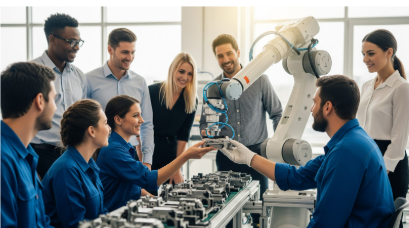
Workplaces chase new tools every year, hoping automation will lighten the load. Many end up discovering the opposite. Tasks may move faster, but people often feel disconnected from the very systems meant to support them.
This article explores why human-centered automation is gaining attention (and why organizations are shifting toward approaches that keep people firmly in control).
Why Human-Centered Automation Matters Right Now
Companies feel the pressure to modernize, but technology that ignores human realities tends to fall short. A people-first approach gives automation a clearer purpose: making work feel more intuitive and less draining.
The gap between what companies need and what automation delivers
Many systems promise speed, yet they overlook how teams actually work. Automation may complete tasks, but it cannot recognize office dynamics, shifting priorities, or the strategic weight of certain decisions.
People run into issues such as:
- Tools that automate the wrong steps
- Workflows that break when exceptions arise
- Added strain from learning systems that don’t match their rhythm
The result is a patchwork of software that looks helpful on paper but leaves teams compensating with manual work behind the scenes.
The shifting expectations of modern teams
Teams today want tools that feel natural to use. They look for systems that reduce friction instead of adding layers. Work is already complex, and software should clear space instead of crowding it.
A human-centered model meets people where they are. It respects the varied ways individuals solve problems and lets them apply their judgment without fighting the system.
When technology adapts to people, adoption rises, collaboration improves, and work becomes easier to navigate.
The rising cost of ignoring human factors
When tools overlook the human element, the consequences show up quickly.
Employees may experience:
- Tool fatigue
- Higher stress levels
- Slower recovery from disruptions
- Resistance to new workflows
Over time, this affects both performance and morale. Even well-designed systems can falter when they leave out the realities of human attention, bandwidth, or learning pace. Businesses eventually pay the price through stalled projects and high turnover.
How Human Judgment Strengthens AI Systems
Automation becomes far more dependable when paired with human understanding. People notice patterns that models miss, interpret signals with nuance, and guide outputs toward responsible, grounded decisions.
Context that AI cannot interpret alone
AI can analyze data, but context gives meaning to that data. Humans understand social cues, tone, cultural references, unspoken expectations, and the emotional layers behind workplace decisions. Those subtleties shape how actions are interpreted and how solutions land.
This context protects organizations from missteps, especially in sensitive interactions or complex situations that require more than surface-level analysis.
Decisions that require experience rather than prediction
Some decisions depend on history, intuition, and the kind of judgment gained through years of navigating a field. AI can offer recommendations, but it cannot carry the lived knowledge of someone who has handled a crisis, negotiated with a client, or adapted under pressure.
Experience guides nuance, and nuance shapes outcomes. When automation operates alongside that experience, its impact grows significantly.
The role of oversight and guidance
Oversight is not about correcting automation at every turn. It’s about steering it. People refine the system’s accuracy, spot inconsistencies early, and ensure the technology aligns with organizational values.
Good oversight builds trust. Teams become more willing to rely on AI when they know their review matters. This trust becomes the foundation that turns automation from a utility into a partnership.
The Business Advantage of Pairing People With Automation
Human-centered automation isn’t a soft concept. It delivers measurable benefits by supporting the way people think, communicate, and solve problems.
Faster problem-solving with fewer bottlenecks
Teams move quickly when technology anticipates their needs instead of forcing them to adapt. Automation handles the repeatable steps, while people handle the unexpected.
This hybrid approach reduces waiting time, compresses decision cycles, and helps teams respond with greater confidence, especially during fast-moving situations.
Stronger customer relationships through better support systems
Customers feel the difference when support teams have tools that help them focus on the interaction instead of searching for information. Automation can surface relevant details instantly, while humans bring empathy, clarity, and reassurance.
This combination leads to smoother exchanges, consistent service quality, and experiences that feel personal rather than mechanical.
Increased adoption and long-term ROI
When tools respect the way people naturally work, teams stay engaged. They adopt new systems willingly and continue using them long after the initial rollout.
This directly impacts ROI. Organizations no longer spend months retraining, reconfiguring, or replacing tools that fell short. Instead, they build a stable foundation where automation supports growth instead of complicating it.
Inside TheoSym’s Approach to Human-AI Partnerships
TheoSym’s framework begins with a simple idea: people make the final call. Every system, workflow, and layer of automation is designed to support human clarity, not override it. This philosophy guides how TheoSym builds, tests, and refines its tools.
Designing tools that amplify human strengths
TheoSym avoids the trap of creating systems that pull people away from their instincts. Instead, its tools help users see patterns, understand situations faster, and make informed decisions without wading through noise.
The focus is on reducing cognitive strain. The platform highlights what matters, hides distractions, and creates space for workers to rely on their judgment. This lets teams move with more confidence, especially in environments where timing and nuance matter.
Creating workflows where humans stay in command
TheoSym structures automation so people remain at the center of each process. Tasks move smoothly, but always with clear checkpoints, review layers, and decision moments reserved for humans.
This approach supports:
- Clear task routing
- Consistent oversight
- A predictable flow of information
It also prevents the common pitfall of “automation drift,” where systems begin making choices that should belong to human teams.
Ethical guardrails built into the core
TheoSym places weight on transparency and responsible design. Users know when AI is assisting, what data informs its recommendations, and how decisions are shaped. Clear explanations help prevent confusion and promote trust across teams.
The guardrails are not an afterthought. They sit at the center of the architecture so people feel informed rather than sidelined.

TheoSym in Action: The Human-AI Augmentation Suite
Human-centered design only matters when it can be applied in real workplaces. TheoSym’s suite of augmentation tools is built with this exact intention, giving teams support that adapts to their pace and style of work.
TheoSym’s AI Task Orchestration Service
TheoSym’s AI Task Orchestration Service sits at the heart of this shift. It brings order to complex workflows without removing human decision-making. The system reads context, routes tasks intelligently, and highlights what needs attention, but always leaves the final action to people.
It solves a familiar workplace issue: scattered responsibilities and unclear ownership. By creating structure around each step, the service helps teams stay organized and reduce the stress that comes from juggling too many moving parts.
What businesses gain from this model
Companies using TheoSym’s orchestration approach often see immediate improvements in daily operations. Workloads become more balanced, bottlenecks ease up, and employees regain mental space previously lost to task-switching.
These gains show up in:
- Smoother collaboration
- More reliable output
- Better consistency across teams
When people feel supported instead of overwhelmed, they contribute more effectively and with greater focus.
Why companies are rapidly adopting people-first automation
Executives are recognizing a pattern: human-centered automation leads to more stable progress. It supports teams instead of pushing them past their limits. It also reduces the turbulence that often follows tech adoption.
Organizations value approaches that respect culture, rhythm, and responsibility. As more leaders rethink their modernization plans, models like TheoSym’s are becoming the preferred path.
Where Human-Centered Automation Is Heading Next
The next stage of workplace automation leans heavily on partnership. Teams want tools that think alongside them rather than above them. This shift marks a broader cultural change in how workers relate to technology.
The move toward AI copilots instead of AI replacements
AI copilots are shaping modern workflows because they provide direction without taking control. They anticipate needs, offer guidance, and steady the pace of work, but they never remove the human element that gives decisions their weight.
This model encourages better outcomes and smoother transitions during periods of change.
The shift in leadership mindset
Leaders increasingly judge automation by how well it supports people. They look for tools that blend into the organization’s culture, adapt to established norms, and promote teamwork.
This mindset changes how automation is evaluated. It’s no longer about the loudest features but the quiet improvements that stabilize daily operations.
The long-term advantage of keeping humans at the core
When people remain central to automation, organizations build systems that can withstand change. Teams stay resilient because they understand their tools and feel comfortable guiding them.
The result is a working environment that grows stronger with time, rather than one that struggles to keep up with its own technology.
Final Thoughts
Businesses are choosing approaches that lift people instead of replacing them. The momentum behind human-centered automation continues to grow, and it’s reshaping how organizations build their future systems.
TheoSym stands at the front of that movement, proving that automation works best when people shape its direction and not the other way around.