

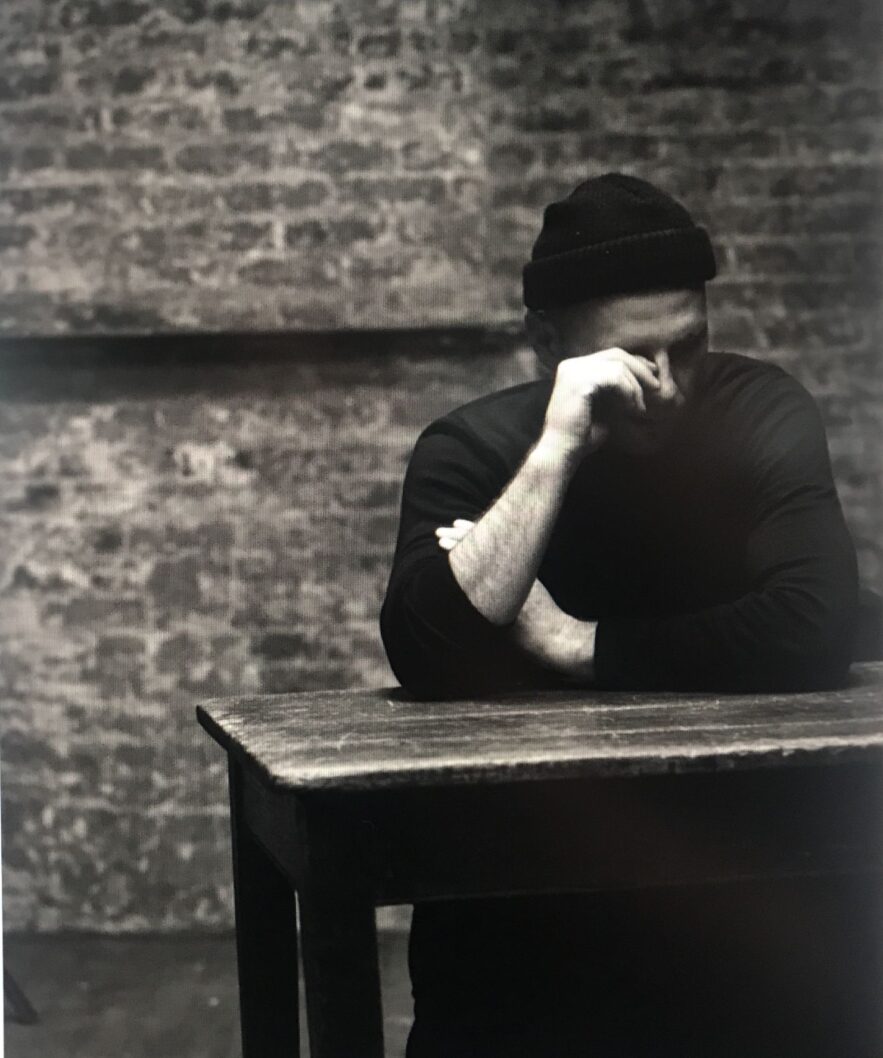
Andrew Harrington’s photographs seem to arrive already complete. They do not announce themselves or reach outward for attention. They sit in the frame with a quiet certainty, as if they know they will be found in time. There is often a pause embedded in the image, a held breath. A body leans forward but does not quite move. A face turns away just enough to deny full access. The photograph feels less like a capture than a decision.
Across editorials for Vogue Australia, Vogue Italia, and Financial Times HTSI, and campaigns for international fashion brands including Prada, ZARA, Urban Outfitters, and Anthropologie, Harrington has developed a body of work that resists easy categorization. There is no single visual trick that defines it. Instead, what emerges is a consistent way of seeing. His images are measured and deliberate, built on proportion, distance, and restraint. They do not explain themselves. They assume the viewer will meet them halfway.
What is striking is how little urgency there is in the work. In a culture that prizes immediacy, Harrington’s photographs slow time down. Motion blur appears not as embellishment, but as evidence of time passing through the frame. The image acknowledges movement without being consumed by it. Clothing is present, but never shouting. Mood and interiority carry as much weight as fabric or silhouette.
Harrington’s understanding of photography was shaped early on through assisting some of the most exacting figures in contemporary fashion image-making. Working under photographers such as Mikael Jansson and David Sims, he was exposed to a way of working that prioritized discipline over expression and precision over excess. These were environments where nothing was accidental. Light, framing, timing, and restraint were treated as essential tools rather than stylistic options. Assisting at that level offered Harrington a close view of how strong images are constructed through repetition, editing, and refusal.
That apprenticeship left a lasting imprint. Harrington’s photographs carry the same respect for structure and economy. On set, his approach is quiet and controlled. He does not crowd the frame or over-direct the moment. Adjustments are subtle. A shift in distance. A pause before the shutter. The image resolves itself through attention rather than force.
His editorial photographs often feel like fragments of a longer, unseen narrative. Faces remain partially obscured. Gestures are interrupted. The viewer senses a larger story without being given its outline. This refusal to over-define is part of the work’s appeal. The photographs trust ambiguity. They trust that what is withheld can be as powerful as what is shown.

That same sensibility carries into Harrington’s commercial projects. He is frequently entrusted with broad creative responsibility, including directing motion and overseeing post-production alongside still photography. These are not ornamental roles. They reflect confidence in his judgment and his ability to carry a visual idea from conception through execution. The scale of these commissions and the compensation attached to them place him firmly within the upper tier of his field, yet the images themselves remain disciplined and spare.
What characterizes Harrington’s work is an instinct for when to stop. In an industry saturated with images, his photographs feel edited before they are made. There is no excess, no insistence on spectacle. Each frame feels considered, weighed, and resolved. The image does not perform. It holds.
Andrew Harrington’s photography feels constructed rather than improvised, but never rigid. It carries the imprint of a career spent understanding structure, responsibility, and restraint. The result is a body of work that feels calm in a loud world, patient in a hurried one. These are images that do not demand to be consumed. They wait, confident that attention, when it comes, will stay.