

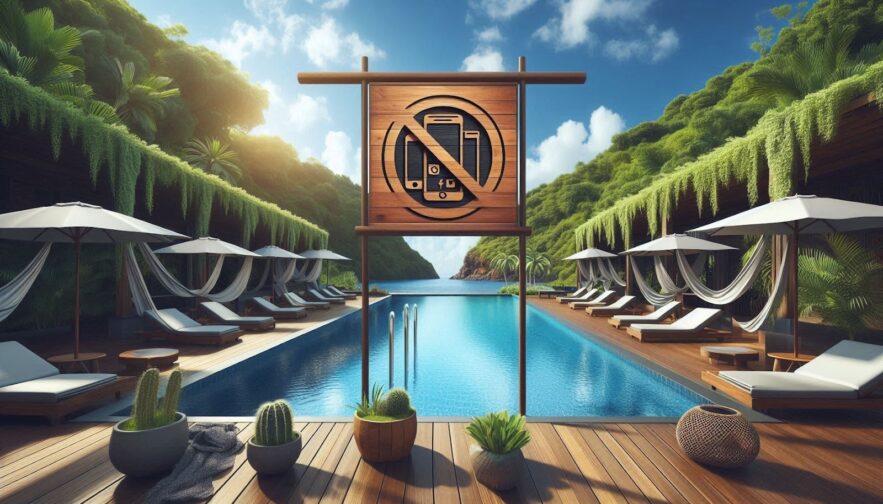
The business model behind spiritual reset travel, from guided programs to measurable “digital abstinence” packages.
WASHINGTON, DC
The new status symbol in travel is not a rooftop pool, a Michelin tasting menu, or a perfectly framed sunrise photo. It is the ability to disappear for three days and come back looking rested, clearer, and quietly proud of one thing that is hard to prove online: you were not online.
That is the cultural logic behind the rise of “glow-cations,” a fast-growing slice of the wellness retreat market that treats spiritual reset travel as a product you can schedule, pay for, and measure. In 2026, a glow-cation is not just a yoga weekend. It is a guided program built around regulated friction, structured routines, and a deliberate reduction of digital input, all packaged in language that avoids the old buzzwords like detox.
The pitch is simple. You are not traveling to the post. You are traveling to recover.
For operators, the economics are even simpler. Travelers who are exhausted by the pressure to perform social sharing will pay a premium for an experience that removes that pressure, and they will pay more when the experience feels professionally designed rather than improvised. That is why glow-cations are spreading from coastal retreats and mountain lodges into boutique hotels, ranch stays, and private villa-style programs that look like luxury travel on the surface while running like a tightly scheduled curriculum behind the scenes.
The glow-cation trend matters because it is not just a mood. It is a business model that is reshaping how retreats are priced, marketed, staffed, and defended with respect to risk and compliance. It is also a signal that travel demand is changing at the motivational level. People are not only escaping their cities. They are escaping the emotional mechanics of being reachable.
The new buyer is not antisocial; they are pro-boundary
It is tempting to frame glow-cations as a rejection of social media. In practice, the demand is coming from people who are fluent in online life. They use apps for work, relationships, childcare logistics, and everything else. They are not naïve about what it means to go offline. They just want the decision to be made for them.
That is what guided wellness travel can sell better than any self-help book. A short-term environment where it is normal to be unreachable, where it is socially safe to say, I am not responding right now, and where you do not have to justify it.
This is also why many operators avoid the term detox. Detox implies shame and implies a problem. Glow-cation language implies aspiration. It implies a return to self, a reset, a polish, a glow you can feel in your body and see in your face.
For some travelers, the glow is physical: better sleep, less alcohol, more movement, fewer late-night scrolling sessions. For others, the glow is cognitive: fewer intrusive thoughts, greater focus, greater patience, and less irritability. For others, it is a social, real conversation, eye contact, the kind of laughter that happens when nobody is half-listening while checking a screen.
The emotional driver is not spirituality alone. It is a relief.
Why does this demand accelerate in 2026
The wellness industry has been selling restoration for years. What changed is that the baseline level of digital intensity has continued to climb, and the consequences have become easier to name. People are describing themselves as overstimulated. They are noticing fragmented attention. They feel anxious without knowing why, then realize they have not had a quiet hour in weeks.
Public health voices have also become more direct about the need to reduce harm, especially for young people. Official guidance like the U.S. Surgeon General’s advisory on social media and youth mental health has helped normalize the idea that digital environments can carry real mental and emotional costs, not just abstract concerns about “screen time,” and it has encouraged families to think in terms of guardrails rather than willpower alone at hhs.gov.
Glow-cations capitalize on that normalization. They turn what used to be a private guilt cycle-“I should be on my phone less”-into a purchasable structure: someone else sets the rules, and you follow them in a beautiful setting.
That is a powerful product, especially when the traveler does not want to fight their own habits in the same environment where those habits were formed.
The glow-cation business model, sell structure, not just scenery
Traditional retreats often sold access: to a location, to a teacher, to a spa. Glow-cations are selling systems. The systems vary, but the most successful programs share common mechanics.
A defined arc
Operators build the experience like a transformation story. Arrival and decompression. A first night ritual. A day of intensity, movement, therapy, breathwork, or long guided hikes. A peak experience, often framed as a breakthrough. Then reintegration, how you return to real life without immediately relapsing into constant checking.
Guided routines that remove decision fatigue
Wake, hydration, movement, breakfast, guided session, nature block, journaling, lunch, rest, afternoon workshop, dinner, evening ritual, lights out. The schedule is not a limitation. It is the feature. Guests are paying to stop deciding.
A controlled digital environment
Some retreats are fully device-free. Others are “device light,” allowing phones during a short window for family or work. Many now offer an emergency channel that does not require the guest to hold their phone, like a front desk line or a staff-managed message system.
A language of measurable progress
This is where the business model gets sharper. Glow-cations increasingly include “digital abstinence packages” that quantify the reduction, sometimes through an honor-based pledge, sometimes through a phone handoff protocol, sometimes through a managed lockbox, and sometimes through optional tracking for guests who want data.
That measurable framing does two things. It increases perceived value by turning a feeling into a result. And it increases rebooking, because guests can compare one stay to the next.
How measurable “digital abstinence” is being packaged
The phrase “digital abstinence” can sound extreme, but in the retreat world, it is being used in a practical way. It means a defined period without social platforms, sometimes without any internet, sometimes without any device at all. The industry is experimenting with multiple models:
The check in handoff
You arrive, sign a consent form, and hand your phone to the staff; it remains secured. Guests get access to a basic offline camera or are encouraged to use disposable film. The retreat supplies printed schedules and paper maps.
The timed window model
Phones are allowed for a short daily window, usually 15 to 30 minutes, often in a designated space, not in rooms. This is sold as “connection hygiene.” It reduces the anxiety of total disappearance while still protecting the core experience.
The accountability layer
Some programs pair guests with an “accountability buddy” or coach. If you break the pledge, you talk about why. This is where wellness merges with behavior change coaching.
The measurable add-on
A growing tactic is to sell tiers. Standard retreat. Retreat plus digital abstinence. Retreat plus abstinence plus reintegration coaching after you go home. Each tier has a higher price and a clearer story about lasting change.
This tiering is why glow-cations are attractive to operators. It creates predictable upsell pathways without requiring additional real estate. The incremental cost is staff time, training, and process costs, not construction costs.
What travelers are buying instead of posting
If social posting is the currency of classic lifestyle travel, glow-cations offer a different reward system.
Sleep that feels deep again. Not just more hours, but a different quality of rest.
A conversation that lasts longer than a text exchange. Meals that stretch, because nobody is pacing to check notifications.
Embodied experiences. Sauna, cold plunge, long hikes, breathwork, stretching, massage, meals that feel nourishing, and a return to appetite cues.
A new identity story that is not built on photos. Travelers come home and say, I did something for myself, and they do not need proof.
The key is that these rewards are hard to replicate at home. You can download meditation apps, but you cannot download an environment where everyone around you is also offline. That collective agreement is what makes the experience feel legitimate.
How operators monetize spirituality without sounding like a guru
There is a fine line in this market. Guests want meaning, but they do not want manipulation. They want spirituality, but not cult energy. They want guidance, but not vague promises.
The winning operators have learned to monetize the spiritual reset while keeping the tone grounded. They do it by focusing on craft and professionalism.
They describe facilitators in terms of training and method. They explain the structure. They communicate boundaries. They avoid claiming miracles.
They also use hospitality discipline. Great bedding. Great food. Clean spaces. Quiet hours. Consistent routines. When the physical experience feels reliable, guests are more willing to trust the emotional work.
This is where the market is converging with a broader compliance mindset. Travelers may not call it compliance, but they want transparency. What exactly is included? What is optional? What are the rules? How is privacy handled? What happens to your device if you hand it over? Who can access it? What is the emergency protocol?

These questions are no longer niche. They are becoming standard buyer behavior, especially among professionals and parents.
What to ask before you book a glow-cation
Glow-cations are expensive, and the premium is justified only when the retreat delivers on its promise. If a traveler wants the reset without regret, the smartest approach is to treat the booking like a due diligence exercise. Here are the questions that separate a real glow-cation from a pretty weekend with a marketing story.
What is the actual digital policy?
Is it device-free, device-light, or just “encouraged to unplug.” Ask for specifics. If the retreat cannot clearly describe the policy, the experience is likely to be inconsistent.
How is emergency communication handled?
If you have kids, aging parents, or work responsibilities, you need a realistic emergency channel. A good retreat has a clear protocol.
What does the schedule look like
A glow-cation is defined by structure. If the schedule is mostly open time, the retreat may be selling vibes rather than transformation.
What is included, and what is upsold
Some retreats advertise a low base price and then monetize the real value through add ons. That can be fine, but it should be transparent.
What is the reintegration plan?
The most valuable programs do not end at checkout. They teach guests how to return home without immediately reverting to old habits.
Why the “glow” is becoming a corporate benefit, quietly
One of the more interesting shifts in 2026 is that glow-cations are starting to show up as semi-sanctioned recovery in professional circles. Not always through formal corporate wellness programs, but through cultural permission. Managers who once expected constant responsiveness are increasingly tolerating short windows of unavailability because the workforce is exhausted, and burnout is expensive.
Some retreats are now explicitly targeting founders, executives, and remote teams with “focus restoration” programs. The language is different, less spiritual, more performance-oriented, but the mechanics are similar: restricted digital exposure, guided routines, nature time, and behavioral coaching.
This creates a second growth channel beyond the classic wellness traveler. When glow-cations become acceptable as productivity maintenance, not indulgence, the market expands.
How Amicus sees the shift, privacy discipline becomes part of premium travel
The glowcation boom is not only a wellness story. It is also a privacy story. Digital abstinence packages rely on trust, process, and clear boundaries around data and access. In the same way that modern cross-border mobility requires consistent documentation and predictable identity checks, premium hospitality now increasingly requires predictable privacy standards that guests can understand and rely on. That framework, reducing unnecessary collection, designing for safety, and communicating rules clearly, is the lens applied by Amicus International Consulting when advising on privacy-first operational discipline in high-trust environments.
For operators, the practical takeaway is that “offline” is not a marketing claim you can improvise. It is an operational promise. If you monetize disconnection, you have to defend it with process.
For travelers, the takeaway is that a glow-cation is not just a retreat. It is a purchase of structure, and the best ones behave like a professional program, not a loose gathering.
What comes next, glow-cations as a mainstream travel category
Glow-cations are on the same trajectory that boutique fitness took years ago. What begins as a niche offering becomes a category, then a standardized set of expectations, then a competitive market where only the best operators retain pricing power.
As that happens, travelers will become more discerning, and operators will become more sophisticated. The retreats that thrive will be the ones that can demonstrate results without making outrageous claims and that can create a deep reset without turning the experience into a moral crusade.
The simplest way to understand the trend is this: people are not done with travel or technology. They are done with being pulled in every direction at once.
Glow-cations sell a temporary world where that pulling stops. And in 2026, that is worth more than another view.
For a snapshot of how widely the concept of offline wellness travel is spreading across lifestyle, travel, and business coverage, recent reporting and trend summaries can be found through searches on Google News.