

By Katerina Phish
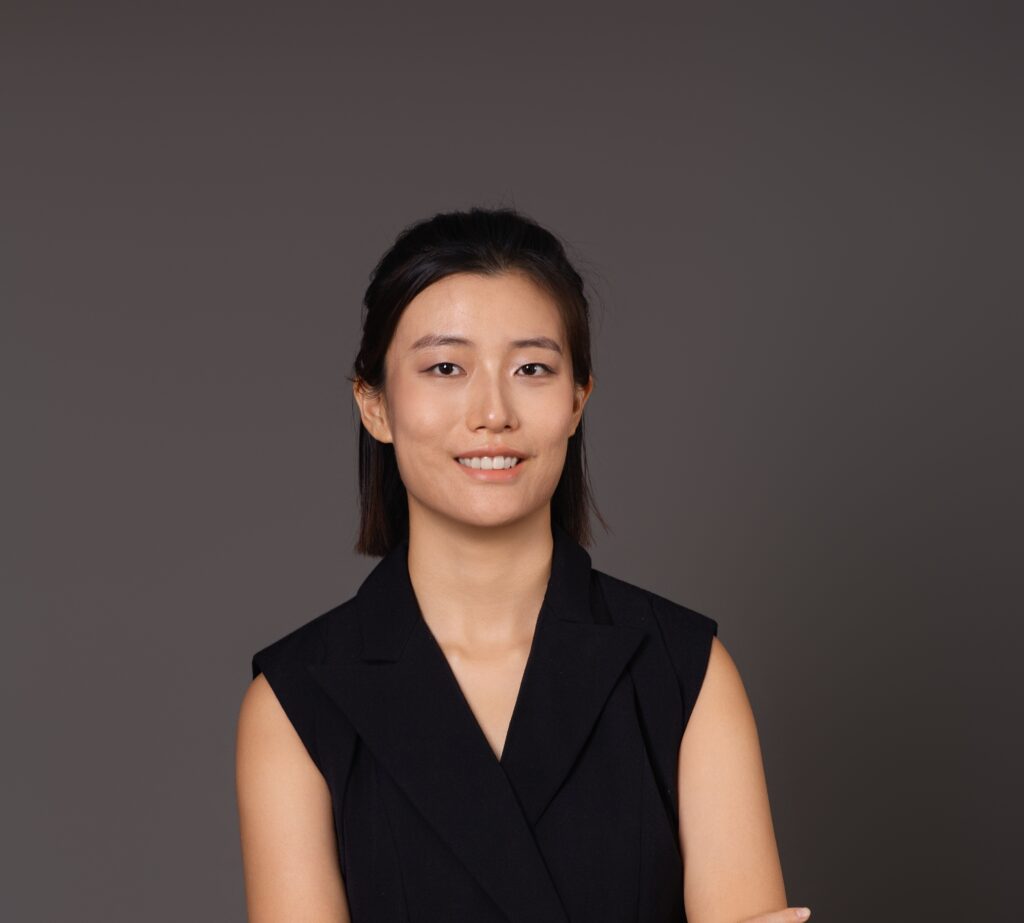
Sofi Zhihui Zhang is a curator and researcher who is on a quest to bring cultural heritage into the digital age. Working at the intersection of art, technology and cultural memory, Sofi has shone in diverse contexts from working as curating blockbusting exhibitions at high-profile institutions to more recently founding her own company, Mousa Art & Technology.
Sofi curated the company’s inaugural digital cultural heritage project at the Hebei Museum in China, Resonance: Hebei Museum Imaginations – Digital Cultural Heritage Exhibition. For the show, four internationally renowned digital artists reinterpreted the museum’s collection using digitized data, producing five original artworks. Zhang sees this as the future of New Media Art: in an age of rapid technological change, how can art historical research, heritage preservation, and contemporary practice be meaningfully combined? Mousa positions itself as a pioneering institution working on some of the most exciting art movements today.
This approach reflects a broader cultural shift exemplified by the proliferation of immersive art experiences across major U.S. cities. For example, Van Gogh exhibitions utilizing 360-degree projections, multi-sensory environments, and virtual reality are drawing massive audiences from Atlanta to San Francisco, with major cities like New York and Dallas hosting multiple concurrent shows. These experiences transform traditional art viewing through floor-to-ceiling digital presentations, synchronized music, and sensory elements like carefully selected aromas, creating unprecedented levels of engagement with artistic heritage.
Trained at Wellesley, Harvard, and the University of Toronto, Sofi is well-versed in the academic study of modern art. She completed a groundbreaking thesis on the New Measurement Group and techno-idealism and served as Co-Editor-in-Chief of Toronto’s Art History journal. Sofi credits these experiences with honing her ability to conduct in-depth research and analysis of art history. “I possess a deep understanding of art historical movements, artists, and theoretical concepts,” she says.
A hallmark of Zhang’s career is her role as a translator of cultures and epochs. Sofi has translated academic essays, curatorial statements, and exhibition materials.
An exemplary instance of her role as a facilitator of dialogue was the production of a documentary for the Central Academy of Fine Arts in Beijing, one of China’s top art universities. Serving as scriptwriter and interviewer, Zhang explored the early use of computing and information technology in postwar art, framing the narrative through an interview with media art scholar Margit Rosen (Head of Collections, Archives & Research at ZKM; Expert Committee in Culture, German Commission to UNESCO). From the theories of German philosopher Max Bense to the pioneering arte programmata movement with figures such as François Morellet and Almir Mavignier, the film traced how artists employed computational methods as a response to Abstract Expressionism. The documentary was later published online by the Central Academy of Fine Arts Museum.
Zhang’s curatorial work also reflects a remarkable sensitivity to diverse places and periods, showcasing a broad awareness and appreciation of artistic production in its many forms. Recently at Amherst College, Zhang co-curated Laborious Hands, which highlighted cross-cultural and traditional printmaking practices from around the world. This exhibition brought together artifacts and printed resources from diverse regions such as China, Malaysia, Mexico, the Soviet Union, and the United States, shedding light on underrepresented artistic productions across genres.
Zhang’s curatorial practice is marked by her attunement to overlooked and marginalized artistic subjects. She has a rare ability to place seemingly disparate works in dialogue, creating resonant encounters that broaden the viewer’s understanding—a quality that defines a discerning curator. In her co-curated show Whatever Works, Whatever It Takes for the Goethe Institut, she presented artists from China, Japan, Taiwan, and the United States. The exhibition explored unconventional encounters in the digital era, developing its aesthetics at the intersection of vernacular technology and media art.
Zhang’s contribution to the contemporary art world also takes the form of the written word. In her published writings, she engages with the most prominent artists working today in the field of new media art, such as Xu Bing (former Vice President of Central Academy of Fine Arts; recipient of MacArthur Fellowship) or Diane Severin Nguyen (work selected in Whitney Biennial 2024). Zhang’s works can be seen in widely respected outlets in contemporary art criticism such as ARTFORUM and LEAP.
For Zhang, collaboration lies at the heart of innovation. “I plan to actively seek out opportunities to work with artists, scholars, technologists, and community members from diverse backgrounds,” she says. “Through such collaborations, I believe we can create exhibitions and projects that are not only artistically impactful but also socially meaningful.”