

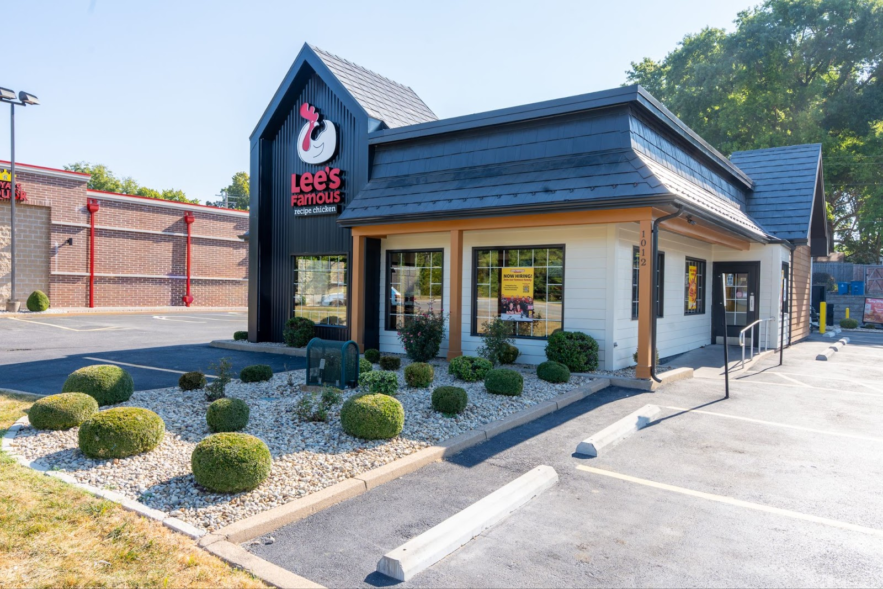
As labor pressures and operational complexity continue to rise in the quick-service restaurant industry, brands are increasingly exploring automation to stabilize core workflows. Lee’s Famous Recipe Chicken is now expanding access to Hi Auto’s AI Order Taker across its franchise system after validating strong performance across 30 locations.
The rollout reflects a shift from limited testing to broader system availability, supported by both operational data and infrastructure upgrades.
Infrastructure Alignment Was A Prerequisite For Scale
Before introducing AI ordering more broadly, Lee’s undertook a significant internal modernization effort. The company unified its POS system and menu database across its restaurant network, creating a consistent operational foundation.
This step is critical for AI-driven ordering systems, which rely on structured, standardized menu data to ensure accuracy and reliability. Without it, system performance can vary significantly across locations.
With this foundation in place, Lee’s proceeded with a 30-store rollout of Hi Auto, incorporating both company-owned and franchise locations operating under real-world conditions.
Franchisees Offered Choice, Not Requirements
Rather than mandating adoption, Lee’s is making Hi Auto’s AI Order Taker available to franchisees as an optional tool. This ensures operators retain control over whether and how they integrate the technology into their stores.
The approach reflects a franchise-first mindset that balances innovation with operational independence.
Ryan Weaver, CEO of Lee’s Famous Recipe Chicken, described the philosophy behind the rollout: “Our operators are the backbone of Lee’s, and it’s our job to give them every advantage we can.”
He pointed to early results, including improved labor efficiency, reduced drive-thru congestion, and stronger guest order accuracy.
Real-World Results Drive System Interest
Across participating locations, Hi Auto has delivered more than 95% order completion rates and 97% accuracy in live drive-thru environments. These metrics are particularly important in high-traffic periods where operational mistakes can quickly compound.
The system has also generated measurable operational benefits beyond order handling. Restaurants report saving three to eight labor hours per day, reducing employee turnover by 17%, and increasing average ticket size by approximately 1.5%.
These outcomes suggest improvements across efficiency, labor stability, and revenue performance.
AI Changes The Structure Of Restaurant Labor
One of the most meaningful shifts introduced by AI ordering is the redistribution of labor responsibilities. Instead of employees managing both order-taking and food service tasks, AI handles the ordering function.
This allows staff to focus more on food preparation, order quality, and customer interaction. During peak periods, this shift reduces pressure and helps maintain consistent service levels.

Over time, this reallocation of labor may prove as impactful as the efficiency gains themselves.
Hi Auto’s Scale Reinforces Reliability
Hi Auto operates at significant scale, powering nearly 1,000 drive-thru locations globally and processing more than 100 million orders annually. It is also used by approximately 200 franchisees across multiple regions.
This breadth of deployment provides validation across different operational environments, strengthening confidence in its performance at scale.
Hi Auto CEO Roy Baharav has emphasized that the platform is designed to enhance operator capability rather than replace human roles, aligning closely with Lee’s operational philosophy.
A Gradual Path Toward AI-Enabled Drive-Thrus
Lee’s rollout reflects a gradual, infrastructure-led approach to technology adoption. By standardizing backend systems first and layering AI capabilities on top, the company is enabling scalable innovation without forcing uniform change.
This ensures franchisees can adopt AI at their own pace while still benefiting from system-wide modernization efforts.
As adoption expands, Lee’s approach may become a reference model for how QSR brands can integrate AI into core operations while maintaining franchise flexibility and operational stability.