

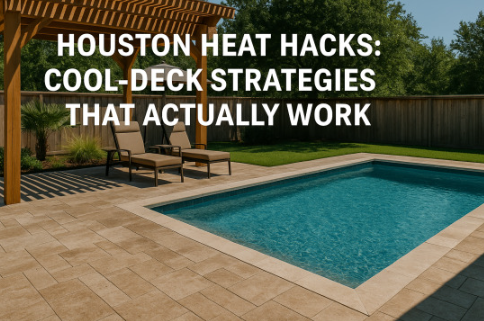
Houston’s summers are no joke. With triple-digit temperatures and scorching UV levels, stepping outside can feel like walking into an oven,especially if your pool deck turns into a frying pan. If you’re tired of hopping across burning concrete, it’s time to rethink your poolside surface.
This guide dives into cool-deck strategies that actually work, from high-tech coatings to material swaps and smart shade design. Whether you’re resurfacing a worn-out patio or building new, here’s how to keep your feet cool and your outdoor space comfortable,even in Houston’s most relentless heat.
Why Pool Decks Get So Hot in Houston
Houston’s climate combines intense sun exposure, high humidity, and prolonged heat waves. Standard concrete, tile, or pavers absorb and retain this heat, often reaching temperatures of 120–150°F on the surface.
This isn’t just uncomfortable,it can be dangerous for bare feet, pets, and children. It also accelerates wear and tear on your deck materials.
Apply a Cool Deck Coating
Cool deck coatings are acrylic-based overlays designed specifically to lower surface temperatures by reflecting solar heat. These coatings:
Reduce surface temps by up to 30%
Come in various textures and colors
Provide slip resistance and UV protection
They can be applied to concrete, existing cool deck, or even resurfaced pool patios. Top-rated brands include Sundek and Kool Deck.
Ideal for: Homeowners who want a cooler, safer surface without tearing out their existing deck.
If your current pool surround is damaged or stained, a full refresh through pool resurfacing Houston
services can prep the area for coating and long-term performance.
Choose Light-Colored, Heat-Reflective Materials
Material choice makes a massive difference in surface temperature.
Material Type Avg. Surface Temp in Sun Notes
White travertine ~95–105°F Excellent cooling, natural stone
Acrylic cool deck ~100–110°F Coated over concrete, affordable
Brushed concrete ~110–130°F Common, but hot if uncoated
Tile/pavers (dark) ~130–150°F Absorb heat quickly
Travertine pavers are among the coolest natural materials, widely used in Houston for both beauty and comfort. They’re also non-slip and weather-resistant.
Add Shade Structures Strategically
Permanent or semi-permanent shade can reduce deck temps by 15–20°F, especially during peak sun (10 a.m.–4 p.m.). Options include:
Pergolas with retractable canopies
Shade sails installed over lounge areas
Umbrellas for movable, seasonal relief
Landscape solutions like palms, crepe myrtles, or hedges
Shade not only keeps surfaces cooler but also protects pool users from UV rays,especially important for children and older adults.
Mist Systems and Water Features
A fine mist system can lower the ambient temperature on your deck by 10–15°F. These are typically mounted under eaves, pergolas, or along fences and activated with a timer or motion sensor.
Water features such as deck jets or perimeter sprayers can cool both the space and the vibe. Pair these with porous surfaces that dry quickly to prevent mildew.
Upgrade to a High-Tech Overlay
For homeowners seeking a full transformation, modern overlays like polymer-modified cement or stamped overlays offer:
Thermal resistance
Custom patterns (stone, wood, slate effects)

Low maintenance and high durability
These systems can be customized to match your home’s aesthetic while addressing Houston’s unique heat and humidity.
Work with a certified installer via a pool resurfacing Houston company that specializes in heat-resistant materials to ensure performance and longevity.
FAQs
What is the coolest pool deck surface?
Travertine pavers and acrylic cool deck coatings offer the best performance in hot climates like Houston.
Can I apply a cool deck coating myself?
While DIY kits exist, professional application is recommended for long-term durability and proper bonding,especially in humid or high-traffic environments.
How long do cool deck coatings last?
With proper maintenance, they can last 7–10 years. Resealing every few years maintains reflectivity and slip resistance.
Can I resurface my existing concrete deck?
Yes. Most concrete decks can be overlaid with cool deck or stamped finishes after cleaning and surface prep. Cracks or major damage may require repair first.
What’s the best shade solution for Houston winds?
Pergolas anchored in concrete footings or adjustable cantilever umbrellas rated for wind gusts are both solid choices.
Conclusion
Houston heat doesn’t have to limit your backyard enjoyment. With the right materials, coatings, and shading strategies, you can dramatically reduce surface temperatures and create a resort-style experience right at home.
From budget-friendly acrylic overlays to premium travertine pavers, there are cool-deck solutions for every style and price point. Partner with a local pool resurfacing Houston expert to explore your best options,and beat the heat without sacrificing style.