

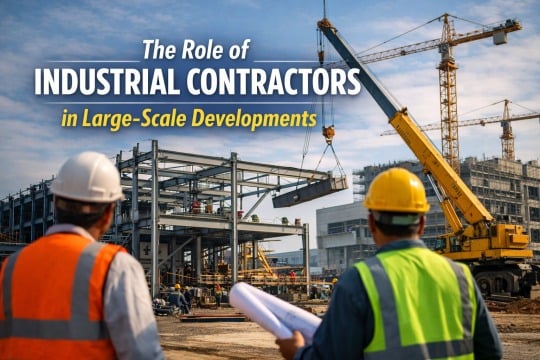
Large-scale developments require detailed coordination, advanced technical knowledge, and disciplined project management. Whether constructing manufacturing plants, logistics centers, processing facilities, or large infrastructure projects, industrial construction involves far more complexity than traditional commercial builds. Understanding The Role of Industrial Contractors in Large-Scale Developments is essential for business owners, developers, and municipalities planning major investments.
In growing regions like Fairfield, Ohio, where industrial expansion continues to accelerate, experienced firms such as Commercial general contractors Fairfield ohio play a critical role in ensuring these projects are completed safely, efficiently, and within budget.
Understanding Industrial Contractors
Industrial contractors specialize in building facilities designed for production, processing, storage, and heavy operations. These projects often involve complex systems such as:
Structural steel erection
Heavy-duty concrete foundations
Process piping systems
High-capacity electrical installations
Mechanical system integration
Equipment setting and alignment
Unlike traditional office or retail construction, industrial builds must support machinery, environmental controls, and operational workflows that demand precision engineering.
Pre-Construction Planning and Feasibility
One of the most important contributions industrial contractors make happens before construction begins. During pre-construction, they assist with:
Cost estimation and budgeting
Scheduling and phasing plans
Risk assessment
Permit coordination
Site analysis
In Fairfield and the surrounding Southwest Ohio region, zoning laws, environmental regulations, and infrastructure considerations require local expertise. Industrial contractors familiar with Butler County requirements can help streamline approvals and prevent costly delays.
Early collaboration between contractors, engineers, and owners ensures that facility design aligns with operational goals.
Managing Complex Project Logistics
Large-scale developments involve multiple moving parts. Industrial contractors oversee coordination between:
Architects
Structural engineers
Mechanical and electrical subcontractors
Equipment suppliers
Municipal inspectors
Without centralized management, communication breakdowns can derail progress. Industrial contractors serve as the primary point of accountability, ensuring each phase of construction progresses according to plan.
They also manage procurement timelines for specialized materials, which is especially important when dealing with custom steel fabrication or long-lead mechanical equipment.
Specialized Construction Expertise
Industrial environments demand durable construction methods. Facilities may house heavy machinery, chemical processing systems, or high-temperature operations. Contractors must account for:
Load-bearing structural design
Reinforced flooring systems
Vibration control
Corrosion-resistant materials
Drainage and containment systems
In regions like Fairfield, Ohio, climate considerations also matter. Freeze-thaw cycles can impact foundation stability, making proper site preparation and concrete work essential.
Industrial contractors apply advanced building techniques to ensure structures withstand both environmental and operational stress.
Safety and Compliance
Safety is a defining element of industrial construction. Large-scale sites include cranes, elevated steel structures, high-voltage wiring, and heavy equipment. Industrial contractors implement strict safety programs that include:
OSHA compliance protocols
On-site safety officers
Routine inspections
Equipment certification checks
Worker training programs
Maintaining a safe work environment protects employees and keeps projects on schedule. Accidents can cause shutdowns and financial setbacks, making proactive safety management essential.
Budget Control and Value Engineering
Industrial developments represent significant financial investments. Contractors use detailed project management systems to monitor expenses in real time.
Value engineering is another key service. Industrial contractors analyze materials, design elements, and construction methods to identify cost-saving alternatives without compromising structural integrity or performance.
For businesses expanding in Fairfield and surrounding Ohio communities, maintaining financial control during construction protects long-term profitability.
Integration with Facility Operations
Industrial contractors do more than construct buildings. They ensure the facility functions efficiently once operational. This involves close coordination with plant managers and engineers to confirm:

Machinery placement aligns with workflow
Electrical capacity meets production demand
Ventilation systems meet environmental standards
Utility systems support future expansion
Early integration planning reduces operational disruptions after project completion.
Supporting Regional Industrial Growth
Industrial contractors directly support economic development in local communities. New facilities create jobs, increase tax revenue, and strengthen supply chains.
Fairfield, Ohio continues to attract distribution centers, advanced manufacturing facilities, and logistics operations due to its strategic location and infrastructure. Skilled contractors ensure these developments are built efficiently and sustainably.
Long-Term Partnerships and Facility Expansion
Industrial facilities often require future modifications, expansions, or equipment upgrades. Contractors who understand the original build can provide ongoing support.
Long-term partnerships allow businesses to scale operations while maintaining structural integrity and compliance with evolving regulations.
Frequently Asked Questions
What is the primary role of industrial contractors in large-scale developments?
Industrial contractors manage the planning, coordination, and construction of complex facilities such as manufacturing plants and distribution centers. They oversee specialized systems, safety compliance, and budget control.
How do industrial contractors differ from commercial contractors?
Industrial contractors focus on heavy-duty facilities that require advanced mechanical, electrical, and structural systems. Commercial contractors typically build offices, retail spaces, and standard business properties.
Why is pre-construction planning important in industrial projects?
Pre-construction planning helps identify potential risks, control costs, secure permits, and ensure the facility design supports operational needs before construction begins.
How do industrial contractors maintain safety on large projects?
They implement OSHA-compliant safety programs, conduct regular inspections, provide worker training, and monitor equipment to reduce risks on job sites.
Why should businesses hire local industrial contractors in Fairfield, Ohio?
Local contractors understand regional regulations, climate conditions, and infrastructure requirements, helping ensure smoother project approvals and construction efficiency.
Conclusion
The role of industrial contractors in large-scale developments extends far beyond construction. They provide strategic planning, technical expertise, project management, safety oversight, and long-term operational support. In rapidly growing areas like Fairfield, Ohio, experienced contractors help transform complex industrial visions into durable, high-performing facilities.
For businesses investing in manufacturing, logistics, or processing infrastructure, partnering with knowledgeable professionals such as Commercial general contractors Fairfield ohio ensures projects are completed with precision, compliance, and long-term success in mind.