


The global freight rail industry is entering a structural turning point as operators confront rising diesel costs and the high capital burden of electrification. For decades, rail decarbonization has been constrained by a single assumption: electrification requires massive, centralized infrastructure buildouts.
Voltify is challenging that assumption directly.
The Los Angeles and Tel Aviv-based startup has raised $30 million in seed funding to deploy a distributed energy platform designed to replace diesel dependence with a flexible, corridor-based energy system. The round was co-led by Aleph and Fortescue, with participation from strategic investors and angels.
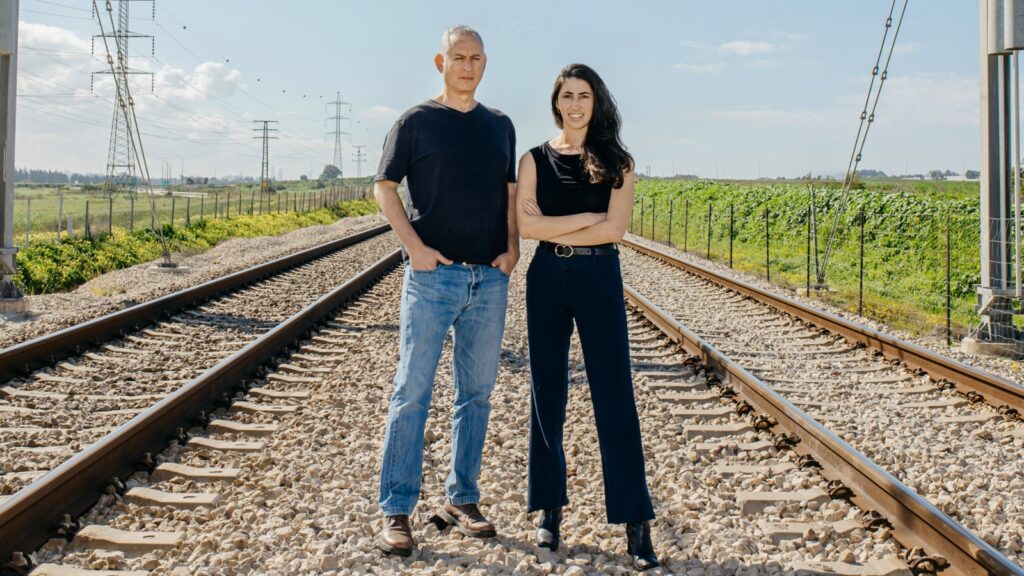
Founded by Dafna Langer and Alon Kessel, the company is positioning itself not as a locomotive manufacturer, but as an energy infrastructure provider for rail.
The $11 Billion Fuel Burden
In the United States, freight rail operators spend approximately $11 billion annually on diesel fuel. While electrification offers a theoretical solution, implementation costs exceeding $1 trillion have stalled progress across major networks.
Voltify is attempting to bypass this constraint entirely by introducing a system designed to reduce energy costs by more than 20% without requiring changes to rail operations or heavy infrastructure investment.
“We built Voltify to solve one of the rail industry’s biggest challenges: energy costs,” said Langer, Co-founder and CEO of Voltify. “Our platform allows rail companies to access clean, affordable energy without changing the way they operate. If you can reduce energy costs by even 5%, it’s huge. If you can reduce them by more than 20%, it becomes transformative.”
Replacing Fixed Electrification With Mobile Energy
Rather than relying on overhead wiring, Voltify’s system combines battery-powered locomotives, fast-charging technology, and renewable microgrids distributed along rail corridors.
This creates an energy network that travels with the system, enabling trains to operate continuously without downtime for charging.
“Importantly, the company’s model removes the so-called “green premium. Our goal is to lower energy costs by over 20%; this is not just the diesel costs, but all the next energy that the industry needs,” Langer said. “Rail companies shouldn’t have to choose between sustainability and economics. We’re making clean energy the financially smarter option.”

Investor Conviction in Industrial Transformation
“Voltify is redefining the energy supply chain for global rail networks”, said Tomer Diari, General Partner at Aleph. “Their electricity-based solution will help rail operators dramatically reduce costs, pollution, and dependency on diesel, and make transporting goods in the US cheaper and more reliable for everyone.”
Fortescue emphasized its alignment with broader industrial decarbonization goals.
“Fortescue is committed to investing in the research and development of innovative technologies to drive Real Zero and accelerate decarbonisation across our operations and beyond. Voltify’s mission to eliminate emissions in the heavy rail industry aligns with ours at Fortescue, and we’re encouraged by the solutions they are working on,” said Gus Pichot, CEO Growth & Energy at Fortescue.
Early Commercialization Underway
Voltify has already signed a paid pilot with a major Class I rail operator, with deployment expected in the coming months. The company is also seeing expanding interest from regional rail operators across the United States.