

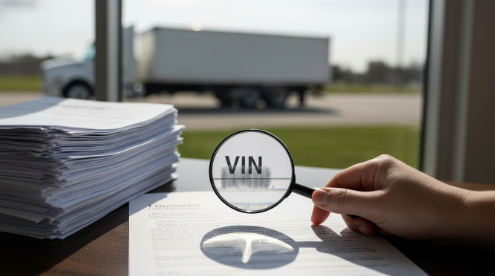
Commercial fleets in Louisiana rely on accurate ownership and registration records to keep vehicles active. Two of the most common sources of delay are incomplete vehicle identification numbers and outdated lien information. These issues often remain hidden until a business attempts a renewal, transfer, audit response, or out-of-state transaction. When clerks encounter missing data, the correction process slows fleet movement and increases administrative workload.
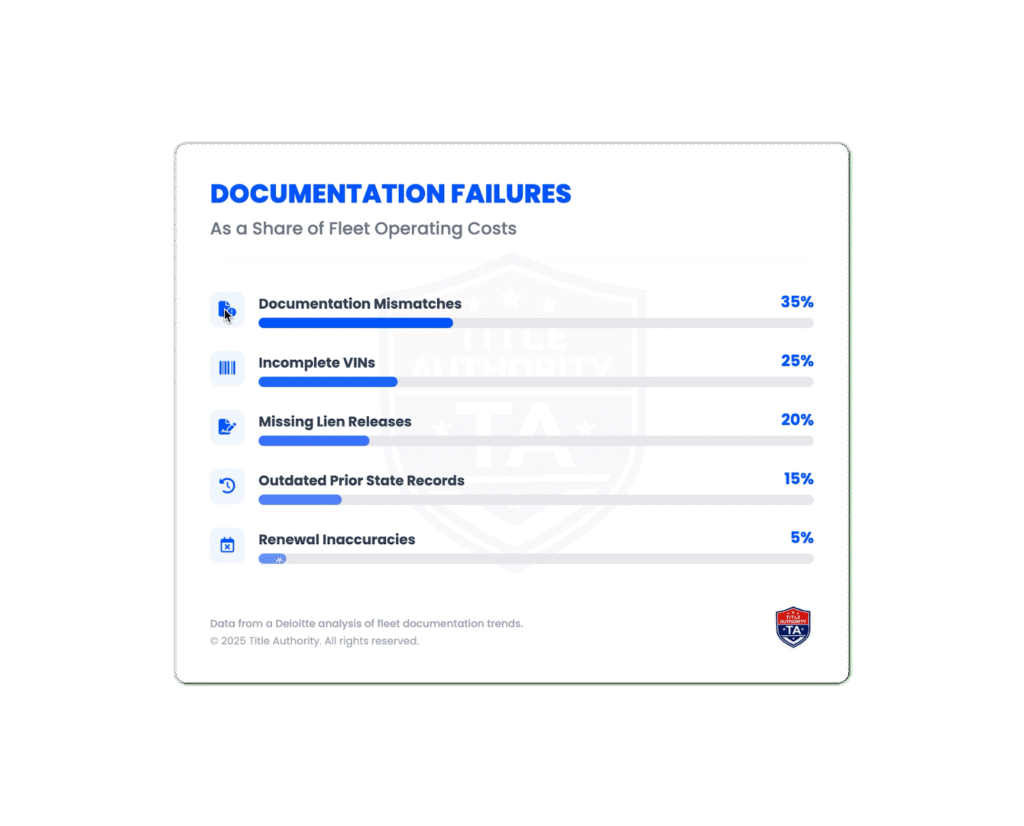
This challenge has become more visible as fleets grow and compliance demands increase. A recent study by Deloitte on fleet documentation errors found that documentation failures now account for a significant share of unexpected fleet operating costs nationwide. Louisiana businesses see these same patterns as VIN and lien discrepancies create predictable delays.
How Incomplete VIN Records Disrupt Fleet Activity
The vehicle identification number is central to every part of fleet compliance. A single incorrect digit can disrupt registration, resale, audit processing, and insurance verification. Missing or partial VINs are among the most common errors discovered during title reviews.
Typical VIN-related delays occur when:
- The VIN on the title does not match the VIN on the vehicle
- A digit is missing or transposed
- Handwritten VIN entries are unreadable
- VIN fields contain smudges, corrections, or altered characters
- A prior title used a shortened or legacy format
When these discrepancies appear, Louisiana clerks must pause processing to verify ownership. This slows renewals and prevents vehicles from entering service.
Why Lien Documentation Problems Cause Multi-Day Delays
Lien information controls ownership and transfer authority. When lien records are incomplete, outdated, or inconsistent with state records, the transfer process stops. Many Louisiana fleets inherit vehicles with old liens that were never properly released.
Common sources of lien-related delays include:
- Missing official lien release forms
- Payoff letters provided instead of formal releases
- Lenders that no longer exist or have merged
- Electronic lien systems not updated at the time of transfer
- State records that still show an active lien despite payoff
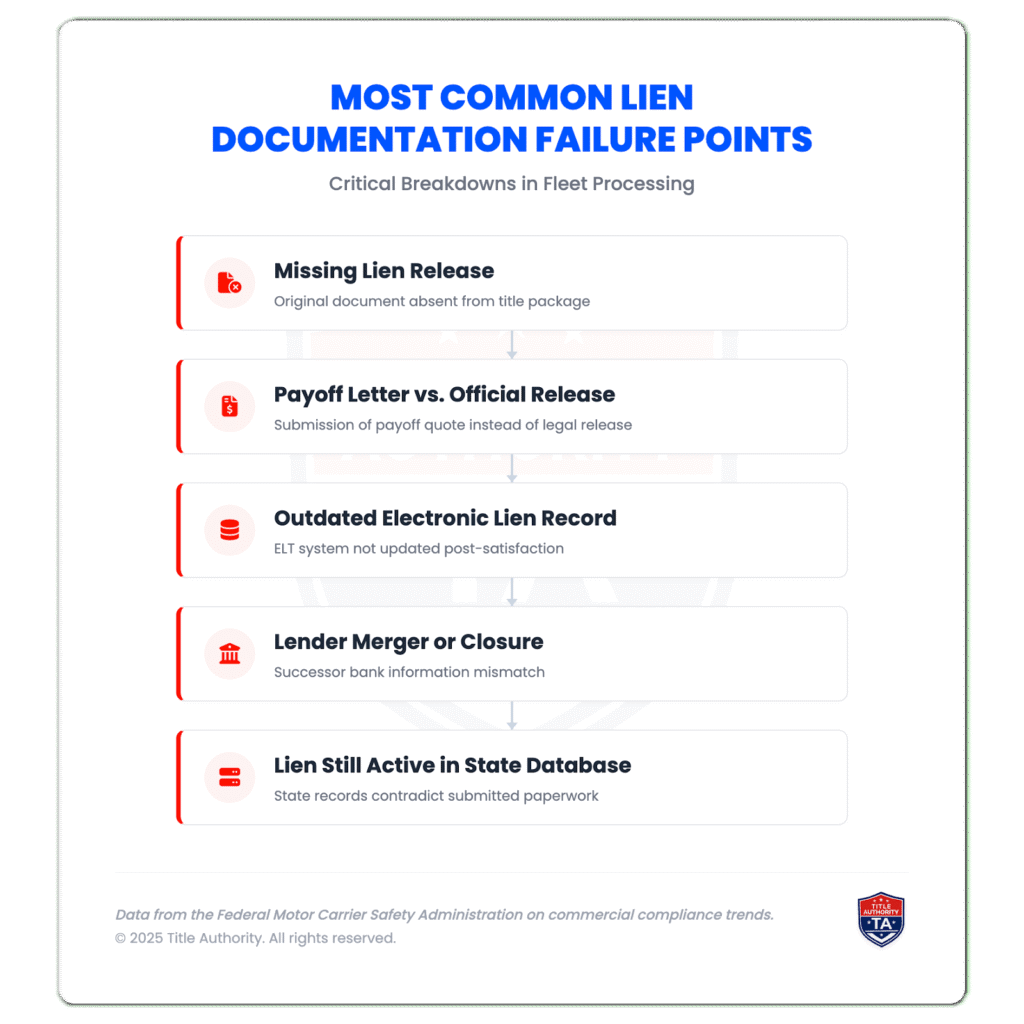
Data from the Federal Motor Carrier Safety Administration on commercial compliance trends indicates that documentation mismatches, including lien irregularities, are one of the fastest-growing sources of administrative delays for commercial operators.
How VIN and Lien Errors Compound Across Multi-Vehicle Fleets
Fleet operators often manage dozens or hundreds of vehicles across multiple parishes. When VIN or lien records are inconsistent, the impact compounds quickly. A single unresolved discrepancy can produce cascading issues during audits, renewals, or resale transactions.
Frequent examples include:
- Multiple vehicles failing renewal at once due to shared recordkeeping gaps
- Inability to complete planned sales because lien releases are missing
- Insurance claims delayed while ownership is verified
- Out-of-state transfers blocked due to unreadable VIN fields
- Duplicate work as managers track down missing documents
These issues are especially common when fleets acquire vehicles from multiple sellers or states.

Cross-State Fleet Purchases Increase Documentation Errors
Louisiana fleets increasingly purchase trucks, trailers, and equipment from sellers in other states. This introduces additional complexity because VIN and lien formats vary widely. Differences in title layout, lien recording practices, and odometer disclosures create a higher likelihood of errors.
The analysis in a recent overview of Louisiana fleet title management practices explains how these inconsistencies often surface only when documents reach Louisiana offices for verification.
Preventing Delays Through Structured Documentation
Consistent documentation standards reduce the likelihood of incomplete VINs or outdated lien records. Many fleet managers now maintain centralized records with uniform requirements across all units. A structured system makes it easier to identify missing information early and prevents multi-vehicle disruptions.
Key preventive steps include:
- Verifying VIN accuracy at the time of purchase
- Requesting formal lien releases instead of payoff letters
- Recording all supporting documents in a centralized archive
- Reviewing titles for altered or unclear entries before submission
- Updating electronic lien records during ownership changes
These simple checks reduce the chance of delays and help fleets maintain consistent operations across all vehicles.
Final Perspective
VIN and lien documentation problems remain two of the most common sources of delay for Louisiana fleets. As compliance demands rise and interstate vehicle purchases increase, accurate documentation is more important than ever. Companies that monitor their records closely reduce errors, prevent downtime, and maintain smoother fleet operations.