

The Local Service Revolution
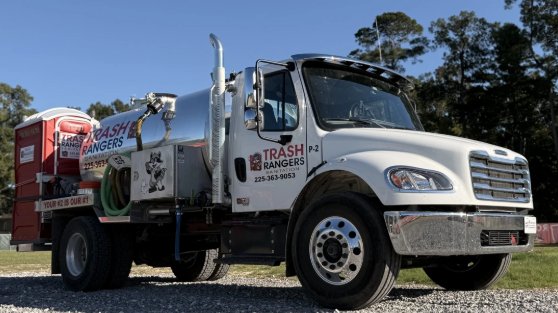
Across Louisiana, local businesses are quietly reclaiming ground once dominated by national service chains. One of the clearest examples is in sanitation, where Trash Rangers of Baton Rouge has turned local ownership into a competitive advantage that national corporations can’t match. In a region where construction, events, and public safety all rely on reliable waste management, service speed and accountability matter more than scale.
Just days after being profiled in BeforeIt’sNews, Trash Rangers continues to prove that homegrown logistics outperform corporate management systems. The company’s approach — built around community relationships, same-day service, and locally made decisions — has created what many call the “Baton Rouge model” for sanitation success.
For a full breakdown of Trash Rangers’ sanitation services, see their Baton Rouge sanitation page.
Where Big Chains Fall Short
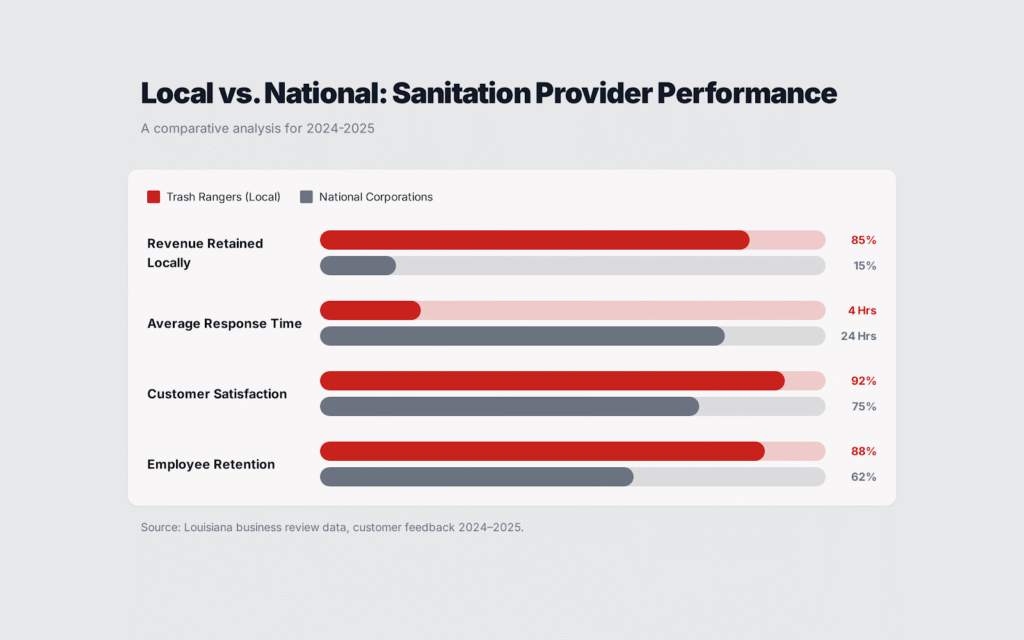
National sanitation providers operate on rigid schedules, centralized ticket systems, and distant customer support. That model breaks down when the job site is a flooded construction lot in Ascension Parish or a music festival that adds ten thousand guests overnight. Local crews like Trash Rangers can adapt immediately, reroute, and deploy equipment without waiting on corporate approvals.
“We don’t wait for someone in another state to clear a decision,” says founder Jake Poche. “We know our customers by name, and we make service calls the same day if needed. You can’t automate that.”
That flexibility keeps critical sites running. Contractors avoid delays, event organizers meet compliance standards, and residents get services on schedule. The result is higher efficiency for the people who actually depend on the work getting done.
Economic Impact: Keeping Dollars Local
Local ownership doesn’t just mean faster response times. It also means stronger economic roots. According to estimates from regional economic development studies, up to 70 percent of revenue spent with local service companies stays within the community, compared to less than 25 percent for national competitors.
Every Trash Rangers truck is fueled, serviced, and staffed locally. Supplies and maintenance contracts go to nearby vendors rather than distant corporate accounts. The company’s continued expansion supports jobs in transportation, mechanical repair, and logistics — trades that national providers often outsource out of state.
“When customers hire a local provider, they’re investing in their own community,” Poche explains. “That spending comes back in the form of jobs, sponsorships, and faster response when you need it.”
Local Knowledge Is Operational Power
Sanitation logistics look simple on paper, but depend on geography, weather, and timing. Baton Rouge’s frequent rain, heavy traffic, and parish permitting requirements can derail even the most detailed corporate schedules. Trash Rangers’ advantage lies in its local familiarity. Crews understand which backroads flood first, which event grounds require special access, and how to navigate parish-specific regulations.
That awareness translates into fewer delays and better compliance for clients. Whether it’s delivering ADA-compliant restroom trailers or performing septic tank pumping in rural subdivisions, every detail is managed by teams that know the territory firsthand.
Community Trust Beats Corporate Branding
National sanitation companies spend heavily on marketing to build brand recognition. Trash Rangers built its name through direct service and word of mouth. The company’s 1,000-plus five-star reviews tell a consistent story: local responsiveness, clean units, and real accountability.

Customers say the difference is obvious. “You don’t have to track a service ticket,” says Baton Rouge contractor Ryan Murphy. “You call, and they pick up. If there’s a problem, someone’s on-site the same day.” That level of reliability has made Trash Rangers the preferred provider for many local builders, festivals, and public projects.
The Baton Rouge Model
Industry observers now use Baton Rouge as an example of how locally managed service companies can outperform large-scale competitors. By keeping decision-making close to the customer, companies like Trash Rangers achieve faster turnaround, cleaner results, and stronger public trust.
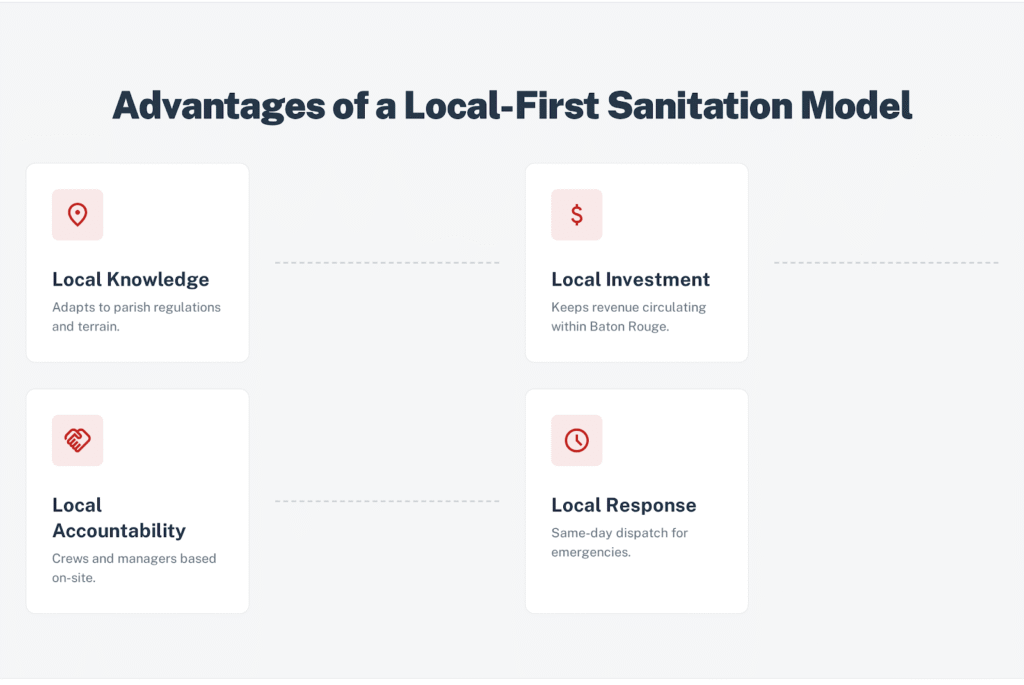
Even in industries where scale was once assumed to be the only advantage, local responsiveness is proving to be the real differentiator. In sanitation, speed and accountability matter more than app-based scheduling or automated routing.
Local Companies Are the Infrastructure
Trash Rangers isn’t just providing portable restrooms or septic pumping. It’s supporting the construction timelines that rebuild parishes, the festivals that bring families together, and the emergency operations that keep neighborhoods safe. As demand grows for reliable, human-driven service, Baton Rouge’s local companies are showing what sustainable infrastructure looks like.
“Being local isn’t our marketing angle,” Poche says. “It’s our structure. It’s how we work.”
In a city that values resilience and community, that structure is paying off. Trash Rangers is proof that when ownership stays close to home, service gets closer to perfect.