


Written by Cooper Knight

The most powerful force in cinema is the one you never see. It operates in the subtle pause that builds tension, in the precise cut that releases laughter, and in the emotional rhythm that guides an audience through a story. This is the art of the film editor, and emerging as a master of this invisible craft is Xinhui Wang. Her growing portfolio—spanning gritty realist dramas, poignant documentaries, and award-winning shorts—showcases a rare talent for finding the universal heartbeat in every story she touches.
From Global Roots to a Universal Touch
Xinhui Wang’s path to editing can be traced to a dawning realization in her hometown of Heihe, China. While her childhood was filled with movies, it was the visceral punch of Old Boy that served as her true awakening and shifted her perspective from that of a spectator to that of a future editor. She was less captivated by the story itself than by its construction—how the specific arrangement of scenes and the control of pace could elicit such a powerful emotional response. This compelled her to seek a global education, first through disciplined film studies in South Korea, and later at the University of Southern California, where she could fully dedicate herself to mastering the art of cut that had first captured her imagination. It was there she fully dedicated herself to the editor’s track. Her global perspective and academic rigor now inform a growing portfolio that showcases a rare ability to find the universal heartbeat in every story she touches.
Wang’s approach to editing is both her methodology and her signature. “Editing is the final rewrite of a story,” she states, “but its consciousness must be present from the very first day. When a script is written and when a scene is shot with the awareness of ‘how will this ultimately cut together,’ that is when a truly seamless and moving piece of cinema is born.”
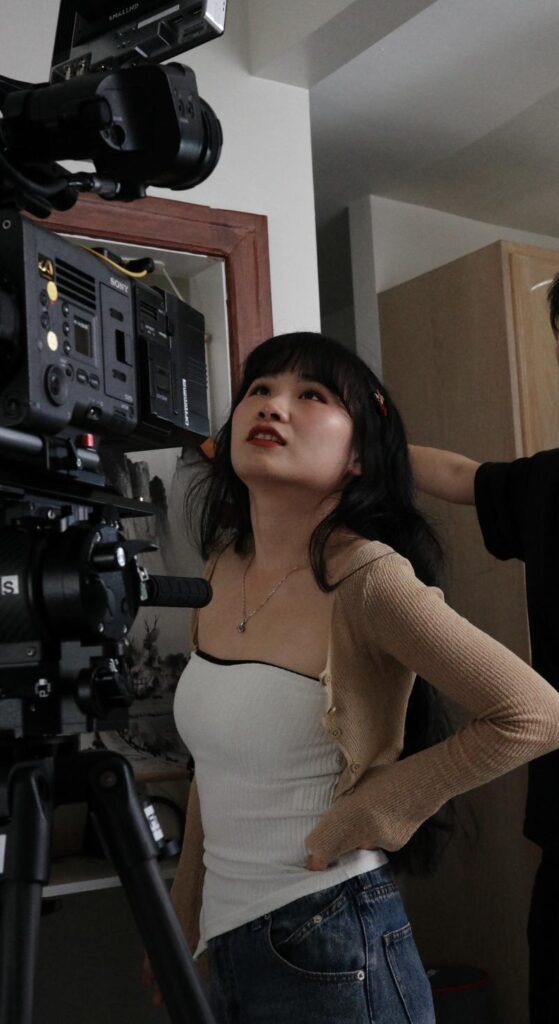
Rewriting Goodbye Stranger in the Edit
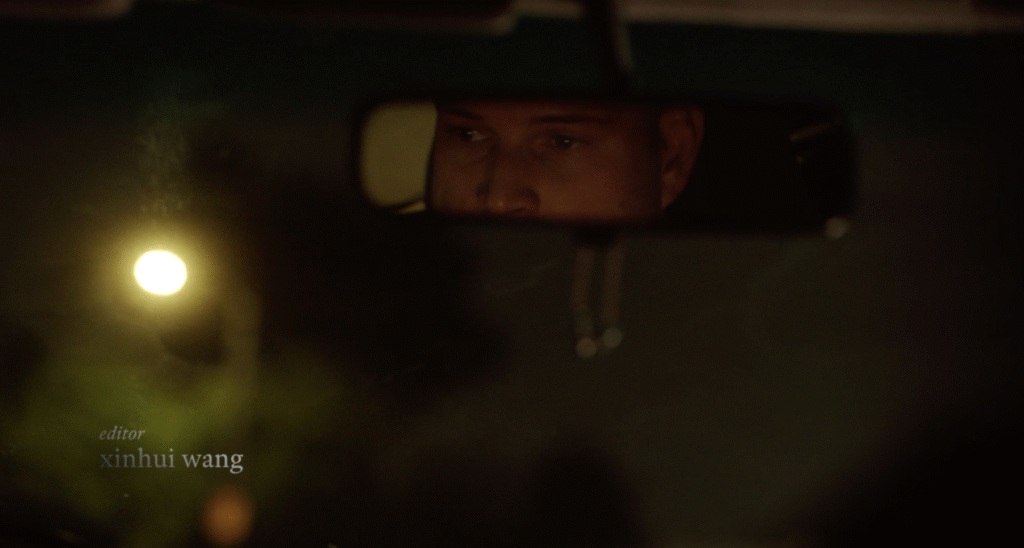
This editing skill was put to the test in the narrative short Goodbye Stranger. The initial cut, faithful to the script, lacked the emotional dynamism the story demanded. The director, seeking a breakthrough, empowered Wang to deconstruct and reassemble the film’s very chronology.
Faced with this challenge, Wang saw not an obstacle, but an opportunity. “I wasn’t afraid to re-write the story in the edit,” she says. Liberated from the script’s linear framework, she experimented with non-linear structures, finding a new rhythm that masterfully amplified the tense, tragic relationship between a conman father and his daughter. The process was one of intense, meticulous refinement, where the emotional weight of a scene could hinge on the placement of a mere two frames. Her innovative work was instrumental in transforming the film, earning it a nomination at the prestigious Micheaux Film Festival.
The director of the project, later commended Wang’s transformative contribution, “Xinhui didn’t just edit the film; she rediscovered its soul. Her intuitive sense of rhythm and fearless approach to narrative structure were pivotal. She is the first editor I will call for my next project.”
The Disciplined Vision of Can You Hear Me?
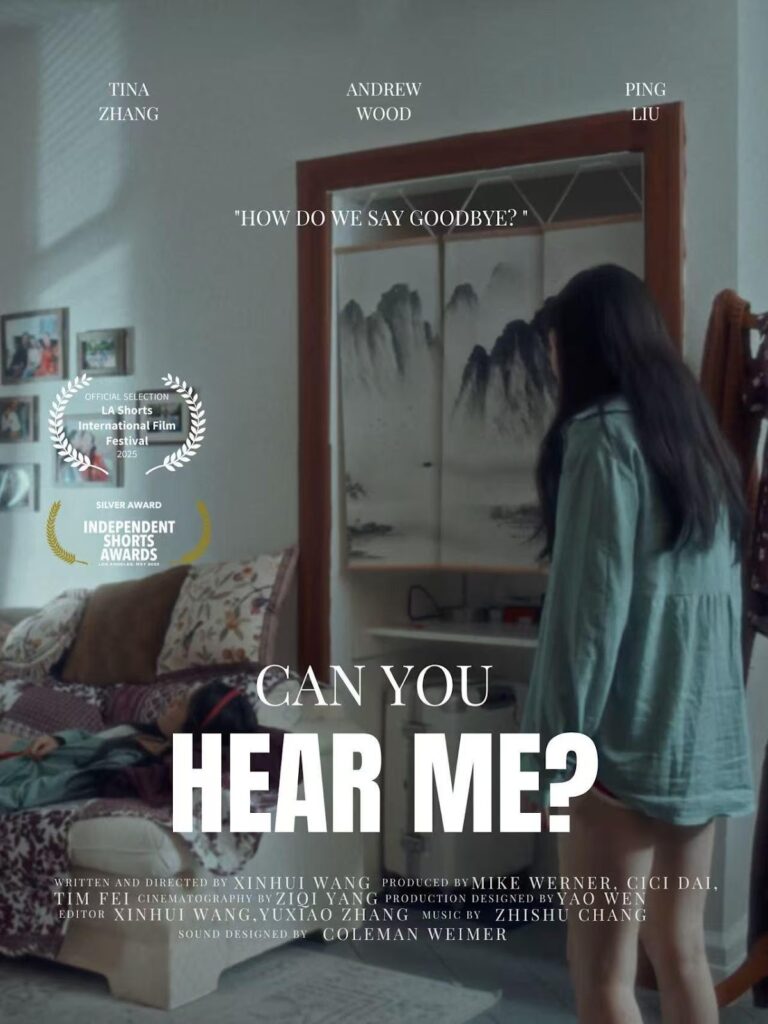
In the fantasy drama Can You Hear Me?, which she wrote, directed and lead edit, Wang faced a different editorial test: the discipline to “kill her darlings.” The film, which poignantly explores the generational and cultural chasms in a Chinese immigrant family, contained a powerfully acted scene of a mother’s farewell. “The performance was breathtaking, but the scene’s emotional core was redundant with an earlier moment,” Wang explains. Despite her dual attachment to the scene as both writer and director, her sharp editorial instinct as an editor on the cut identified it as a barrier to the film’s narrative flow. She championed its removal—a difficult but crucial decision that tightened the story and amplified its impact. This editorial clarity was a key factor in the film’s success, leading to an official selection by the LA Shorts International Film Festival, a screening at the Regal LA Live Theater, and the award for Best Fantasy Short at the Independent Shorts Awards.
Beyond the Festival Circuit: Impact in the Professional Realm
While her festival accolades are significant, Wang’s editorial skills have also made a substantial impact in the professional arena. A notable example of her technical versatility and ability to communicate complex subjects is her work as the lead editor for a series of high-profile advertisement and promotional films for the Chinese National Center for Nanoscience and Technology. In this role, Wang was tasked with translating advanced scientific concepts into compelling visual narratives for public consumption. Her edited films, distributed widely across the Center’s official public platforms, were praised for their clarity and engaging pacing, generating significant audience engagement and contributing to broader public understanding of nanoscience.

Currently, Wang is an integral member of the editorial team at DramaBox, a leading global short-drama company whose app boasts millions of downloads. In this fast-paced environment, she applies her nuanced understanding of pacing and story structure to hit series that garner hundreds of thousands of views. Her ability to contribute to compelling narratives for a massive, global audience demonstrates a remarkable versatility, bridging the gap between intimate festival darlings and mainstream digital entertainment.
Vision for the Future: The Human Element in a Digital Age
Looking forward, Xinhui Wang is driven by a dual ambition: to helm the editing of feature-length narrative films and to advocate for greater recognition of the editorial craft. In an industry increasingly fascinated by artificial intelligence, she offers a confident and humanistic perspective on the future.
“There is a conversation about AI in editing, but I believe the core of this craft is unassailably human,” Wang contends. “It demands intuition, empathy, and a subjective understanding of human emotion—the very things a machine cannot learn. My goal is to work on projects that achieve both critical and commercial success, and in doing so, highlight the editor’s vital, irreplaceable role. The best stories are felt, not just processed, and that requires a human heartbeat.”
With a meticulous eye, a profound respect for narrative, and a global perspective, Xinhui Wang is more than an editor; she is an essential architect of cinematic experience. She doesn’t just find the rhythm of a story—she builds it, frame by deliberate frame, establishing herself as a creative force whose invisible hand leaves a lasting and visible impression.