

As the Gifford Fire swept through Los Angeles’ Padres National Forest, flames moved southward, blanketing Las Vegas under a suffocating haze that sent the city’s air quality index (AQI) plummeting to a two-year low. From western Canada to Nevada and California, AQI levels soared into the “Very Unhealthy” and even “Hazardous” categories.
Year after year, wildfire seasons and recurring health warnings force us to confront a sobering question: Behind tightly closed windows and doors, is your air really safe to breathe?
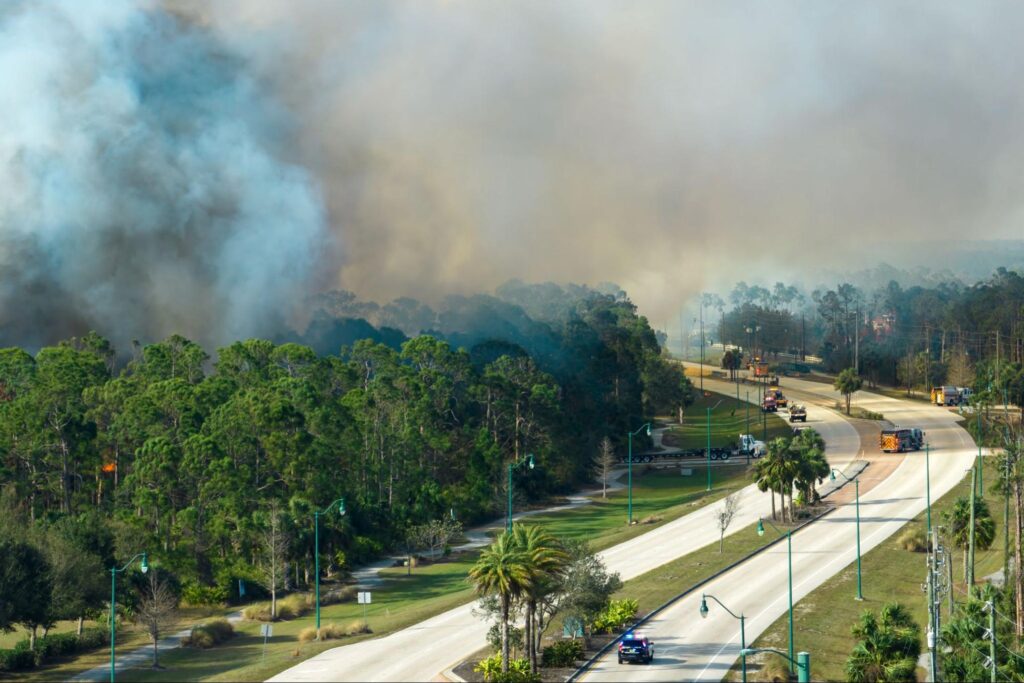
Photo credit: Envato
Invisible Threats in Wildfire Smoke
The U.S. AQI is EPA’s index for reporting air quality.
EPA establishes an AQI for air pollutants regulated by the Clean Air Act. Air Quality Crisis Explained: When the Index Breaks the Health Threshold — once the AQI reaches 200, it is already harmful to the human body.
• PM2.5 — The Invisible Killer
These fine particles can penetrate deep into the lungs and bloodstream, triggering inflammation, cardiovascular disease, and acute asthma attacks. Long-term exposure increases risks of heart disease and lung cancer.
The WHO notes that each 10 μg/m³ rise in PM2.5 raises daily mortality risk by 0.68%. Research in the Journal of the American Heart Association found long-term exposure increases cardiovascular death risk by 11% and lung cancer mortality by 15–21% — particularly harmful for children, pregnant women, the elderly, and those with chronic respiratory conditions.
• Carbon Monoxide (CO) — The Silent Asphyxiant
Wildfires produce large amounts of CO. In downwind areas, concentrations may reach 70 ppm, posing serious risks to people with heart or lung disease.
• Volatile Organic Compounds (VOCs) — The Overlooked Carcinogens
Smoke contains benzene, formaldehyde, and other carcinogens. During severe fires, benzene levels may rise several to ten times above safe limits, significantly increasing long-term cancer risks.
• Ground-Level Ozone — The Lingering Lung Irritant
Unlike the protective ozone layer in the upper atmosphere, ground-level ozone is harmful. According to the American Lung Association, each 25 ppb increase in ozone correlates with a 3–5% rise in asthma-related emergency visits.
Even after visible smoke dissipates, ozone continues forming under sunlight for 1–2 days — meaning the health threat lingers long after the flames are gone.
Health authorities therefore recommend limiting outdoor activity, keeping windows closed, and using HEPA filtration indoors to reduce exposure.
Wildfire Season: Home Air Protection Guide
The U.S. Environmental Protection Agency (EPA) and Centers for Disease Control and Prevention (CDC) recommend the following steps for residents affected by wildfire smoke:
- Create a “Clean Air Room”: Choose a frequently used room, close windows and doors, and seal gaps with tape or damp towels.
- Purify Indoor Air: Use a HEPA air purifier or upgrade HVAC filters to reduce indoor PM2.5.
- Reduce Indoor Pollution Sources: Avoid smoking, burning candles, or using gas stoves and aerosol sprays.
- Stay Protected When Going Out: Wear N95/KN95 masks; use vehicle air recirculation mode with high-efficiency filters.
- Protect Sensitive Groups: Pay special attention to children, the elderly, pregnant women, and those with heart or lung disease.
- Stay Informed: Monitor local air quality updates and adjust activities accordingly.
AlorAir CleanShield HEPA 550 Air Scrubber — Your First Line of Defense During Wildfire Season
Built for durability, portability, and professional-grade performance, the AlorAir CleanShield HEPA 550 has become one of the best-selling HEPA air scrubbers during wildfire season — the ideal choice for creating an efficient “Clean Air Room.
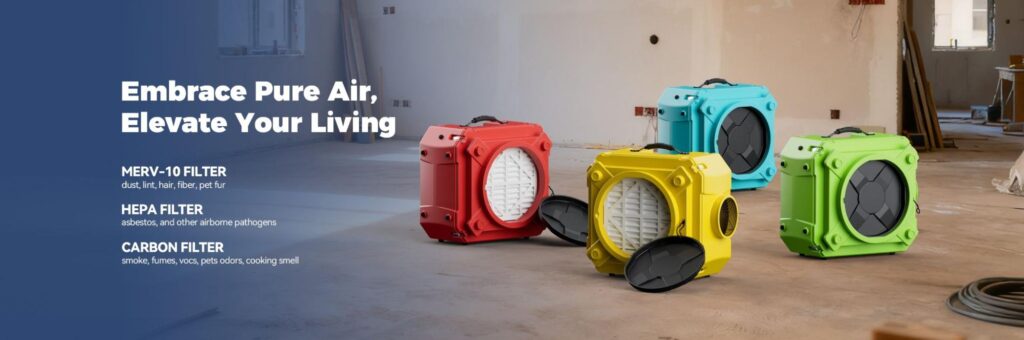
Photo credit: AlorAir

Triple-Layer Industrial Filtration System
- MERV-10 Pre-Filter: Captures visible dust and large airborne particles.
- HEPA + Activated Carbon Filter: HEPA filtration removes ≥0.3 μm particles including PM2.5, pollen, mold spores, and bacteria, while the activated carbon layer absorbs wildfire-related VOCs, nitrogen dioxide, and odors, delivering comprehensive air purification.
Flexible and Stackable Design
The CleanShield HEPA 550 is designed for both residential and commercial applications.
In post-fire recovery or restoration projects, three stacked units can generate powerful airflow to clean large spaces up to 30% faster, minimizing secondary contamination.
Its lightweight and portable design make it ideal for homes, schools, offices, hospitals, and restoration companies.
For large-scale cleanup after wildfire events, its GFCI dual-stack power capability provides enhanced output for high-demand purification tasks.
When Air Quality Reaches a Breaking Point, Protection Begins Indoors
Choosing a trusted air purification system is not only an act of responsibility for your family’s health — it’s a commitment to quality living.
Wildfires will eventually fade, but the invisible threats they leave behind can linger far longer.
Safeguard every breath — starting today.
At AlorAir, we care about our communities breathing in purity.
AlorAir remains committed to protecting the air you breathe and helping communities rebuild clean, healthy environments after wildfire season.