

Most people don’t wake up excited to compare a cell phone network provider. They start looking because something feels off. Calls drop in the same spot every day. Video buffers even though the plan claims fast speeds. A map refuses to load right when you need it. That frustration usually leads to the same question: “Is it my phone, or is it my network?” In many cases, it’s the network. And once you start paying attention to how a cell phone network provider performs, you realize that the differences aren’t just about marketing. They show up in the small moments that define daily life—whether your phone works in your living room, in the parking lot outside your office, or on a road trip through unfamiliar towns.
This guide breaks down what a cell phone network provider actually is, what coverage maps can and cannot tell you, and how to compare speed and reliability in a way that matches real-world use.
What a cell phone network provider actually does
A cell phone network provider is the company behind the infrastructure that connects your phone to the wider world. That includes cell towers, spectrum licenses, and the systems that manage how devices share network resources. When you make a call, your voice travels through that network. When you send a photo, it moves through that network. When you open a website, your phone is constantly negotiating the best connection available based on signal strength, tower capacity, and network technology.
In practical terms, a cell phone network provider influences three big things you feel every day: whether you have signal, how fast your data loads, and how consistent that experience is when the network is busy.
Coverage maps: helpful, but not the whole story
Coverage maps are usually the first thing people check when comparing a cell phone network provider. They seem straightforward: more colored area equals better coverage. But coverage maps are often best viewed as a starting point rather than a verdict. They’re typically based on predictive modeling that estimates outdoor signal strength across a region. That can be useful for big-picture planning, but it doesn’t always reflect what you’ll experience indoors, in cars, or in places where signal behaves unpredictably, like valleys, dense neighborhoods, and high-rise areas.
Another issue is that coverage can exist without being usable. A map might show coverage, but if the signal is weak or the tower is overloaded, the experience can still feel slow and unreliable. This is why people sometimes say they “have bars” but nothing loads. The network is technically present, but performance isn’t meeting the moment.
When using coverage maps to compare a cell phone network provider, it helps to focus on the places that matter most: your home, your workplace, your commute, and any areas you regularly travel. The more specific your evaluation, the less you’ll be misled by a broad, optimistic map.
Understanding speed beyond the headline numbers
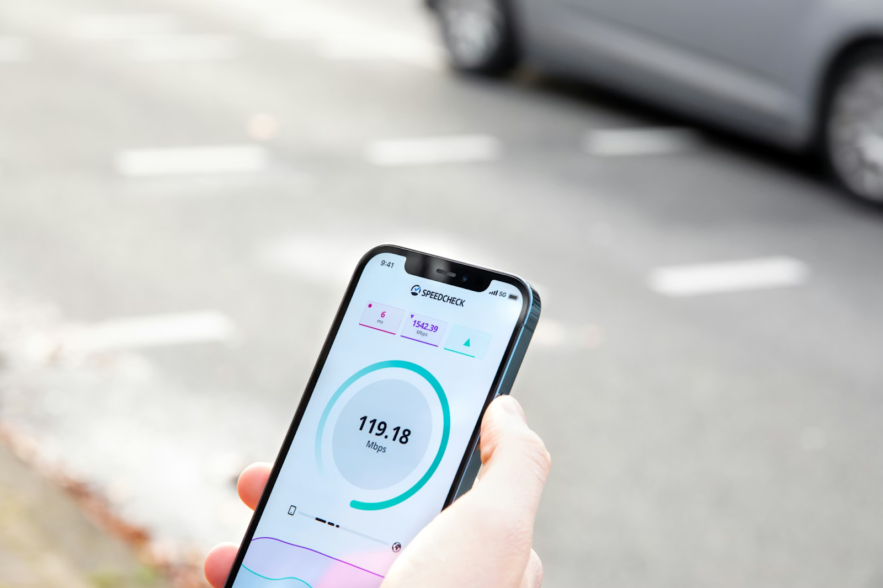
Speed is one of the most advertised features of a cell phone network provider, and it’s also one of the easiest to misunderstand. The speed you experience depends on more than the network’s maximum capability. It depends on distance from a tower, the frequency band in use, the number of people connected to the same tower, and even the building materials around you.
Many people associate speed with 5G, but 5G itself isn’t one single thing. Depending on what spectrum is used, 5G can be fast but short-range, or slower but far-reaching. A cell phone network provider may have widespread 5G coverage that feels similar to strong 4G in real-world use, or limited 5G coverage that delivers very high speeds in certain areas. Neither approach is automatically “better.” The right network depends on where you live and how you use your phone.
Speed also needs context. If you primarily browse the web, use social media, and stream music, you don’t need extreme speeds—you need consistent speeds. If you stream HD video, play online games, upload large files, or rely on hotspot, you’ll care more about both download and upload performance, plus stability.
Reliability is the difference between “fast sometimes” and “good every day”
Reliability is what people often mean when they say they want “good service.” It’s not just speed. It’s consistency. It’s whether your phone works during rush hour, in crowded venues, or in the same dead spot where you always lose signal. A cell phone network provider can have excellent average speeds in testing but still feel unreliable if performance swings dramatically depending on time and location.
Reliability is also shaped by congestion. In busy areas, lots of phones compete for limited network resources. A well-built network handles that pressure better, maintaining usable speeds even when demand is high. Congestion is the reason someone might say a network is great at 10 a.m. and terrible at 6 p.m. The infrastructure didn’t change—demand did.

The role of network technology in your daily experience
Even if you never think about it, your phone is constantly switching between different types of network connections to stay online. A strong cell phone network provider offers smooth transitions between these layers. That means fewer dropped calls, fewer moments where data freezes, and fewer situations where your phone struggles to reconnect after entering a building or riding an elevator.
Your device matters too. A newer phone may support more frequency bands and better antennas, allowing it to connect more efficiently. But even the best phone can’t overcome weak network coverage. That’s why choosing the right cell phone network provider remains the foundation of a good mobile experience.
How to compare providers in a practical way
If you want to compare a cell phone network provider without getting lost in technical jargon, focus on your real-life needs. Think about whether you value indoor reliability, rural coverage, or consistently strong speeds in busy areas. Then test that reality as much as possible. Trial periods can be incredibly helpful because they reveal the everyday experience that maps and marketing can’t fully capture.
It also helps to talk to people nearby. The best “coverage review” is often a neighbor or coworker who uses their phone in the same places you do. Their experience can quickly confirm whether a cell phone network provider performs well in your area.
Closing thoughts
A cell phone network provider isn’t just a brand behind a plan—it’s the system that determines whether your phone works when you actually need it. Coverage maps can guide your search, but real-world reliability and consistent performance should be the final deciding factors. When you compare providers, focus on the places you live and move, and prioritize a network that feels stable across your normal routine. A slightly cheaper plan isn’t a win if the network can’t deliver dependable service where your life happens, day after day.