

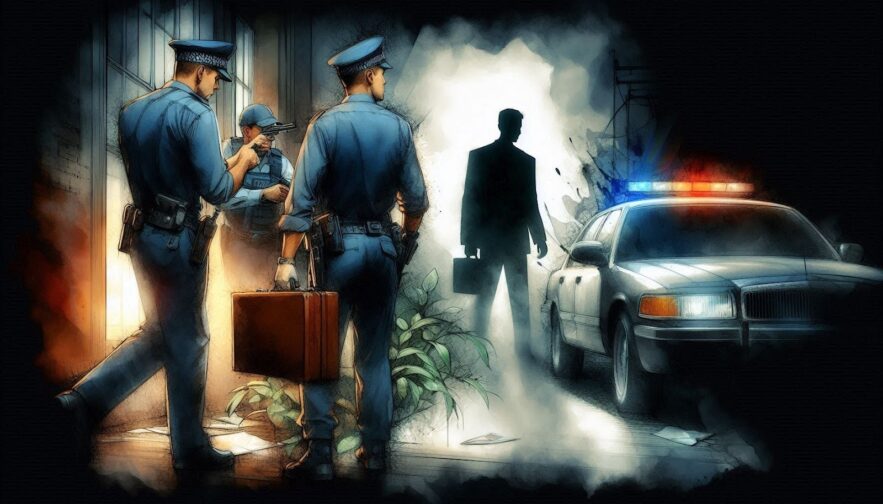
International manhunts are getting faster, smarter, and far more difficult to escape.
WASHINGTON, DC.
For fugitives in 2026, the biggest fear is no longer just the knock on the hotel-room door or the surprise arrest at an airport gate. It is the silent match.
A fingerprint lifted years ago. A face compared against an image bank. A border photo checked in seconds. A false passport that gets past one officer but not the system behind him. One biometric hit can turn a man who thought he was invisible into a live target again.
That is why the new global dragnet scares people on the run so much. It is not one giant sci-fi database controlling the planet. It is more practical and, in many ways, more dangerous. Interpol’s biometric systems, stolen-document records, border-technology systems, and international police cooperation are starting to close the cracks that fugitives used to squeeze through. What used to be a game of aliases, fake papers, and lucky geography is becoming a harder game of matching bodies to data.
The old escape fantasy is dying.
For decades, the fugitive dream ran on simple assumptions. Change your name. Shave the beard. Dye the hair. Buy better documents. Avoid countries with strong extradition ties. Use cash. Keep moving. Never stay anywhere too long.
That logic still buys time in some cases. But it is weaker now because names can change faster than biometrics do. A passport can be forged. A supporting identity can be layered. A backstory can be rehearsed. But fingerprints remain fingerprints, and facial recognition systems do not care how many stories a person talks about who he is.
Interpol has been pushing that reality much harder through its biometric infrastructure. Its Biometric Hub, launched in late 2023 and rolled out to frontline officers and border points, was designed to let member countries check fingerprints and facial images against Interpol’s criminal databases quickly. That matters because it changes the old timing advantage fugitives used to enjoy. The question is no longer only whether an officer recognizes a face. The question is whether the image or print in front of that officer can be matched against a much wider international pool before the suspect slips away.
This is not one database; it is a web.
That distinction matters.
People often talk about “the Interpol database” as if there is one giant vault of criminal identities. The reality is broader. Interpol maintains databases tied to fingerprints, facial recognition, DNA profiles, and travel documents, including records of stolen and lost passports. At the same time, countries are building or expanding their own biometric border systems, facial comparison tools, and document-fraud detection programs.
That means fugitives are not just dodging one list. They are moving through a widening web of checks.
A face presented at a border can be compared to travel documents. A fingerprint taken during a police stop can be searched against criminal records. A suspicious passport can trigger document scrutiny. A traveler who clears one country can still stumble in another, where the systems, officers, or legal thresholds differ. The danger comes from the overlap.
That overlap is what makes the modern dragnet so unnerving. It does not have to be perfect everywhere. It only has to work in the wrong place once.
The quiet biometric hit is what destroys the illusion.
This is the part fugitives hate most. There is often no warning.
A person can spend months believing he has managed the risk. The new identity seems to hold. The route seems safe. The airport routine becomes familiar. The border crossing feels normal. Then one scan takes a little too long. One officer glanced twice at a screen. One supervisor appears. The traveler is asked to step aside.
That is the real shock of biometric enforcement. It can look like nothing right up until it becomes everything.
Interpol itself has made clear why these matters. A fugitive can change his name and alter parts of his appearance, but biometric data is much harder to escape. That is why the people who live under false identities are often more afraid of being processed than being watched. A camera may miss them. A person may overlook them. But a print, a face match or a document discrepancy can suddenly cut through years of careful hiding.
Border systems are becoming part of the hunt.
That is one of the biggest 2026 shifts.
The dragnet is no longer just about detectives hunting from the shadows. Border security itself is becoming a more important piece of the chase. In the United States, CBP’s biometric travel systems are now deeply tied to identity verification, using facial comparison technology to match travelers to their documents and strengthen screening at ports of entry and departure.
That does not mean every airport instantly catches every wanted person. It does mean the simple act of travel is getting riskier for anyone relying on disguise, impostor tactics, or bad documents. Every border interaction produces a chance for a mismatch, an alert, a delay, or a deeper inspection.
For fugitives, that creates a miserable strategic problem. If they keep moving, they expose themselves to more checkpoints. If they stop moving, they become easier to pattern and easier to find. Movement used to be a shield. In many cases now, it is the hazard.
False documents are no longer enough by themselves.
This is why the fake-passport fantasy keeps breaking down.
A forged passport can still fool human beings. So can a lookalike traveler with enough nerve and a convincing script. But document fraud has become less reliable when systems can compare faces, flag inconsistencies, and check reported lost or stolen travel documents through international channels.
Interpol’s databases are particularly dangerous in cases where the fugitive relies on document substitution. A stolen or revoked passport is not just a piece of paper. It is data. Once that data is in circulation, the document becomes a liability. And when a face or fingerprint does not align with the identity being presented, the entire cover story starts wobbling.
That does not mean document fraud is dead. It means the margin for error is shrinking. The old tricks can still work at weak points, but they are less dependable when more of the travel chain is digital, searchable, and connected to international policing.
The dragnet is getting smarter, and the politics are getting harder.
Technology is only part of the problem for fugitives. The other part is pressure.
Once biometric systems, border databases, and international alerts make a subject more visible, politics can do the rest. A person who was tolerated yesterday can become suddenly inconvenient tomorrow. A country that looked passive can start cooperating after a diplomatic push, a public scandal, or a surge of press attention. Once a biometric or identity match helps confirm the target, the argument shifts from rumor to action.

That is why international fugitives are living in a more unstable world now. It is not just that the systems are better. It is that better identification makes governments more confident about who they have in front of them. And once a government is confident, detention and extradition pressure become much easier to justify.
Even private-sector advisers such as Amicus International Consulting’s overview of extradition and Red Notice risk describe the same reality from the opposite side of the problem, namely that once identity, movement, and legal exposure start connecting across borders, the situation can escalate fast and become much harder to contain.
Facial recognition is spreading, and that changes the odds.
The broader law-enforcement climate matters too. Reuters reported in December that Britain is expanding police facial recognition, underscoring a larger trend that goes well beyond one country. More police forces and border agencies are leaning into facial comparison tools because they see them as fast, scalable, and useful for identifying suspects who might otherwise blend into crowds, terminals, or camera footage.
That expansion raises really civil-liberties concerns, and those concerns are not trivial. Critics warn about privacy, overreach, and mistakes. They are right to do so. Biometric policing is powerful precisely because it can reach so far, and anything that powerful deserves scrutiny.
But from the fugitive’s point of view, the operational takeaway is brutally simple. The world is becoming less forgiving of faces that appear where they should not appear.
A man on the run may not be picked up by a camera today. He may not be matched tomorrow. He may pass through five airports and clear six hotel lobbies without trouble. Then one image, one checkpoint, one comparison, or one officer with the right tools ends the streak.
Why long-running fugitives still get caught.
Because life on the run is not just about avoiding police. It is about surviving systems.
The longer a fugitive hides, the more he has to travel, document himself, rent, book, move money, meet people, and exist inside ordinary processes. Every one of those processes is becoming more data-rich. And the more ordinary life he tries to build, the more opportunities there are for a biometric or identity event to expose him.
This is why so many “untouchable” fugitives eventually fall in mundane places. Not in jungle raids. Not in movie-style chases. But at borders, airports, hotels, police checks, and bureaucratic moments where their bodies have to answer the question their documents are trying to dodge.
That is the part they fear most in 2026. Not just the warrant. Not just the tip line. Not just the informer.
The match.
A face against a file. A print against a record. A passport against a database. A false life colliding with systems that are getting faster, smarter, and less willing to guess.
For fugitives, that is the new global nightmare. The dragnet is no longer just looking for your name.
.