

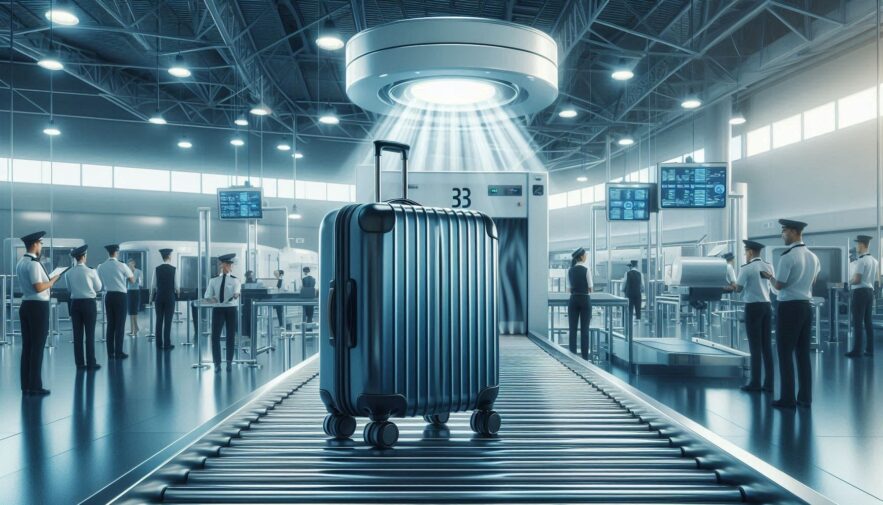
Major carriers roll out self-service kiosks that use facial recognition to link your suitcase to your digital ID instantly.
WASHINGTON, DC.
The luggage line is becoming the next target for airport automation
The airport bag drop, long defined by printed tags, counter queues, scale belts, passport checks, and anxious travelers weighing suitcases under fluorescent lights, is now being redesigned around facial recognition, digital identity, and automated baggage acceptance.
Major carriers are moving biometric verification from the security checkpoint into the lobby, where passengers can tag a suitcase, look into a camera, link the bag to a verified travel profile, and continue toward screening with fewer manual interruptions.
The promise is simple, because the fastest version of the new process could make a checked bag feel almost as quick as tapping through a subway gate, provided the traveler has enrolled correctly, and the bag meets airline rules.
The technology does not remove security responsibility, baggage screening, weight limits, customs requirements, or human exception handling, but it changes the most visible customer experience by reducing the time spent proving identity at the counter.
For frequent flyers who already use TSA PreCheck Touchless ID, airline apps, mobile passports, and digital travel credentials, biometric bag drop is becoming the missing link between curbside arrival and the automated security lane.
A suitcase is no longer just a suitcase once it is tied to a verified face
The new biometric bag drop model starts with a practical airline problem: every suitcase must be linked to the correct passenger, route, flight, destination, liability record, and security trail before it can enter the baggage system.
Traditional check-in now looks increasingly outdated because it relies on human review, printed tags, boarding passes, passports, driver’s licenses, payment records, and airline agents who must confirm that the person at the counter matches the reservation.
Biometric bag drop compresses that process into a shorter sequence: the kiosk scans the bag tag, retrieves the reservation, verifies the traveler using a document or digital identity profile, and uses a live facial image to confirm the match.
Industry coverage of Alaska Airlines’ automated bag drop deployment in Seattle and Portland described a process in which travelers scan a bag tag, verify their identity, receive an optional facial scan, and proceed after the bag is accepted.
That model shows why the technology matters: the face is not merely opening a line; it is connecting the traveler to the physical suitcase before the bag disappears into an airport system that may span terminals, airlines, and borders.
The passenger sees a faster transaction, but the airline sees a cleaner chain of custody, fewer counter delays, stronger identity assurance, and better alignment between the person who checks the bag and the itinerary that carries it.
Delta and other major carriers are turning bag drop into a biometric proving ground
Delta has been one of the most visible United States airlines pushing biometric airport flow, including dedicated Touchless ID bag-drop signage, app-based enrollment, and hub-level ground experience upgrades designed to reduce document handling.
The airline’s approach matters because bag drop sits at the beginning of the passenger journey, where even a small delay can create frustration that follows travelers through security, lounges, boarding gates, and onward connections.
When a passenger can arrive with a digital profile already prepared, tag their bag, verify it with a camera, and move toward security without showing physical identification, the entire departure sequence begins to feel more coordinated.
The Transportation Security Administration’s official Touchless ID program has accelerated that shift by making facial comparison familiar to PreCheck travelers who already expect identity verification to happen through a camera rather than a document handoff.
The same concept is now migrating upstream into bag drop, because the traveler’s biometric profile can support both identity confirmation at the lobby and faster verification at the checkpoint when airline and government systems align.
That alignment is commercially powerful because the airline wants fewer counter queues, the airport wants better lobby flow, TSA wants stronger identity verification, and the passenger wants a faster route from entrance to gate.
Under 10 seconds is the marketing dream, but the real victory is predictability
The phrase “checking luggage in under 10 seconds” captures the ambition behind biometric bag drop, although actual times will depend on enrollment status, bag weight, payment issues, destination rules, airline staffing, and system reliability.
A perfectly prepared traveler with a tagged bag, a valid digital profile, an eligible itinerary, no fee dispute, and no unusual routing may complete the identity portion almost instantly, which is where the 10-second promise becomes plausible.
For most travelers, however, the larger benefit may be predictability rather than literal speed, because automated bag drop reduces the uncertainty created by counter lines, staffing shortages, paper documents, and manual identity checks.
A family with oversized luggage, an international passenger with visa requirements, or a traveler carrying sports equipment will still encounter human review because automation works best when the journey is simple, and records are clean.
That caveat does not weaken the technology’s importance, because airport transformation usually begins with the highest-volume routine cases before expanding into more complex situations as systems improve, staff adapt, and passenger behavior changes.
If biometric bag drop removes even part of the ordinary counter delay during peak departure periods, the savings could reshape airline staffing, lobby design, passenger satisfaction, and the economics of self-service airport processing.
The baggage counter is becoming part of the identity corridor
Airports are no longer treating check-in, bag drop, security, lounge access, boarding, and border control as separate experiences, because biometric identity allows each stage to recognize the same traveler in a controlled sequence.
A passenger who checks a bag via facial verification may then pass through a Touchless ID lane, enter a lounge via digital recognition, board via a biometric gate, and arrive at a foreign border already on a digital identity trail.
That does not mean one database automatically controls every moment, but it does mean the passenger’s face, passport, reservation, loyalty account, baggage record, and travel history can increasingly interact inside the same journey.
This is why biometric bag drop is more significant than an upgraded kiosk, because it brings luggage into the same identity ecosystem that already includes facial security checkpoints, digital boarding, automated gates, and international entry systems.
The suitcase becomes another data object linked to a verified person, and that link matters for mishandled baggage, security investigations, airline liability, customs declarations, and customer service recovery when bags go missing.
For the traveler, the emotional value is immediate, because a bag that enters the system through a clean biometric transaction may feel less likely to disappear into the anonymous machinery of airport logistics.
Privacy questions now follow the suitcase into the baggage system
The privacy concerns around biometric bag drop differ from those of ordinary facial recognition at security because the system does not merely confirm that the traveler may proceed through a checkpoint.
It links a person’s face to a physical bag, itinerary, destination, loyalty account, checked-item record, payment status, airport location, and time-stamped transaction that may become relevant if the luggage is delayed, inspected, or mishandled.
Airlines and technology providers may promise that images are deleted after matching, that biometric templates are encrypted, and that passengers can use manual alternatives, but the broader metadata question remains important.
Travelers increasingly want to know what is stored, which organization stores it, whether the airport or airline controls the record, how long transaction logs remain, and whether the data can be shared with government agencies.
Those concerns are not irrational because baggage records have always been important to aviation security, and biometric bag drop makes those records more directly connected to the traveler’s physical identity.
The strongest systems will therefore need plain-language consent, clear retention rules, visible opt-out paths, transparent vendor responsibilities, and human assistance for passengers who decline facial recognition or cannot be verified successfully.
The private sector is racing ahead of public understanding
Airlines love biometric bag drop because it reduces friction, but public understanding is moving more slowly than deployment, especially when passengers encounter new camera-based systems during stressful travel moments.
A traveler rushing to make a flight may not carefully read a biometric consent notice, compare privacy policies, or understand whether a face scan is required, optional, airline-operated, government-linked, or vendor-managed.
That confusion creates a trust problem, because even a well-designed system can feel intrusive if passengers believe they are being pushed into facial recognition without understanding the alternative.
The airport industry must learn from earlier biometric controversies because passengers generally accept technology more easily when the process is voluntary, the benefit is obvious, and the fallback lane is dignified.
The fallback issue is especially important at bag drop, because a traveler cannot simply walk away from a checked suitcase process without risking a missed flight, a stranded bag, or an itinerary problem.
For biometric bag drop to become mainstream, airports must make manual verification easy enough that the choice feels real, not like a punishment disguised as a privacy option.
Automation changes staffing, not just passenger behavior
Biometric bag drop will also change the role of airline staff, because fewer agents may be needed for routine identity checks while more employees become responsible for exceptions, oversize items, fee disputes, disrupted itineraries, and passenger assistance.
That shift can improve service if airlines use automation to free skilled staff from repetitive transactions, allowing them to support travelers with genuine problems instead of scanning documents hundreds of times per hour.
It can also harm the experience if airlines treat automation mainly as a labor-saving device, leaving too few employees to help when kiosks fail, bags are rejected, or passengers cannot navigate the process.
The best airport lobbies will combine self-service speed with visible human support, because passengers trust automation more when they can quickly reach a trained person who understands the system.
Airline executives often describe automation as seamless, but travelers judge it by the exception: the kiosk that works perfectly is forgotten, while the one that fails becomes the story they tell for months.
That reality should guide deployment, because biometric bag drop can reduce queues only if the supporting infrastructure prevents minor technical issues from leading to missed flights or public frustration.
International travel makes the biometric bag drop more complicated
Domestic biometric bag drop is difficult enough, but international travel adds passport validity, visa rules, entry requirements, customs declarations, embargoed routes, agricultural restrictions, and government data obligations that cannot be solved by a face scan alone.
A camera can confirm that the traveler matches a profile, but it cannot by itself determine whether the destination country will admit the passenger, whether onward documents are valid, or whether a bag requires special handling.
This means biometric bag drop must remain connected to airline document-check systems, government travel authorization platforms, destination restrictions, and trained staff who can intervene before a passenger reaches the gate with unresolved issues.
The risk of overpromising speed is especially high on international routes, because travelers may assume a successful bag-drop transaction means every downstream border or document issue has been cleared.

Airlines will need careful messaging because biometric acceptance of a suitcase is not the same thing as immigration admissibility, customs compliance, visa approval, or guaranteed boarding.
The face can speed one stage of the journey, but it cannot replace the legal architecture that still governs passports, nationality, residence status, and cross-border movement.
Digital identity planning now begins before the airport
Biometric bag drop increases the importance of pre-trip preparation, because travelers who enroll correctly, update passport information, check names carefully, pay bag fees early, and confirm documents before arrival will benefit most from automation.
A passenger with mismatched names, expired identification, incomplete airline profiles, inconsistent loyalty records, or unresolved document issues may find that the biometric lane simply exposes problems faster than a traditional counter would have.
That is not a flaw in the technology, because digital identity systems are designed to reward consistency, but it does mean passengers must treat airline profiles as serious travel records rather than casual app settings.
For executives, public figures, investors, journalists, and families who value discretion, anonymous travel planning now includes understanding how biometric bag drop, digital boarding, trusted traveler programs, and airline data trails interact.
The objective is not to bypass lawful identification, because aviation security and border rules require verified identity, but to reduce unnecessary exposure while keeping records consistent across airlines, banks, governments, and travel platforms.
In the biometric airport, privacy belongs to the traveler who plans ahead, because improvisation creates friction and inconsistent records attract the attention that discreet travelers usually want to avoid.
Second passports must survive baggage-system scrutiny too
The rise of biometric bag drop also affects second-passport planning, because the passenger’s travel document, face, reservation, loyalty profile, baggage record, and destination history are increasingly connected at the start of the trip.
A lawful second passport remains valuable for mobility, contingency planning, residence options, and international access, but it must be supported by coherent records that can withstand automated verification across multiple systems.
Poorly structured identity strategies become riskier when the airport can compare documents, biometrics, bookings, and baggage activity in seconds, especially on international routes where airline liability and border compliance are closely monitored.
Through second passport and citizenship planning, travelers can evaluate how lawful nationality options interact with digital identity, baggage records, tax profiles, banking access, and biometric airport processing.
The point is not that second passports are weakened by automation, because legitimate documents remain powerful, but that the margin for inconsistency is shrinking as airports connect more stages of the journey.
A suitcase checked under one identity record, a passport presented under another, and a biometric profile that raises questions can create the kind of friction modern travelers are trying to avoid.
The end of the counter will be gradual, uneven, and irreversible
Biometric bag drop will not eliminate every airline counter, because airports will still need staffed positions for special assistance, unaccompanied minors, complex itineraries, pets, weapons declarations, oversize items, and irregular operations.
Some travelers will continue to prefer human interaction, and some airports will deploy the technology slowly because older terminals, union agreements, budget cycles, baggage-system layouts, and passenger demographics vary widely across the network.
Even so, the direction is unlikely to reverse because airlines have strong incentives to reduce lobby congestion, speed passenger flow, gather cleaner data, lower operating costs, and make the airport feel more digital.
The technology will probably expand first where airlines control major hub operations, passenger volumes are high, trusted-traveler adoption is strong, and airport layouts can support dedicated automated bag-drop zones.
Once passengers become accustomed to tagging a bag at home, verifying their identity with a camera, and walking away from the kiosk in seconds, the traditional counter will start to feel outdated.
The baggage lobby will not disappear, but its purpose will change from routine processing to exception management, with most ordinary bags entering the system through automated identity-linked lanes.
The suitcase is becoming part of the biometric journey
The rise of biometric bag drops marks a major shift in airport identity, because the traveler’s face is no longer used only to enter a security lane or board an aircraft.
It is now being used to attach a physical object to a digital journey, turning the suitcase into a verified extension of the passenger’s identity inside the airline and airport system.
That change can be good for passengers when it reduces lines, prevents bag confusion, improves tracking, and allows airline staff to spend more time helping travelers with complex issues.
It can also be risky if the industry fails to explain privacy rules, preserve opt-out rights, protect metadata, and provide real human support when automated systems fail.
The airport of the near future will not only ask who the passenger is, but also whether the bag, the face, the passport, the reservation, and the destination all match.
When that match happens smoothly, checking luggage may finally become one of the fastest parts of flying rather than the moment when the journey slows before it even begins.