

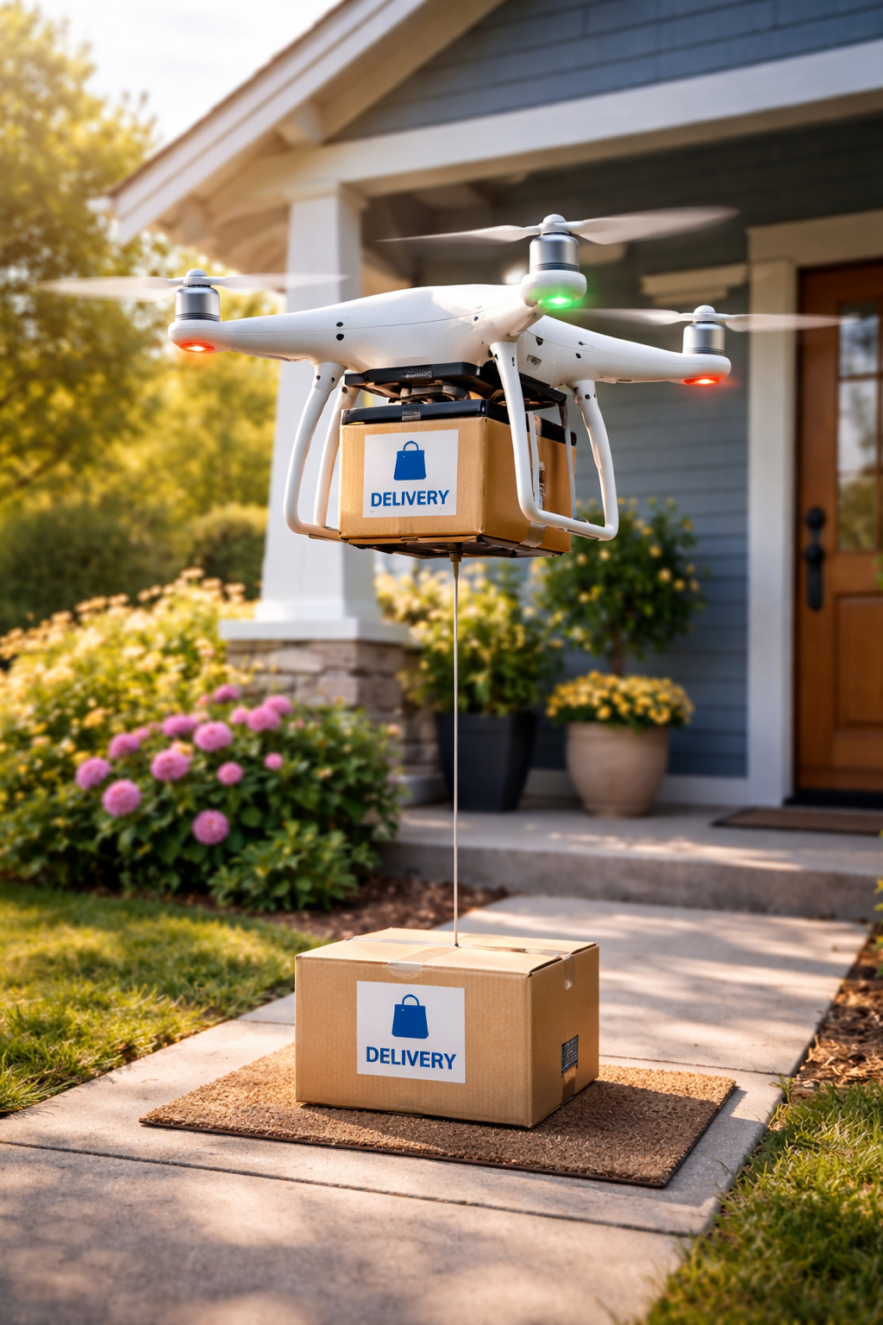
Remote deliveries break budgets quietly, then explode into customer complaints when roads fail, drivers lose daylight and urgent orders miss promised windows. Logistics leaders in remote regions manage long distances, low drop density, volatile weather and expensive backup trips that weaken service consistency.
The pressure is rising as the drone package delivery market is projected to reach $27.4 billion by 2030, growing at a 44.1% CAGR from 2025 to 2030. That momentum reflects a clear shift, because last mile drone delivery is moving from pilot headlines toward targeted operational use in difficult service zones.
Let’s learn how last mile drone delivery is gaining attention in remote areas and where it creates the strongest operational value.
What Makes Remote-area Deliveries Difficult for Traditional Networks
Remote logistics creates a cost and service gap that road fleets alone struggle to close, especially when demand is urgent and shipment sizes stay small.
- Sparse Demand Weakens Route Economics
Long distances and low shipment density raise delivery costs and reduce route productivity in remote areas.
- Terrain and Access Variability Disrupt Delivery Consistency
Road gaps, difficult terrain and weather disruptions create delays that standard routing plans cannot fully absorb.
- Wide Delivery Windows Increase Support Load
Larger buffers increase customer anxiety, status checks and pressure on support teams.
- Road-only Models Hit a Ceiling in Remote Zones
Road constraints limit reliability even when teams use route planning software and route optimization software.
- Fixed Planning Struggles When Conditions Change Mid-Route
Live execution visibility and intelligent route decisions are needed when delays, weather shifts or urgent insertions disrupt active routes.
These structural constraints explain why operators are exploring new delivery models that improve reach without expanding road fleets in every lane.
Why Last Mile Drone Delivery is Emerging as a Practical Remote Delivery Strategy
Interest is growing because operators need faster coverage in hard-to-reach areas, while still controlling unit economics and protecting service reliability.
- Bypasses Road Bottlenecks for Urgent Shipments
Direct aerial routes reduce delays for time-sensitive orders in regions with poor roads, heavy reliance on ferries or frequent access disruptions.
- Last Mile Drone Delivery Improves Service Reach in Hard-to-Access Communities
Remote clinics, villages and island locations can receive critical shipments more consistently without waiting for truck-route volume to build.
- Strengthens Remote Delivery Responsiveness
Urgent, lightweight items such as medicines and diagnostics can move faster, making drone operations a strong fit within broader last mile delivery optimization programs.
- Regulations are Making Commercial Conversations More Serious
Evolving aviation rules, approvals and Beyond Visual Line of Sight (BVLOS) pathways are making last mile drone delivery a more practical operational option.
- Intelligent Delivery Orchestration Improves Remote Execution Reliability
Orchestration platforms improve service consistency by aligning dispatch decisions, live tracking and exception response within a single control layer.
- Real-time Tracking and Route Optimization Strengthen Trust in Remote Deliveries
Tracking visibility and intelligent route optimization improve delivery speed, predictability and reliability in remote e-commerce and healthcare operations.
Growing attention is understandable, but durable adoption depends on a clear use-case fit rather than broad replacement assumptions.
Where Last Mile Drone Delivery Works Best in Remote-area Logistics
The strongest use cases combine urgency, lightweight parcels and difficult road access, where service gains outweigh added operating complexity.
- Healthcare Replenishment and Urgent Medical Routes
Last mile drone delivery works well for critical medical supplies moving to clinics with unreliable road access.
- Island and Mountainous Delivery Corridors
Last mile drone delivery adds value when ferry delays, blocked roads or weather disruptions affect ground fulfillment.
- Remote Industrial and Field-service Support
Drone deliveries reduce downtime by delivering critical spare parts to remote sites faster.
- Hybrid Dispatch Models With Targeted Drone Use
Multimodal last mile delivery optimization improves resilience by assigning drones to urgent drops and trucks to bulk volume.
- Smart Delivery Scheduling Improves Remote Service Flexibility
Constraint-based scheduling improves delivery flexibility, reduces idle time and supports better resource use in remote networks.
The best business cases come from focused lanes where urgency, terrain and low density create clear performance gaps.
What Logistics Leaders Must Evaluate Before Adopting Last Mile Drone Delivery
Remote drone operations can create measurable value, but economic benefits accrue only when leaders evaluate constraints with the same rigor applied to fleet programs.
- Regulatory Readiness and Operating Approvals
Last mile drone delivery requires operator approvals, airspace planning and local compliance rules before leaders can scale services confidently. Regulatory readiness should be reviewed lane by lane, because restrictions can vary across regions, corridors and operating conditions.
- Payload, Range and Weather Limitations
Many shipments exceed practical drone payload thresholds, especially when weather conditions reduce usable range and operational stability. Wind, rainfall and temperature windows should be carefully modeled before teams commit to service promises around drone capacity.
- Handoff Design and Proof Standards

Safe drop zones, landing constraints and recipient handoff rules shape customer experience and delivery completion quality. Strong proof standards must support claims handling, exception review and trust in remote delivery completion events.
- Integration With Visibility and Exception Systems
Last mile drone delivery cannot run outside core dispatch, tracking and customer communication systems if teams want to scale. Last mile tracking software should display flight milestones, fallback triggers and exceptions with the same clarity as road deliveries.
- Lane Economics and Service-level ROI
Teams should compare drone and ground options by urgency, service level, failure cost and recovery cost after missed deliveries. Clear evaluation criteria protect budgets and prevent pilots that create visibility but fail to improve outcomes.
- Data Visibility and Trend Analysis for Decision-making
Logistics leaders need platforms that track KPIs and delivery trends clearly so that teams can spot recurring failures and service bottlenecks early. Actionable trend intelligence improves reliability and helps reduce costs linked to failed deliveries, poor routing decisions and operational inefficiencies.
Once the evaluation criteria are clear, teams can launch pilots that solve real delivery problems and produce credible evidence of expansion.
How to Build a Practical Last Mile Drone Delivery Pilot?
A strong pilot should clearly solve one operational problem, then demonstrate repeatable results before leaders expand scope across more regions.
- Start With One Narrow Use Case
Choose one corridor, one shipment class and one pain point so early pilots stay disciplined and results remain easy to compare.
- Baseline Current Road Performance First
Measure lead time, cost per successful delivery, missed delivery rates and support escalations to benchmark last mile drone delivery impact accurately.
- Build SOPs for Dispatch, Handoff and Recovery
Define dispatch rules, handoff procedures, weather contingencies and backup routing before launch to improve repeatability and reduce confusion during exceptions.
- Unify Visibility Across Drone and Road Operations
Use last mile delivery tracking software and last mile delivery software to connect milestones, ETAs, proof events and exception responses in one view.
- Monitor Delivery Trends and Pilot KPIs Continuously
Track completion rates, delays, failed attempts and exception patterns to improve reliability and guide lower-risk expansion decisions.
Once a pilot gains repeat consistently, platform selection becomes a scale decision shaped by governance, visibility and operational resilience.
Move Forward With a Smarter Remote Delivery Strategy
Remote logistics pressure will keep rising as customer expectations tighten and service economics become harder across low-density routes and unpredictable access conditions. The teams that win will treat last mile drone delivery as a targeted capability within a broader last mile delivery optimization strategy.
That approach requires clear operating rules, integrated visibility and measurable lane economics before expanding beyond early pilots into production networks. With technology partners such as FarEye, teams can connect last mile drone delivery signals to control-tower workflows, customer updates and exception response.
The way forward is to adopt a last mile delivery optimization and tracking software approach that improves reliability first and strengthens decision-making through better operational visibility. Then, teams can scale remote coverage responsibly, lane by lane, with stronger execution discipline.