

Key Takeaways
- Check the ECT rating before you buy — a double wall box rated below 44 ECT won’t outperform a good single wall box, so the number matters more than the wall count.
- Match box strength to actual load: double wall boxes earn their keep on shipments over 40-50 lbs, long-haul freight, or anything stacked more than four high on a pallet.
- Popular sizes like 24x24x24, 20x20x20, and 18x18x28 double wall boxes sell out fast at retail stores, so sellers shipping heavy or bulky items should line up a bulk source before they run short.
- Compare double wall box vs single wall costs on a per-shipment basis, not per-unit — fewer damage claims and returns usually offset the higher upfront price.
- Don’t assume every heavy item needs the biggest double wall box available — oversizing wastes cash on shipping and void fill you don’t need.
- Buying custom size double wall boxes in bulk almost always beats piecing together retail near-me runs once you’re shipping more than a pallet a month.
Crush a $40 blender because the box gave out at 30,000 feet of cabin pressure and a rough tarmac ride, and you’ll understand why warehouse managers stopped trusting single wall corrugated for anything over 20 pounds. That’s the math playing out across fulfillment centers right now. Damage claims on heavy items shipped in standard boxes run higher than most sellers realize — and 2026 is the year a lot of them finally stopped ignoring it.
Double wall boxes aren’t new. But the reasons sellers are switching to them for heavy loads have gotten sharper, more specific, and honestly, harder to argue with. A single failed pallet stack in a hot truck, a crushed corner on a 24x24x24 shipment, one too many refund requests for a product that arrived fine except for the box that carried it — these add up fast. Realistically, the gap between what single wall can handle and what heavy ecommerce freight demands has been widening for years. This is the point where that gap becomes too expensive to ignore.
The 2026 shift: why heavy ecommerce loads are moving off single wall corrugated
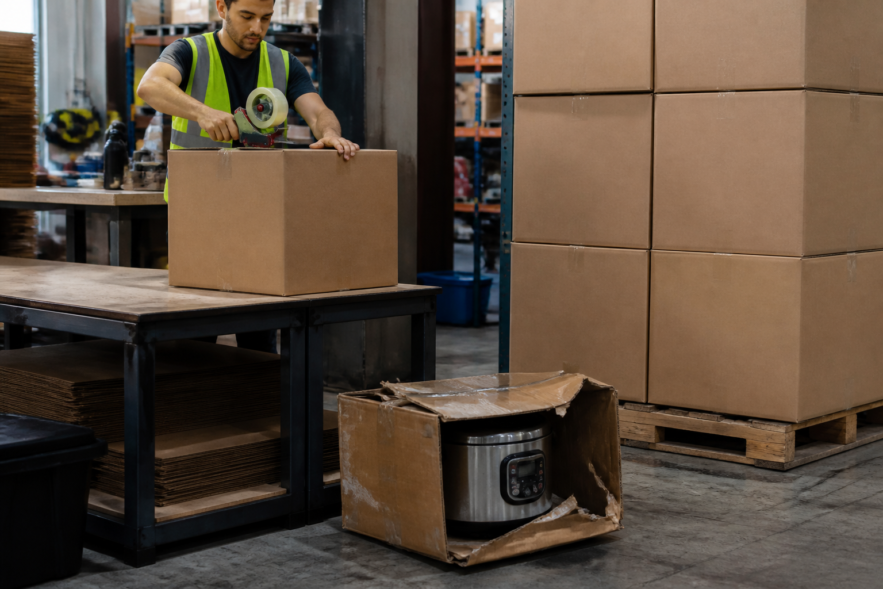
Picture a warehouse crew taping up a 42-pound countertop appliance in a standard single wall carton, only to watch the bottom seam blow out on the truck dock. That scene is playing out at fulfillment centers everywhere, and it’s why more shippers are switching to double wall boxes for anything over 30 pounds. Heavy duty shipping boxes aren’t optional anymore — they’re the baseline for protecting product and margin.
What actually separates a double wall box from a single wall box
Single wall corrugated uses one fluted layer sandwiched between two liners. Double wall stacks two flutes — three liners into one panel — roughly double the puncture resistance. That’s the difference between a small dent and a crushed corner on an extra large shipment.
Stacking strength and compression numbers that matter for warehouse pallets
Compression is where it counts. A typical medium single wall box tops out near 32 ECT, while a comparable 20x20x20 double wall box or custom size double wall boxes built for pallet duty often hit 275 lb. burst test ratings. Stack five high on a pallet and that gap becomes real damage risk — not theory.
When your shipment actually needs a double wall box (and when it’s overkill)
Weight, fragility, and distance thresholds worth checking before you upgrade
Not every shipment needs two layers of corrugated board. That’s the blunt truth most sellers skip past when they panic after one damage claim and order double wall for everything. Here’s the actual math: once a packed box crosses 40 pounds, single wall board starts flexing under its own weight during transit, and that flex is what cracks products inside. Below that threshold, a quality single wall corrugated box usually does the job fine — no need to pay for extra material you don’t need.
Distance matters too. A box traveling cross-country through three or four handling points takes more abuse than one going ten miles to a local buyer. Long-haul freight, palletized loads, or anything heading overseas benefits from double wall boxes for heavy items, especially dense products like electronics, machine parts, or glass fixtures.
Quick checklist before upgrading:
- Packed weight over 40 lbs? Go double wall.
- Fragile, dense, or irregular shape? Go double wall.
- Shipping under 30 lbs locally with padded fill? Single wall works.
- Multiple transfer points or international carriers? Double wall, no exceptions.
Skip the upgrade for lightweight apparel or soft goods — that’s just wasted board and higher freight cost.
Heavy duty double wall sizes sellers search for most: 24x24x24, 20x20x20, and 18x18x28
Which box size actually fits your product without wasting corrugated board? That’s the question warehouse teams ask most before placing their next order.
The 24x24x24 box shows up constantly in searches because it fits large, awkward-shaped items — patio parts, small appliances, bulky electronics — without collapsing under stack weight. A single wall box that size flexes and bows under a pallet load. Double wall doesn’t.
The 20x20x20 double wall box handles mid-size freight: countertop appliances, multi-unit cases, boxed inventory headed to a fulfillment center. And the 18x18x28 box covers tall, narrow loads — lamps, framed art, stacked product runs — where vertical crush strength matters more than footprint.
Shoppers hunting these dimensions at big-box hardware or office supply chains often hit limited stock, inconsistent flute quality, or sizes that don’t quite match their product. Businesses stuck between standard dimensions often turn to custom size double wall boxes instead of forcing a product into something slightly wrong.
Here’s the honest math: once a product tops 65 lbs or ships internationally, double wall is the floor, not the ceiling. For loads past 100 lbs — pumps, machine parts, dense electronics — it’s worth reading up on triple wall boxes benefits for heavy items before locking in a size.
Sourcing double wall boxes: retail near-me options versus custom bulk ordering
Here’s a number that surprised even seasoned freight managers: searches for heavy duty shipping boxes near me jumped nearly 35% year-over-year as more sellers started shipping bulkier, heavier items straight from small warehouses. That surge tells you something — retail shelves can’t keep up with demand for real double wall boxes home depot shoppers actually need in stock sizes like 24x24x24 or 18x18x28.
Big box stores are fine for a one-off move or a single fragile shipment. A quick trip for a home depot heavy-duty box or a 24x24x24 box walmart carries in limited stock works when you need two or three units today. But retail pricing per unit is brutal at scale, — sizing options run thin fast — good luck finding a true 20x20x20 double wall box or anything close to double wall box vs single wall specs explained on the shelf tag.
For ecommerce operations shipping weekly, custom bulk ordering wins every time. Sellers moving dense products — think small appliances or auto parts — often standardize on a compact, high-strength option like the 12x12x10 doublewall corrugated box for consistent stacking strength and predictable freight costs, instead of hunting shelves for whatever’s left.
Reading ECT and burst ratings before you commit to a bulk order
Here’s a myth that costs sellers real money: thicker automatically means stronger. Not true. A double wall box with a low Edge Crush Test number can fail faster than a well-built single wall box with a higher rating. ECT measures how much stacking force the box edges can take before crushing — that’s what matters for pallet storage and freight stacking, not wall count alone. Burst rating (Mullen test) measures puncture resistance, which matters more for sharp corners or rough handling.
Look for these numbers before ordering: 275 lb. test double wall boxes handle most heavy-duty shipping between 65 — 95 lbs per box. For extra large double wall boxes shipping metal parts, electrical components, or dense hardware, 350 lb. test is worth the extra cost. A junction box shipment or anything with sharp plastic edges needs both a solid burst rating and thick single or double wall flutes to avoid puncture damage in transit.
Don’t just size up and hope. Oversized boxes waste cash and invite crush damage from shifting weight — a point worth understanding before locking in a bulk order. It’s the reason more shippers are learning why a right-sized shipping box beats bigger packaging on total cost instead of grabbing the biggest box on the shelf.
Frequently Asked Questions
What’s the actual difference between double wall boxes and single wall boxes?
A single wall box has one layer of fluting sandwiched between two liners. A double wall box stacks two flute layers with three liners, which roughly doubles the stacking strength and puncture resistance. If you’re shipping anything over 40 lbs, or anything fragile that needs to survive a rough truck ride, that second wall matters a lot more than people expect.

Where can I find double wall boxes near me?
Big box hardware stores carry a limited selection, and Home Depot boxes labeled “heavy duty” are sometimes double wall, sometimes not. The label doesn’t always tell you the flute construction. Your best bet for consistent double wall corrugated boxes near you is a packaging supplier that lists ECT ratings and flute type on the product page, not just a weight guess.
Are Home Depot’s heavy-duty boxes really double wall?
Some are, some aren’t. Home Depot’s moving box line mixes single wall B-flute with a handful of true double wall SKUs, and the packaging rarely spells out the flute count. If a listing doesn’t state “double wall” or give an edge crush test number, assume it’s single wall until proven otherwise.
What size double wall box do I need for a 24x24x24 shipment?
A 24x24x24 box in double wall construction is a common choice for large, heavy items like appliances, furniture parts, or bulk-packed products. You’ll find this size at most major shipping suppliers, though stock at Walmart or Home Depot locations tends to be hit or miss. For anything close to the weight limit of a standard 24x24x24 double wall box (usually 200 to 275 lb test), check the ECT rating before you load it.
Is a double wall box worth it for international shipping?
Yes, and it’s not close. International freight gets handled more times, sits in more warehouses, and takes more abuse than a domestic parcel. Heavy duty boxes for international shipping should be double wall at minimum, with reinforced tape on every seam.
Can I order custom size double wall boxes?
Most manufacturers will cut double wall stock to a custom size if you’re ordering in bulk. This matters if your product doesn’t fit neatly into a 20x20x20 or 18x18x28 standard size. A quick tip: measure your product, add 2 inches per side for cushioning, then request that exact dimension instead of rounding up to the next stock size and wasting space (and money) on extra void fill.
How much weight can an extra large double wall box actually hold?
Depends on the flute and the test rating, but a typical 275 lb test double wall box holds 100 to 150 lbs of product safely, assuming it’s stacked and taped correctly. Some heavy duty double wall shipping boxes rated at 350 lb test can go higher, but stacking strength drops fast once the box gets wet or crushed at the corners. Never trust the weight rating printed on the box alone — check for water damage or crushed edges before you load it.
Why do double wall boxes cost more than single wall boxes near me?
More material, more labor to laminate the extra layer, and lower production volume compared to standard single wall stock. That said, the price gap is usually smaller than people assume — often 20 to 35% more per unit. One damage claim from a crushed single wall box costs more than the difference would’ve been across a hundred shipments.
The math on double wall boxes isn’t complicated once you’ve seen a pallet collapse from ECT numbers that couldn’t carry the load. Single wall still earns its keep for light, short-haul shipments — — anything crossing 50 lbs, stacking three-high in a warehouse, or riding a truck for more than a couple days needs the extra flute layer. That’s not caution talk. That’s what compression testing shows every time.
Before placing a bulk order, pull the ECT and burst ratings on the spec sheet and match them against actual product weight, not a guess. Check sizing against your real dimensions, too — a 24x24x24 does nothing for you if your product needs an 18x18x28. And don’t assume a nearby retail shelf stocks the strength rating your shipment demands; bulk sourcing from a manufacturer usually beats scrambling for whatever’s in stock locally.
Order samples first. Test them under real product weight before committing to a full pallet. Get that step right, and double wall boxes stop being an expense and start being the reason damage claims drop next quarter.
For more, check out What makes travel wheelchairs different from standard hospital models explained.