

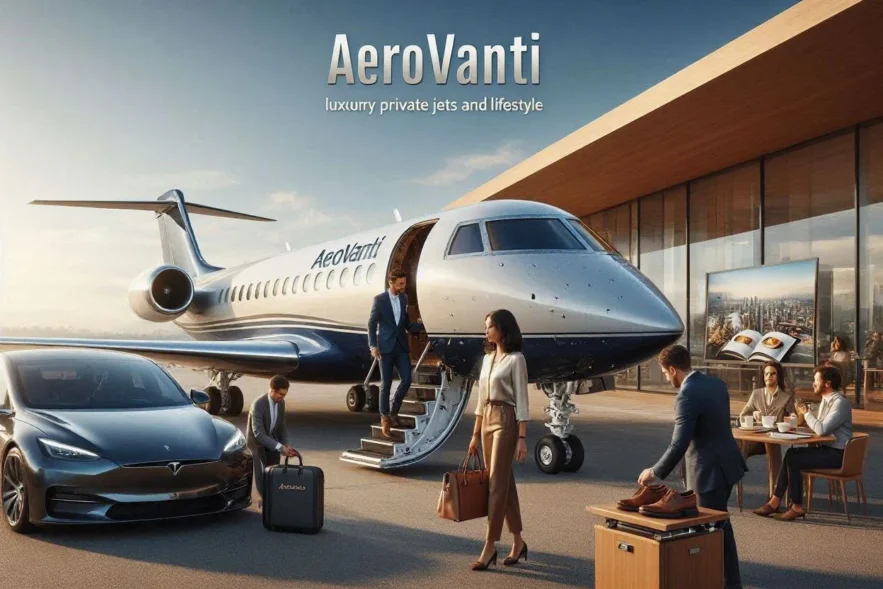
What began as a high-end travel startup became a federal fraud case with wide-ranging business consequences.
WASHINGTON, DC, September 3, 2026 — AeroVanti sold an image of private aircraft, yachts, stadium hospitality, and effortless travel, but the Annapolis-linked company’s luxury narrative has been replaced by a federal fraud conviction, creditor judgments, unpaid-wage claims, sponsorship disputes, and questions about recoverable assets.
The venture’s collapse demonstrates how premium branding can accelerate trust for a young company whose customers cannot easily verify aircraft ownership, available financing, regulatory arrangements, escrow protections, or the financial strength required to support years of promised service.
Founder Patrick Britton-Harr used AeroVanti’s distinctive planes, aggressive expansion announcements, high-profile partnerships, and exclusive membership language to position the business as an innovator that could deliver private aviation access at prices well below traditional charter alternatives.
Federal prosecutors later persuaded a Maryland jury that the central Top Gun membership offer rested on materially false promises about approximately $15 million collected for aircraft purchases, resulting in six wire fraud convictions and potential imprisonment for Britton-Harr.
The transformation from admired startup to legal ruin affected far more than its founder, leaving customers, pilots, aircraft owners, vendors, lenders, sports organizations, and regional business supporters confronting financial losses or reputational consequences tied to the once-celebrated AeroVanti name.
Luxury presentation became a substitute for institutional history
Established private aviation companies can point to years of audited results, fleet records, operating experience, safety systems, and customer performance, while a startup must persuade prospective members to accept its promises before it has that institutional record.
AeroVanti addressed this credibility problem through a highly visual identity centered upon the Piaggio Avanti, an unconventional twin-engine turboprop whose rear-mounted propellers, sleek profile, and recognizable design made the aircraft particularly effective for luxury marketing.
The company paired those airplanes with concierge language, polished imagery, private terminals, ambitious service claims, and a founder who presented himself as a serial entrepreneur capable of disrupting an industry often criticized for excessive pricing and limited accessibility.
That combination allowed AeroVanti to sell more than transportation because members were buying belonging, status, convenience, time savings, and entry into a curated lifestyle that connected private aircraft with professional sports, luxury hospitality, and eventually yachting.
Premium customers routinely pay before receiving services, making trust especially valuable within private aviation, where a member may commit substantial money without seeing the aircraft assigned to a future trip or understanding the operator’s underlying ownership and financing structure.
Luxury branding can reduce perceived risk because exceptional design, prominent affiliations, and confident service representatives create an impression of abundant resources, even though presentation alone reveals nothing about cash reserves, creditor pressure, or the legal status of advertised assets.
For AeroVanti, the brand became an economic asset that quickly attracted customers and counterparties, but it also became a liability once financial records and lawsuits began contradicting the stability, availability, and growth suggested by the company’s public identity.
A lower-cost promise expanded the addressable market
AeroVanti presented membership as an alternative for travelers who wanted the flexibility of private flying without purchasing an entire airplane, accepting a fractional-ownership commitment, or paying hourly rates commonly associated with conventional charter providers.
Its pricing proposition depended heavily upon the operating profile of the Piaggio aircraft, whose efficiency could support lower advertised flight costs while still providing a pressurized cabin and performance appealing to business and affluent leisure travelers.
Members generally paid recurring charges plus flight costs, allowing AeroVanti to describe the club as a way to obtain luxury and value simultaneously rather than treating relative affordability as incompatible with exclusive private travel.
The company launched during a period when pandemic-era concerns increased interest in private flying, giving it access to customers who valued uncrowded terminals, flexible departures, direct routing, and reduced dependence upon commercial airline schedules.
Britton-Harr’s message therefore arrived at a particularly favorable moment, offering a modern membership structure, recognizable aircraft, and attractive economics when market demand was strong enough to make rapid expansion appear both necessary and achievable.
The model nevertheless required dependable scale because low hourly prices become difficult to sustain when aircraft remain idle, maintenance costs rise, empty repositioning increases, crews are unavailable, or membership revenue fails to cover fixed operational obligations.
That economic tension remained largely invisible within the luxury presentation, while customers evaluated AeroVanti mainly through service promises, promotional partnerships, visible aircraft, press coverage, and the confidence displayed by its founder and leadership team.
Financing announcements strengthened the illusion of durability
In 2022, AeroVanti announced a Series A fundraising effort of up to $9.75 million and later publicly promoted an aircraft financing vehicle of up to $100 million led by Lafayette Aircraft Leasing.
Those announcements suggested that sophisticated financial partners had validated the company’s economics and that capital would be available for fleet expansion, giving prospective members, vendors, employees, and marketing partners a reason to view AeroVanti as institutionally supported.
The phrase “up to” can conceal important limitations because a financing facility may fund only qualifying aircraft acquisitions under specified conditions, while leaving payroll, customer refunds, sponsorship fees, maintenance bills, and ordinary working capital dependent upon separate resources.
Public summaries often compressed the announcement into statements that AeroVanti had raised or secured $100 million, illustrating how promotional financing language can become more definite as it moves through press releases, media coverage, sales conversations, and customer assumptions.
Britton-Harr also made aggressive public claims concerning revenue and growth, while AeroVanti described fundraising, acquisitions, and partnerships as evidence that the company had moved beyond the fragile startup stage and entered rapid national expansion.
A detailed Business Observer review of Britton-Harr’s rise and fall later contrasted those confident public growth representations with lawsuits, grounded aircraft, repeated management turnover, and federal allegations that emerged as the operation deteriorated.
For Maryland’s business community, the reversal offers a lesson in distinguishing a financing announcement from unrestricted cash, a revenue claim from audited performance, and prominent coverage from independent confirmation of underlying corporate health.
Top Gun converted customers into acquisition financiers
AeroVanti’s limited-time Top Gun opportunity asked selected members to advance $150,000 so the company could purchase and recondition designated aircraft, while participants would receive blocks of future flight time at heavily discounted hourly rates.
Britton-Harr promised that the money would acquire specific airplanes and that titles would be delivered into escrow, creating the appearance that member payments were supported by identifiable assets and protected from unrestricted corporate use.
Approximately one hundred participants collectively provided nearly $15 million toward five aircraft, effectively financing AeroVanti’s capital expansion even though their principal objective was purchasing travel rather than acquiring ordinary equity in a speculative aviation venture.
The structure benefited AeroVanti because customer money could reduce reliance upon conventional investors or lenders, but it exposed members to acquisition and operating risks that ordinary travelers rarely expect when purchasing services from an established provider.
Escrow language substantially lowered the apparent danger because an independent holder should control funds or titles under written conditions, preventing management from redirecting protected property before satisfying the acquisition obligations described to participating members.
True security would require executed agreements, verified title delivery, completed purchases, identified collateral, perfected interests, release conditions, and confirmation that competing lenders or owners held no superior rights in the same aircraft.
Without those completed safeguards, the word “escrow” could provide psychological protection greater than the legal protection members actually received, encouraging substantial trust while leaving payments vulnerable to unauthorized transfers beyond the designated fleet purchases.
Trial evidence dismantled the branded narrative
The federal criminal case did not ask jurors to decide whether AeroVanti’s branding was excessive or whether its business plan was unrealistic, because neither promotional ambition nor corporate failure independently establishes wire fraud under federal law.
Prosecutors instead linked specific statements about aircraft purchases and escrow protection to electronic payments, bank records, titles, personal expenditures, and later financing, building a documentary sequence intended to show Britton-Harr deliberately deceived customers.
According to the Justice Department’s account of the verdict, the promised aircraft were not purchased using Top Gun funds, while member money financed yachts, expensive jewelry, living costs, and a Tampa-area rental home costing approximately $10,000 monthly.
The government also established that Britton-Harr obtained a one-point-five-million-dollar loan to buy an aircraft he had already claimed was paid for with member payments, while withholding material information from the lender used to finance the later transaction.
Those facts made the company’s luxury identity relevant in a different way because items once associated with the founder’s success became evidence supporting the prosecution’s argument that customer money had financed personal enrichment rather than promised fleet growth.
Jurors convicted Britton-Harr on all six wire fraud counts, rejecting the proposition that the disputed transfers reflected only contractual breaches, good-faith business discretion, or ordinary efforts to keep a capital-intensive startup operating during financial strain.
The verdict converted AeroVanti’s collapse from a debated story about an overextended company into a criminal finding that materially false representations were used to obtain money through the Top Gun program Britton-Harr controlled.
Sports and lifestyle partnerships amplified both rise and fall
AeroVanti associated itself with the Tampa Bay Buccaneers, Chicago Cubs, Tampa Bay Rays, university athletics, sailing organizations, and a stock-car racing appearance, giving the young company visibility that ordinary aviation advertising could not have produced as quickly.
The company also expanded its marketing message from aviation into yachting, promoting distinctive vessels and high-end experiences that transformed membership into a broader luxury lifestyle proposition rather than a narrowly defined flight-access service.
These relationships provided social proof because prospective members could reasonably assume that famous organizations had evaluated AeroVanti before displaying its name inside stadiums, hospitality areas, promotional events, fan campaigns, and premium partnership announcements.
Sponsorships nevertheless create payment obligations rather than free credibility, and the relationships became additional sources of legal exposure when sports organizations alleged that AeroVanti failed to pay agreed fees or complete promotional commitments.
The Chicago Cubs pursued at least $3 million in claimed damages arising from a multiyear marketing agreement and related obligations, while a Tampa Bay Rays affiliate separately alleged that more than $880,000 in sponsorship and licensing fees remained unpaid.
The Tampa Bay Buccaneers later obtained a consent judgment reported at approximately $3.34 million, illustrating how the promotional machinery that strengthened AeroVanti’s brand during expansion became a substantial creditor burden after collapse.
Those sports disputes arose under their own contracts and cannot be treated as facts automatically established by Britton-Harr’s Maryland wire fraud conviction, which addressed specific Top Gun payments and representations rather than every company expenditure or unpaid obligation.
Pilots and vendors experienced the operational consequences
When a luxury travel company loses financial stability, customers see cancellations first, but pilots, dispatchers, maintenance providers, lessors, and other operational participants experience the deeper mechanics through missed payroll, overdue invoices, grounded equipment, and uncertainty about continuing work.
Former AeroVanti pilots filed a federal class-action complaint alleging unpaid minimum and overtime wages after receiving assurances that the company’s financial difficulties would be resolved, seeking compensation and damages under labor law.
Aircraft owners reportedly pursued claims for unpaid lease obligations, while maintenance facilities and service providers faced outstanding bills for equipment essential to every membership promise AeroVanti kept making.
The interconnected nature of aviation magnified each default because one repossessed aircraft or unpaid maintenance invoice could reduce capacity, trigger multiple cancellations, force expensive substitutions, increase pressure on remaining airplanes, and trigger further member refund demands.
Employees occupied a particularly difficult position because pilots must maintain safety and regulatory standards regardless of financial distress, yet they may lack access to corporate bank records, financing agreements, or member accounts that would show whether management assurances remain credible.
The company’s network of affiliated entities further complicated recovery by separating aircraft, maintenance, capital, brokerage, hangar, and operating functions, requiring each claimant to identify which company signed the relevant agreement and possessed collectible assets.
Legal ruin therefore developed through accumulation rather than one decisive event, as customer lawsuits, wage allegations, leases, liens, sponsorship claims, creditor judgments, and criminal proceedings each exposed another layer of an enterprise no longer capable of sustaining its obligations.
Leadership instability deepened the loss of confidence
Britton-Harr resigned as AeroVanti’s chief executive and board chairman during July 2023 as operational and legal problems intensified, beginning a period of rapid leadership turnover that made an already fragile recovery substantially more difficult.
Scott Hopes assumed the chief executive role but departed within months, while Britton-Harr’s brother briefly replaced him before resigning after only several days and describing financial and legal problems he said became apparent after taking control.

Britton-Harr subsequently returned to corporate leadership, producing three chief executives in a remarkably short period while members, creditors, employees, and counterparties sought consistent explanations about solvency, litigation, available aircraft, and future operations.
Leadership changes can support a turnaround when new executives possess authority, capital, credible records, and stakeholder cooperation, but repeated transitions often signal internal conflict and prevent any one team from developing or implementing a reliable restructuring plan.
Each incoming executive also inherits representations and obligations created by prior management, meaning a new title cannot restore missing funds, perfect an uncompleted security interest, reverse a repossession, or eliminate contractual liabilities already in default.
For luxury customers, instability at the top undermines the assurance that someone remains accountable for their travel and money, making additional payments unlikely and accelerating the loss of revenue required to keep aircraft operating.
Legal ruin extends beyond the federal conviction
Britton-Harr faces a statutory maximum of twenty years’ imprisonment on each wire fraud count, creating theoretical exposure totaling 120 years, although federal guidelines and statutory factors will determine the sentence rather than simple addition of maximum penalties.
He has sought a new trial based upon alleged improper interactions between a former courtroom deputy clerk and jurors, leaving sentencing postponed while the court evaluates whether the reported conduct affected the integrity of the verdict.
The six convictions remain operative unless the trial judge grants relief or an appellate court later overturns them, while restitution and forfeiture proceedings may determine what qualifying victims are owed and which assets can support recovery.
Britton-Harr also faces separate unresolved health care fraud and money laundering charges involving Medicare claims for respiratory tests, allegations that carry their own presumption of innocence and were not decided by the AeroVanti jury.
A related federal civil health care proceeding produced a substantial default judgment, but that outcome remains legally distinct from the criminal aviation conviction, the pending post-trial motion, and the separate still-unresolved Medicare prosecution.
AeroVanti and its affiliates separately confront civil judgments and contractual claims from workers, customers, sports organizations, aircraft counterparties, and vendors, ensuring that the company’s legal ruin cannot be measured by Britton-Harr’s imprisonment exposure alone.
Reputation now follows the documentary record
AeroVanti’s early success illustrates how premium presentation can define public perception before customers or journalists possess enough information to evaluate cash flow, related-party transfers, ownership records, and the conditions attached to announced financing.
Its collapse illustrates the reverse process, as bank statements, court filings, aircraft titles, judgments, employment claims, and trial evidence gradually replace marketing images and founder interviews as the most authoritative sources describing the enterprise.
Organizations separating themselves from a failed founder or sponsor require disciplined crisis and public-relations management that accurately acknowledges established facts, protects affected stakeholders, distinguishes unresolved claims, and avoids speculative statements contradicted by publicly accessible records.
Longer-term social and reputational rebranding may organize truthful public evidence of reform or separation, although no communications strategy can substitute for meaningful restitution, governance changes, lawful outcomes, or verifiable conduct maintained consistently over time.
Luxury brands are especially vulnerable after scandal because their value depends heavily upon trust and aspiration, allowing customers to transfer loyalty quickly when the name becomes associated with canceled services, missing money, unpaid partners, or criminal findings.
The AeroVanti brand may retain visual recognition, but its historical identity is now inseparable from the Top Gun prosecution and the broader collapse unless future operators establish transparent ownership, independent controls, reliable service, and a demonstrably separate financial structure.
Maryland businesses inherit a governance warning
The AeroVanti story warns founders that rapid visibility creates obligations faster than it creates institutional maturity, requiring governance, accounting, compliance, and board oversight to expand at least as quickly as marketing commitments and customer acquisition.
Boards must independently verify significant revenue and financing claims before publication, continuously monitor restricted funds, review related-party transfers, examine available liquidity, and require documented approval whenever founder-controlled entities exchange money or valuable assets.
Investors should distinguish announced capital from funded capital, inspect transaction conditions, reconcile customer deposits, verify aircraft ownership, and test whether the company’s pricing remains sustainable after maintenance, repositioning, crew, insurance, and downtime costs.
Customers should obtain direct escrow confirmation, title evidence, lien searches, refund conditions, and a clear explanation of whether their payment purchases travel, finances assets, creates secured debt, or exposes them to investment-like risk.
Marketing partners should carefully evaluate a startup’s ability to fund multiyear obligations, while protecting fan promotions through advance payment, enforceable guarantees, insurance, staged deliverables, termination provisions, and replacement rights if the sponsor becomes financially distressed.
Employees and vendors should treat repeated missed payments as material governance signals rather than temporary public-relations problems, carefully documenting management assurances and preserving contractual rights before remaining assets become subject to numerous competing claims.
The luxury image could not survive the financial facts
AeroVanti initially persuaded numerous customers and commercial partners that it had successfully combined sophisticated aviation, favorable economics, institutional capital, and elite affiliations into a nationally scalable private travel platform originating partly from Annapolis.
The company’s promise depended upon aircraft being consistently available, customer funds remaining protected, employees receiving timely payment, counterparties honoring relationships, and public claims accurately reflecting completed financial arrangements rather than optimistic projections or conditional commitments.
Once those foundations weakened, luxury branding accelerated the collapse instead of slowing it because every sponsorship, yacht, premium residence, and high-end purchase invited comparison with members awaiting airplanes, pilots awaiting wages, and partners awaiting contractual payments.
The federal verdict gave that comparison legal force by establishing that Britton-Harr fraudulently obtained Top Gun money through false promises concerning its use and protection, converting the company’s most important membership offer into evidence of criminal conduct.
For Maryland, AeroVanti’s trajectory reminds us that branding can introduce a startup to the world, but only verified assets, disciplined governance, honest disclosure, and reliable execution can keep an ambitious venture from descending into legal ruin.