

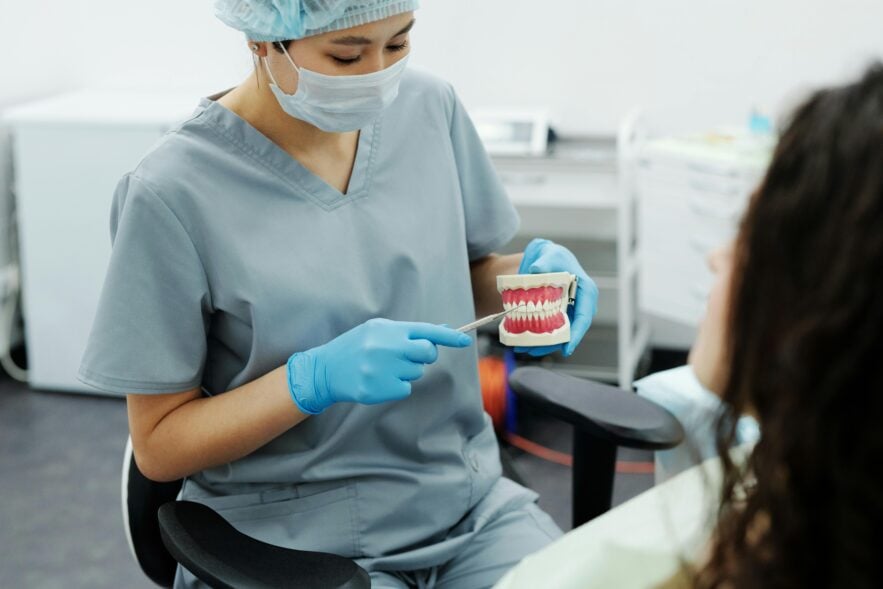
A chipped or cracked tooth is one of those small disasters that can feel like no big deal in the moment. You bite into something hard, feel a tiny snap, and maybe notice a rough edge with your tongue. There is no pain, or just a tiny flash of sensitivity. Life goes on. You plan to mention it to the dentist at your next cleaning, and then you forget about it for a few months.
The problem is that teeth do not heal themselves. A chip or crack that looks minor today can quietly turn into something much more serious if it is ignored. Some damage only shows up as a dull ache months later. Some ends up costing you the tooth. Knowing what you are actually dealing with, and what happens if you wait, is the difference between a quick fix and a much bigger treatment.
Here is a clear look at what different kinds of tooth damage actually are, what you risk by ignoring them, and what to do instead.
Not All Chips and Cracks Are the Same
Dentists actually have a whole classification for tooth damage, because the right treatment depends on where the break is and how deep it goes. A tiny chip in the enamel, the hard outer layer of the tooth, is very different from a crack that runs all the way down to the root.
Surface chips are the most common and the least urgent. These are small pieces that break off the edge of a tooth, often from biting something hard or from an old filling giving out. They usually do not hurt and are easy to miss.
Deeper chips go through the enamel into the softer dentin layer underneath. Dentin is not as tough as enamel, and once it is exposed, the tooth becomes more sensitive and more vulnerable to decay. You may notice sensitivity to cold drinks or air.
Cracks are often harder to see than chips. A crack can be a fine line running down the tooth, sometimes invisible to the eye, that extends from the chewing surface toward the root. Cracks can trap bacteria, grow over time, and eventually reach the nerve.
Fractures are the most serious. These can split the tooth into pieces or run all the way through the root. At this point, the tooth is often beyond repair and may need to be removed.
The Myth of a Pain-Free Problem
The most common reason people ignore a chip or crack is that it does not hurt. Dental damage does not follow a neat pain timeline. A tooth can have a crack running halfway through it and feel completely normal, until one day it does not.
When the damage finally reaches the nerve, the shift is dramatic. You go from no symptoms to intense, persistent pain, sometimes overnight. Sensitivity to hot and cold becomes sharp rather than mild. Chewing on that side becomes impossible. What could have been a simple bonding or filling is now a root canal, or worse, an extraction.
The worst part is that pain is not a reliable signal of how bad the damage is. Some of the most serious cracks never hurt until the tooth actually fails. By then, you have fewer options.
What Happens to an Ignored Chip
Even a tiny chip changes the geometry of your tooth. The edge becomes sharper, which can scrape your tongue or the inside of your cheek. You start chewing differently to avoid that spot, which shifts pressure to other teeth and, over time, wears them down unevenly.
More importantly, a chip removes part of the enamel barrier. The area underneath is now rougher and holds more plaque. Bacteria settle in. Decay starts quickly, and because the chip has already weakened the tooth, that decay spreads faster than it would on a healthy surface.
What began as a simple edge repair can become a large filling within a year. If the decay reaches the nerve, you are now looking at a root canal and a crown, potentially five to ten times more expensive than what a quick bonding would have cost.
What Happens to an Ignored Crack
Cracks are sneakier and more dangerous than chips. A crack allows bacteria to travel into the middle of the tooth along the fracture line. Over weeks and months, the crack widens from chewing pressure and temperature changes. Hot food and cold drinks cause the tooth to expand and contract slightly, which pries the crack open a little more each time.
Eventually, the crack reaches the pulp, the inner chamber where the nerve lives. Now the tooth is inflamed and starts to hurt. At this stage a root canal is often the only way to save it, and it usually needs a crown afterward to hold the cracked tooth together.
If the crack travels into the root, below the gum line, the tooth usually cannot be saved at all. That is the difference between waiting a few weeks and waiting too long. A crack caught early is a crown and a saved tooth. A crack caught late is an extraction and a decision about what to do with the gap.
Why Cracks Are So Hard to See
Most people cannot tell they have a cracked tooth just by looking. Cracks can be too fine to see without magnification. They often do not show up on regular X-rays in the early stages. Symptoms are vague: a fleeting sharp pain when you bite a certain way, an odd sensitivity that comes and goes, a tooth that feels off but looks fine.
This is why dentists use specific tests to find cracks. They might have you bite on a small wooden stick or a special instrument that isolates pressure on one cusp at a time. They might use a bright light or dye to spot fine lines. Newer practices use intraoral cameras that magnify the tooth surface and can reveal cracks that the naked eye misses.
If your dentist tells you they suspect a cracked tooth even without a clear visual, take that seriously. They are seeing patterns and symptoms that suggest a problem is brewing. Catching it before it splits the tooth is the whole game.
The Cost Difference Between Now and Later
The financial case for treating dental damage quickly is usually clear. A simple bonding repair of a small chip runs $200 to $600 and takes one visit. A filling for a deeper chip is $150 to $400 depending on size. A crown for a more significant break is $1,000 to $2,500.
Now compare that to what happens if you wait too long. A root canal plus a crown is $2,500 to $4,000. An extraction and implant is $4,000 to $6,000 per tooth. A bridge to replace a lost tooth is $3,000 to $5,000. And those numbers assume everything goes smoothly. Complications add more.
The pain, lost time, and anxiety are not in those numbers. Emergency dental visits, especially after hours or on weekends, usually cost more than scheduled ones. Missed work while you deal with severe pain is not free. Even the decision to ignore a chip for a year can multiply your eventual dental bill tenfold.
When Is It a True Emergency?
Most chips and cracks do not need to be seen the same day, but some do. If you have a large break that exposes the inner, pink layer of the tooth, get to a dentist urgently. That pink is the nerve, and it needs to be protected within hours to avoid infection and save the tooth.
Severe pain, swelling around the tooth, visible bleeding from the tooth itself, or a tooth that is loose after trauma are all emergencies. If you lose a piece of tooth, bring it with you in a container of milk or saliva. Some breaks can be reattached if you get to the dentist quickly.
Practices that handle urgent cases can usually make time for real emergencies. In Chicago, Bite Club’s emergency dental page is a useful reference for knowing how same-day dental care works, what you can manage at home, and when you should call right away.

In London, Ontario, Luka Dental Care’s emergency page explains how to reach the practice when something urgent happens, which is worth bookmarking before you ever actually need it. Having a plan is half the battle when a dental emergency hits.
What a Minor Repair Actually Looks Like
People sometimes avoid getting a small chip fixed because they assume the repair will be painful or involved. It usually is not. Bonding, the most common repair for small chips, is a one-visit procedure that often does not require any numbing. The dentist cleans the area, applies a tooth-colored resin, shapes it to match the rest of the tooth, and hardens it with a light. Total time is often 30 to 45 minutes.
Fillings and small repairs are about the same. Numbing is quick, the work itself takes less time than you would expect, and you walk out with the tooth restored. Compare that to the alternative of letting the damage grow into a multi-visit root canal or extraction, and the decision is usually clear.
Why People Still Wait
Most people who ignore dental damage are not being careless. They are busy, they are hoping it will resolve on its own, or they are worried about the cost. All of these are normal, and all of them usually backfire.
Busyness rarely gets better with time. Waiting a few weeks to book usually turns into a few months. By then, the problem that would have taken 30 minutes to fix now needs a bigger treatment that takes longer to schedule and costs more.
Dental issues do not resolve on their own. Teeth cannot heal or regrow. Cracks do not close. Chips do not fill back in. Whatever you notice today will only get worse without treatment.
If cost is the concern, most practices will give you an estimate over the phone or during a quick exam. Many offer payment plans. Waiting almost always makes the bill bigger, not smaller.
Preventing Damage in the First Place
Some chips and cracks are bad luck. Others are preventable. Common culprits include chewing ice, biting into hard candies, using your teeth to open packages, grinding your teeth at night, and playing contact sports without a mouthguard.
If you grind your teeth, a custom night guard is a small investment that prevents a lot of damage. If you play sports, even recreationally, a mouthguard is essential. If you catch yourself chewing pens, ice, or popcorn kernels, stop. These habits add up and eventually something gives.
Regular dental checkups also catch problems early. Your dentist can see the beginnings of wear patterns, tiny cracks, or fillings that are starting to fail, long before you would notice them. Catching these early is always easier than fixing them late.
The Bottom Line
A chipped or cracked tooth is not an emergency unless it hurts, bleeds, or exposes a nerve. But it is also not something to ignore. The damage does not stop where you see it. It creeps forward quietly, adding risk with every meal and every temperature change, until something finally gives.
If you have a chip or crack that is more than a week old, book an appointment. Even if it does not hurt, even if it looks minor, even if you are sure it is fine. The cost of being wrong is high, and the cost of being right is usually a small repair that takes less time than your lunch break. Treat the little things while they are still little.