

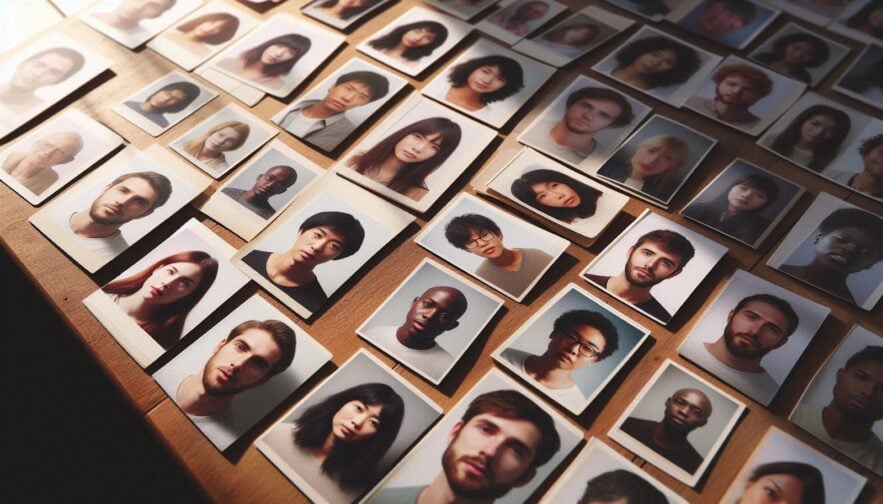
Even in the digital age, passport photo rules remain a core part of how passports prevent forgery.
WASHINGTON, DC.
Passport photos survive on every modern passport not because governments cling sentimentally to an old paperwork ritual, but because states learned through fraud, war, and administrative failure that weak identification systems break down fastest at the moment when certainty matters most.
A passport has always needed to do more than prove nationality in the abstract, because the document must also persuade a border officer, airline employee, police official, or consular worker that the person carrying it is the person described inside it.
That practical demand shaped modern passport design far more than travelers usually realize, since the photograph became mandatory only after officials concluded that signatures, written descriptions, and supporting papers were too easy to borrow, misread, forge, or manipulate under real checkpoint pressure.
In 2026, after decades of machine-readable lines, contactless chips, and biometric comparison systems, the passport photograph still matters for the same blunt reason that made it valuable in the first place, which is that a visible face remains one of the fastest ways to connect a human body to an official identity claim.
The face solved a border problem that words could never solve quickly enough.
Before photographs became central to passport design, many authorities relied on names, signatures, birthplace details, nationality statements, and physical descriptions that might mention height, complexion, hair color, age, or occupation in language that was often vague and surprisingly unhelpful.
A written description could sound precise on paper while still leaving wide room for confusion when a tired official faced a traveler in poor light, in a crowded line, with limited time, incomplete records, and no shared language.
The arrival of the photograph changed that entire process because it gave officials something direct, portable, and visually comparable that could be tested instantly against the bearer standing at the counter.
Once the face entered the passport, the document stopped being only a narrative statement issued by a government and became a visible challenge to the traveler, asking whether the page and the person still belonged together under ordinary human scrutiny.
That may sound almost simplistic by contemporary standards, yet many durable security advances are simple in exactly that way, because they solve an operational problem directly instead of assuming every checkpoint can rely on perfect technology and unlimited time.
The photograph became necessary because old identification systems were too easy to exploit.
Loose identity systems fail in predictable ways because they ask officials to place too much trust in paperwork that can be reused, misdescribed, mistranslated, or intentionally distorted by the person presenting it.
A signature may be copied, a birthplace may be repeated convincingly, and a written description can match more than one person closely enough to create doubt, especially when border control is under pressure to process travelers quickly.
Governments eventually recognized that a passport without a reliable facial image gave dishonest travelers too much room to work with, since the difference between rightful bearer and impostor could collapse into argument, guesswork, or inconsistent interpretation.
That is why the photograph shifted from an optional aid to a mandatory core feature, because the state needed something that could reduce ambiguity without requiring every official to become an investigator before allowing the document to do its job.
The photograph did not eliminate fraud, but it narrowed one of the biggest openings in the system by making the passport answer the most immediate question in travel control, which is whether the document visibly appears to belong to the person holding it.
Photo switching taught governments that the image area was the weakest point worth attacking.
The earliest passport photo systems helped immediately, although they also created a new risk because criminals quickly realized that the easiest way to hijack a genuine passport was often to alter the image rather than counterfeit the entire booklet.
That older scam, commonly understood as photo switching, worked because authentic paper, authentic numbering, official seals, and real issuance history could still carry the authority of the state after someone tampered with the face on the page.
A genuine passport with a changed photograph could be more dangerous than a poor counterfeit, precisely because most of the document still looked legitimate before an official focused closely enough on the identity area to notice trouble.
This was a decisive moment in passport security history, since governments understood that adding a photograph was not enough and that the image had to be standardized, controlled, and physically protected if it was going to function as a serious anti-fraud feature.
Once that realization took hold, passport photo rules became much stricter, identity pages became harder to disturb cleanly, and the passport began evolving from a booklet containing identity details into a booklet designed to defend those details materially.
War accelerated the shift from loose paperwork to disciplined identity control.
The First World War transformed movement across borders from a relatively flexible administrative matter into a far more sensitive state concern, because governments feared enemy nationals, spies, deserters, couriers, smugglers, and travelers using weak papers to move unnoticed.
Under those conditions, the cost of identity confusion rose sharply, and officials became less willing to tolerate travel documents that depended too heavily on text, informal procedure, or local improvisation.
That pressure can be seen in early American passport instructions preserved by the Office of the Historian, where officials required photographs and directed that the official seal partly cover the image in order to discourage substitution or quiet tampering.
That detail matters because it shows governments already understood that the photograph was both the passport’s greatest practical advance and its most obvious point of attack, meaning the image area had to be tied physically to official authority.
War did not invent the passport photograph, but wartime pressure made clear that travel documents could no longer be trusted if the state could not bind one recognized face to one official identity claim under conditions of stress and suspicion.
Standardization turned a portrait into a security device.
A passport photo became powerful only when governments stopped treating it like an ordinary portrait and started treating it like controlled evidence meant for rapid comparison in institutional settings.
That is why modern rules insist on recent images, direct facial presentation, visible features, neutral composition, and backgrounds that strip away distraction rather than add personality, because comparison works better when the face is the only thing competing for attention.
The current U.S. State Department photo requirements still reflect that logic by requiring a recent color image with a clear full-face view and a plain white or off-white background, while rejecting altered images, filters, and artificial-intelligence edits.
Those rules can seem annoyingly rigid to applicants, yet every one of them exists because variation helps fraud by creating room for argument, uncertainty, and delay at exactly the point where officials want quick and confident visual judgment.
A standardized image is easier to compare across airports, consulates, police encounters, airline desks, and border stations because it teaches thousands of officials what a valid identity photo should look like before they ever read the supporting details.
Physical safeguards mattered because a useful photo still needed to survive tampering.
The real anti-fraud breakthrough came when states realized that the photograph had to be protected physically as well as standardized administratively, since an excellent image is still a weak defense if it can be lifted, replaced, resealed, or disturbed without obvious evidence.
Lamination, overlays, seals, and later, more advanced page construction changed the economics of forgery because they turned quiet photo switching into a much riskier act that was more likely to leave bubbles, haze, wrinkles, lifted edges, tears, or alignment problems visible during routine inspection.
That shift was enormously important because a passport does not need to be magically impossible to alter in order to become safer, and instead only needs to make alteration messy enough that trained human handling catches it more often.
When the identity page became a tamper-evident zone rather than a convenient frame for a removable photograph, the oldest passport scam lost much of its practical appeal, and the booklet itself started helping officials detect what had happened after issuance.
That same principle still governs modern document design, because security works best when interference creates clues that can be noticed under ordinary light, ordinary touch, and ordinary skepticism before deeper testing ever begins.
The identity page became the heart of the passport because everything important moved into one protected zone.
Earlier travel documents often required officials to assemble identity from scattered clues across the booklet, including signatures, text descriptions, seals, visas, surrounding paperwork, and whatever personal explanation the traveler happened to offer.
The standardized identity page solved that problem by concentrating the photograph, personal data, numbering logic, and protective features into one inspection zone that could be evaluated quickly and repeatedly.
That concentration made the passport more trusted because the page began behaving like a coherent security surface rather than a loose collection of details vulnerable to separate manipulation.
A well-designed identity page teaches officials what normal looks and feels like, which means subtle problems can announce themselves through material behavior long before anyone reaches a database or technical scanner.
When the page reflects light oddly, sits too flat, feels too thick, or shows irregular wear around the image area, a trained official can begin suspecting interference even before finding the precise reason the document feels wrong.
Digital verification added power, but it never made the printed image irrelevant.
Many travelers now assume the chip, the database, or the biometric gate performs the real security function while the visible photo page lingers as a relic from a less advanced era, although real-world document control does not work that way.
Passports are handled constantly by humans before, alongside, and sometimes instead of machines, which means the printed or engraved image still carries much of the daily burden of proving identity in ordinary travel life.
An airline agent at check-in, a consular clerk processing documents, a police officer during an identity check, or an immigration official facing a stalled system may still rely first on the simplest possible test, which is whether the face on the page matches the face in front of them.

That continuing human role explains why photo rules still matter deeply in 2026, because digital systems can fail, networks can lag, and suspicious documents are often doubted first by the hand and eye rather than by the machine.
The passport photograph remains part of a layered defense, not an outdated decorative holdover, and its continued value comes from working in environments where perfection cannot be assumed.
Modern redesigns still show that governments think the image page is the pressure point.
When states unveil new passports, they still emphasize physical protection around the photograph and the data page, which is a telling sign that the original lesson of photo security has never lost relevance.
As Reuters reported, when Canada introduced its redesigned passport, the document added a Kinegram over the main photo, a see-through window with a secondary image, a variable laser image, and other features meant to frustrate tampering and counterfeiting.
Those features are modern in material and production method, but their purpose is very old, because governments are still trying to make the face anchoring the passport difficult to separate from the page carrying the state’s official identity claim.
The digital passport did not replace the older logic of photo protection and instead extended it, layering machine checks onto a document that still depends heavily on the physical integrity of the image zone.
That continuity says more about passport security than any marketing language about seamless travel, because it reveals that officials still regard the visible identity page as the place where fraud is most profitably challenged.
The rule still matters because passports are used far beyond the border booth.
A passport does not live only in advanced airports or automated immigration halls, because it is also presented at embassies, hotels, banks, local police checks, transportation counters, and many other everyday settings where sophisticated verification may not be available immediately.
In those environments, the standardized photograph continues doing enormous practical work by giving ordinary institutions a quick identity reference that can be understood across languages and bureaucracies without deep investigation.
That is one reason the passport remained so central to modern mobility, because it became a widely trusted summary of official identity that could function across many settings precisely because the photograph made the document easier to evaluate on sight.
The stronger and more tamper-resistant the image page became, the more confidently institutions beyond border agencies could treat the passport as a usable and credible proof of identity.
A weak or suspicious photo page still threatens that trust immediately, which is why governments continue treating the photograph as a core anti-forgery feature rather than a mere administrative requirement.
The same logic still shapes lawful mobility planning in 2026.
Contemporary discussions about privacy, international relocation, second citizenship, and legal identity continuity often sound futuristic, yet they still depend on a very old operational truth, which is that documents must survive ordinary scrutiny before they impress anyone technologically.
That reality explains why organizations operating in lawful mobility planning, including Amicus International Consulting, continue to frame international movement around valid documents, identity continuity, and practical compliance rather than around myths of effortless invisibility.
The same operational emphasis appears in discussions of second passport services, where the decisive issue is not how dramatic a personal narrative sounds, but whether the underlying passport remains coherent before officials, carriers, and compliance teams trained to spot weak links.
A document that fails visually at the photo page, raises doubts about alteration, or no longer seems to belong naturally to its bearer can begin collapsing long before any larger legal or logistical strategy has a chance to matter.
For that reason, the passport photo remains a remarkably old-fashioned but remarkably durable foundation of lawful travel, even in a year when digital identity systems receive most of the public attention.
The rule survives because it still works.
Passport photos are required because loose identification systems proved too easy to exploit, because photo switching exposed how valuable a genuine document could become once its face was altered, and because governments found that a standardized, protected image dramatically improved both speed and trust.
The rule still matters in 2026 because every modern verification layer, including chips, machine-readable lines, and biometric comparison, works better when the physical passport already carries a strong, legible, and tamper-resistant identity claim on its face.
What looks like a plain photograph against a plain background is actually the visible result of more than a century of hard lessons about fraud, war, document abuse, and the practical need to make identity harder to steal.
Long before machines learned to read passports electronically, the photograph had already become one of the smartest defenses ever built into the booklet, and the reason it survives is the same reason it was adopted: it still helps the document tell the truth faster.