

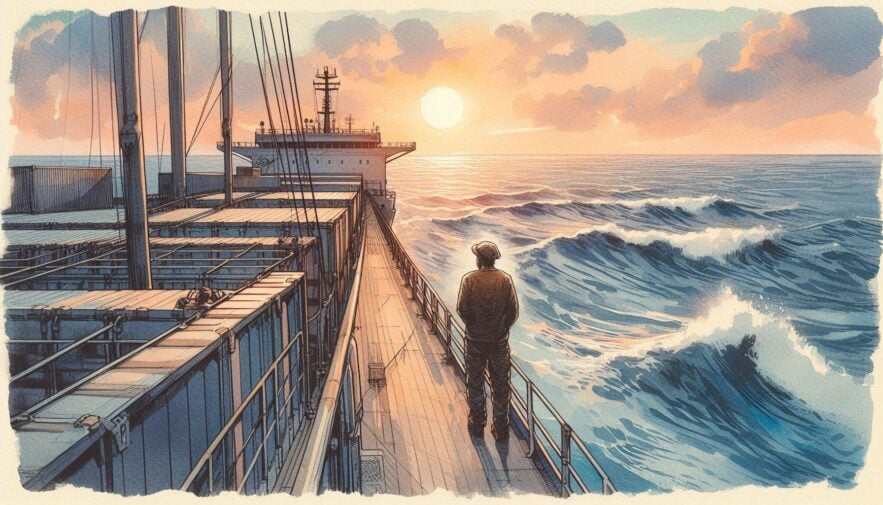
Why estimated departure dates require patience, realistic buffers and a willingness to let cargo, weather and port operations shape the journey before the traveler ever reaches the open sea.
WASHINGTON, DC, June 4, 2026, Freighter travel attracts people who want silence, distance and a slower way across the world, but the first rule of cargo ship passage is simple: the schedule is never truly pinned until the ship, cargo, weather, and port are ready.
The journey begins with uncertainty before it begins with the sea.
A traveler booking a freighter voyage may imagine the crossing itself as the difficult part, yet the real test often begins weeks earlier, when departure dates remain approximate, and every plan must bend around maritime operations.
Unlike aviation, where flights are sold around fixed departure times and predictable passenger demand, cargo ship travel operates within a freight network where containers, port slots, customs, weather, and commercial priorities determine when the vessel actually moves.
That means a passenger may have an estimated date, a route description, and a planned embarkation port, while still needing to accept that the final boarding time may not be confirmed until close to departure.
This uncertainty can unsettle travelers accustomed to treating transportation as a controlled consumer service, because freighter travel belongs to a world where operational realities outrank itinerary design.
The person who enjoys the voyage most is usually the one who accepts from the beginning that the ship is not late in the ordinary sense of travel; it is simply obeying the logic of cargo.
Estimated dates are a working forecast, not a promise.
Freighter operators and specialist agencies often provide estimated sailing windows because that is the most honest way to describe a voyage governed by port conditions, cargo loading, vessel rotation, and weather changes.
The estimate is still useful because it helps travelers arrange documents, insurance, accommodation, and personal commitments, but it should never be treated like a guaranteed airline boarding pass.
Cargo may arrive late, cranes may be delayed, a berth may not open on time, customs processes may slow the vessel or a storm system may push the captain and operator toward a safer timing decision.
Even when the ship is physically close to port, the exact embarkation time may remain uncertain because the vessel must complete commercial and safety procedures before passengers are allowed aboard.
The traveler who understands this distinction will plan with flexibility, while the traveler who ignores it may experience every update as a crisis rather than a normal feature of maritime life.
Cargo always comes first because cargo is the reason the ship exists.
A commercial freighter may accept a civilian passenger, but it is not a passenger vessel in the emotional or commercial sense, because its purpose is to move goods efficiently through global trade routes.
Every port call is built around cargo operations, including loading, unloading, container positioning, inspections, paperwork, fuel planning, berth assignments, and coordination with terminal crews.
The passenger is carried within that system, not above it, which means the traveler’s comfort, schedule preferences, and onward plans cannot override the commercial operation that supports the voyage.
That hierarchy can feel harsh to people accustomed to hospitality-driven travel, but it is also what makes the journey authentic, as the passenger watches global logistics from inside the machinery.
A thoughtful discussion of freighter travel, privacy and slow mobility places this reality at the center of the experience, explaining why cargo ship passage must be understood as lawful, practical movement rather than cruise-style convenience.
The best plan begins with buffer days.
Anyone considering a freighter voyage should build generous buffer time before embarkation and after arrival, because a rigid calendar is the quickest way to turn slow travel into stress.
A traveler may need to arrive near the departure port several days early, book flexible accommodation, and avoid scheduling immovable commitments immediately before the expected sailing date.
The arrival side requires the same caution, because a vessel can arrive late, wait offshore, adjust its routing, or complete discharge operations on a timeline that does not match the passenger’s expectations.
This is especially important for people with visa deadlines, medical appointments, business meetings, family events, onward flights, or residence obligations that cannot tolerate uncertainty.
The humane approach is to treat the voyage as a flexible travel window rather than a fixed transportation product, because the ship’s rhythm cannot be compressed into an airport-style schedule.
Port delays are ordinary, not exceptional.
Port delays can occur for reasons that have nothing to do with passenger service, including congestion, weather, labor availability, berth scheduling, inspection procedures, customs review, and changes in cargo readiness.
A passenger may see only the delay, but the shipping company is balancing vessel rotation, freight contracts, port costs, terminal access, and safety obligations that are invisible from the traveler’s hotel room.
Industrial ports are complex operating environments, not scenic passenger terminals, which means a small change in cargo or berth timing can shift the boarding plan for everyone involved.
This is why experienced freighter travelers keep phones available near departure, stay in contact with the booking agent, and avoid assuming that silence means everything is fixed.
The better mindset is calm readiness, because the passenger may need to move quickly once the final embarkation window opens after days of apparent waiting.
Weather still has authority over modern shipping.
Modern vessels are powerful, professionally managed and guided by sophisticated navigation systems, yet weather remains one of the central forces shaping departure, routing and arrival.
A storm, heavy swell, visibility concern, or dangerous port condition can affect a ship’s schedule because safe passage matters more than the passenger’s expectation of certainty.
For slow travelers, this can become one of the most important lessons of the voyage, because the freighter reminds them that distance and weather still matter in a world obsessed with speed.
The delay caused by weather is not wasted time if the traveler understands that safety is part of the journey, not an interruption of it.
A person who wants humane travel must accept that humane travel includes respect for the sea, the crew’s judgment, and the captain’s responsibility to avoid unnecessary risk.
Flexible scheduling requires financial flexibility too.
Freighter travel is often misunderstood as a cheap secret, but flexible scheduling can create extra costs that budget travelers may not expect when comparing the voyage against a flight.
A delayed departure may require additional hotel nights, meals near the port, changed ground transport, flexible tickets, storage arrangements, or extra days away from work.
A delayed arrival may create similar costs, especially when the traveler has onward travel, rental housing, business obligations, or immigration timing that must be adjusted.
The ticket price is therefore only one part of the real cost, because the successful traveler needs a cushion against the uncertainty that makes cargo-ship travel possible.
People who cannot afford scheduled travel should think carefully before booking, because the voyage’s charm can disappear quickly when every delay threatens money, work, or legal deadlines.
The booking process rewards patience and documentation.
Cargo ship passenger travel usually requires more preparation than many travelers expect, including passport checks, medical clearance, insurance review, visa planning, and acceptance of shipping company rules.
Some operators or agencies may also require evidence that the traveler can manage shipboard life safely, especially when the route involves long sea days, restricted medical access or industrial port environments.
This process can feel old-fashioned compared with instant online travel booking, but the slower pace reflects the reality that civilian passengers are a minor addition to a serious commercial operation.
Specialist operators repeatedly emphasize flexibility because schedules can change frequently, deep-sea passenger options remain limited, and travelers may need to wait for the right route or cancellation opening.
The traveler who treats the booking process as part of the slow journey will experience less frustration than the traveler who expects an airline-style checkout page and a confirmed seat number.
Medical planning belongs at the beginning.
A flexible freighter schedule is easier to accept when the traveler has also prepared medically, because unexpected waiting, route changes and days at sea can be more stressful for people with fragile health needs.
Commercial freighters generally do not carry civilian medical teams comparable to large passenger cruise ships, which means passengers must be realistic about medications, mobility, chronic conditions, and emergency coverage.
A traveler should review whether their insurance covers freighter travel, maritime evacuation, delayed embarkation, changed arrival dates, and medical care in port countries.
That review should happen before booking, not after the final sailing confirmation, because late-discovered medical problems can have consequences for the passenger, operator, and crew.
The most peaceful freighter travelers are often the most prepared travelers, because practical confidence reduces anxiety when the schedule begins to shift.
Travelers should plan communications before the signal disappears.
Flexible scheduling does not end once the ship departs, because limited connectivity may affect a traveler’s ability to update family, employers, clients, banks, or relocation advisers during the voyage.
Some vessels may have little or no passenger internet, while others may restrict connectivity because satellite access is costly and operational communication takes priority.
That means travelers should prepare key messages before boarding, including expected windows of reduced contact, emergency contacts, banking notifications, and instructions for anyone who may need to act on their behalf.
Remote workers should be especially cautious, because a freighter voyage should not be treated as a floating coworking space unless connectivity has been verified and professional obligations can tolerate silence.
The ship’s digital quiet can be restorative, but only when the traveler has planned for it rather than discovering at sea that essential responsibilities still require immediate response.
Legal timing can matter more than travel timing.
Freighter travelers who are relocating, changing residence patterns or moving between jurisdictions must think beyond the ship’s schedule and consider visas, immigration permissions, tax residency, banking records, and lawful entry requirements.
A flexible departure may affect visa validity, permitted stay calculations, onward travel documents, or timing related to residence applications, which means legal planning must allow for maritime uncertainty.
For travelers considering structured international living, professional planning around residency and citizenship solutions can become relevant when slow movement becomes part of a larger jurisdictional strategy.
The vessel may move slowly, but compliance deadlines can still move quickly, especially when documents expire, entry windows close, or destination rules require arrival within a specific period.
A responsible traveler checks these issues in advance, because a beautiful voyage can become complicated if the port arrival does not match the traveler’s legal assumptions.
Privacy planning also requires realistic timing.
Privacy-minded travelers are often drawn to freighters because maritime passage can reduce exposure to crowded airports, hotel lobbies, rideshares, tourist terminals, and other public-facing travel spaces.

That privacy value is real when it is properly understood, but it does not eliminate the need for valid documents, accurate manifests, carrier approval, port inspection, and lawful entry or exit procedures.
For individuals seeking lawful discretion, professional anonymous living planning can support a compliant strategy when the goal is privacy, safety, and reduced public exposure rather than evasion.
Flexible scheduling matters in this context because privacy planning can be undermined by last-minute public hotel stays, rushed travel, poorly coordinated document use, or unexpected exposure due to delays.
The strongest low-profile travel plan is not the one that pretends delays will not happen, but the one that anticipates delays and preserves discretion even when timing changes.
Departure hotels should be chosen strategically.
A traveler waiting near a cargo port should choose accommodation with flexibility, quiet, secure storage, reliable communication, and easy access to the port or assigned meeting point.
The cheapest hotel may not be the best choice if schedule changes require repeated extensions, late checkouts, secure luggage handling, or quick movement when the agent confirms boarding.
Travelers should also consider whether the hotel location creates unnecessary visibility, difficult transportation, excessive public exposure, or long travel times through congested urban areas before embarkation.
For privacy-minded passengers, the waiting period before boarding can be more visible than the voyage itself, which makes pre-departure logistics an important part of the overall plan.
The goal is to arrive at the ship rested, documented and calm, not exhausted by a chaotic holding pattern created by poor accommodation choices.
Packing should reflect delay, simplicity and self-sufficiency.
Freighter passengers should pack for practical independence, as they may have limited access to shops, laundry, specialty foods, medication replacement, or passenger services once the voyage begins.
A good packing plan includes medications, printed documents, offline entertainment, weather-appropriate clothing, comfortable footwear, charging equipment, backup glasses, essential toiletries, and copies of insurance and emergency contacts.
Travelers should also consider what they may need if departure is delayed by several days, because luggage designed only for the ship may not support an extended wait near the port.
The best packing approach is simple and redundant, because the traveler wants enough independence to handle delays without overloading themselves in industrial port environments.
A freighter voyage rewards people who can live lightly, but it punishes people who confuse minimalism with inadequate preparation.
The schedule can become part of the inner journey.
At first, flexible dates may feel like a practical inconvenience, but they can also become part of the psychological shift that makes freighter travel meaningful.
Modern life trains people to expect precision, confirmation and control, while maritime travel reminds them that not every meaningful movement can be reduced to a calendar alert.
Waiting for the ship can become the first exercise in slowing down, especially when the traveler stops treating uncertainty as failure and begins treating it as part of the transition.
This does not mean delays are always pleasant, because they can be expensive, inconvenient and emotionally challenging for people carrying serious obligations.
It does mean that the traveler who chooses a freighter must accept that patience is not a soft virtue, but a practical skill required for the entire journey.
The arrival should be treated as a window, not a moment.
Just as departure dates can shift, arrival times can change because the ship may slow due to weather, wait for port clearance, adjust the sequence, or complete cargo operations later than expected.
Passengers should avoid tight onward connections and should not assume they can disembark immediately when the ship reaches port, because port formalities and cargo priorities may still control movement.
A realistic arrival plan includes flexible accommodation, flexible onward travel, and enough time to complete immigration, customs, local transport, and recovery after the voyage.
This is especially important for travelers who have been offline, because they may need time to reconnect, confirm banking access, update family, and adjust to the destination before making major decisions.
A humane journey continues after the ship docks, because arrival is easier when the traveler has protected enough time to re-enter ordinary life slowly.
The bottom line is that freighter travel rewards people who plan without a pin.
A freighter voyage can be peaceful, private and deeply memorable, but only when travelers understand that estimated departure dates are shaped by cargo, weather, port operations, and safety rather than passenger preference.
The best travelers build buffers, choose flexible accommodation, avoid tight commitments, prepare documents carefully, review medical and insurance requirements, and communicate expectations before connectivity fades.
The ship’s uncertainty is not a defect in the experience, because it is part of the working maritime world that makes cargo travel different from aviation and cruising.
For privacy-minded travelers, the flexible schedule can still support low-profile movement when the waiting period, documents, port access, and arrival plan are handled with care.
For the public record, planning without a pin is not poor planning; it is the only realistic way to travel by freighter, because the slow lane belongs to travelers patient enough to let the ship, the cargo, and the sea decide the exact hour of departure.