

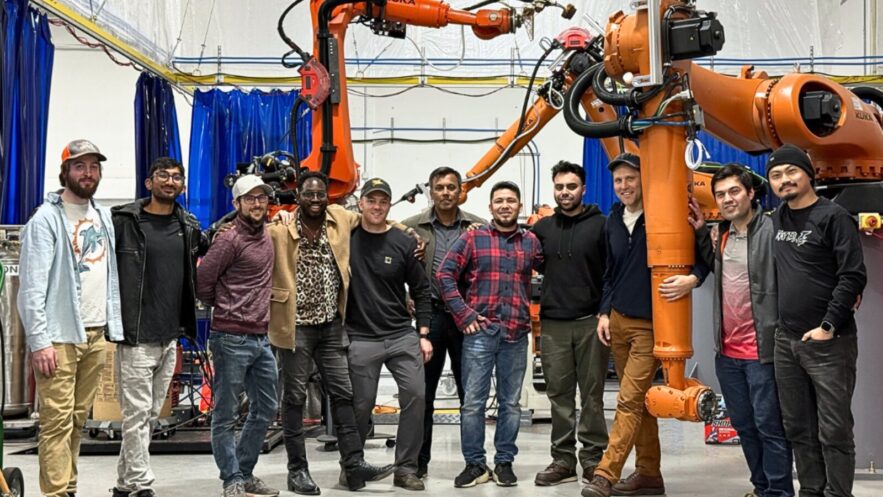
Los Angeles has a long history of building things that fly. Aerospace plants shaped whole neighborhoods in the South Bay, and a newer generation of rocket and defense companies has kept that tradition alive. Solideon, a robotics manufacturing company, is the latest to plant itself in it.
In 2026 the company moved its headquarters from the Bay Area to Los Angeles. It now operates from a shared factory space in Inglewood, where standard industrial robot arms run on Solideon’s software to print, machine and assemble large metal parts.
A homecoming of sorts
For founder and CEO Oluseun Taiwo, the move closes a loop. He came to Southern California at 21, fresh out of a manufacturing engineering program in Illinois, to 3D-print rocket engine components in metal at Rocket Lab USA. He later worked in additive manufacturing on Virgin Orbit’s LauncherOne program before founding Solideon in 2021.
Southern California offered what a hardware company needs: engineers who have built flight hardware, machinists and welders, suppliers, and defense customers close by. It also offers neighbors working on the same problems.
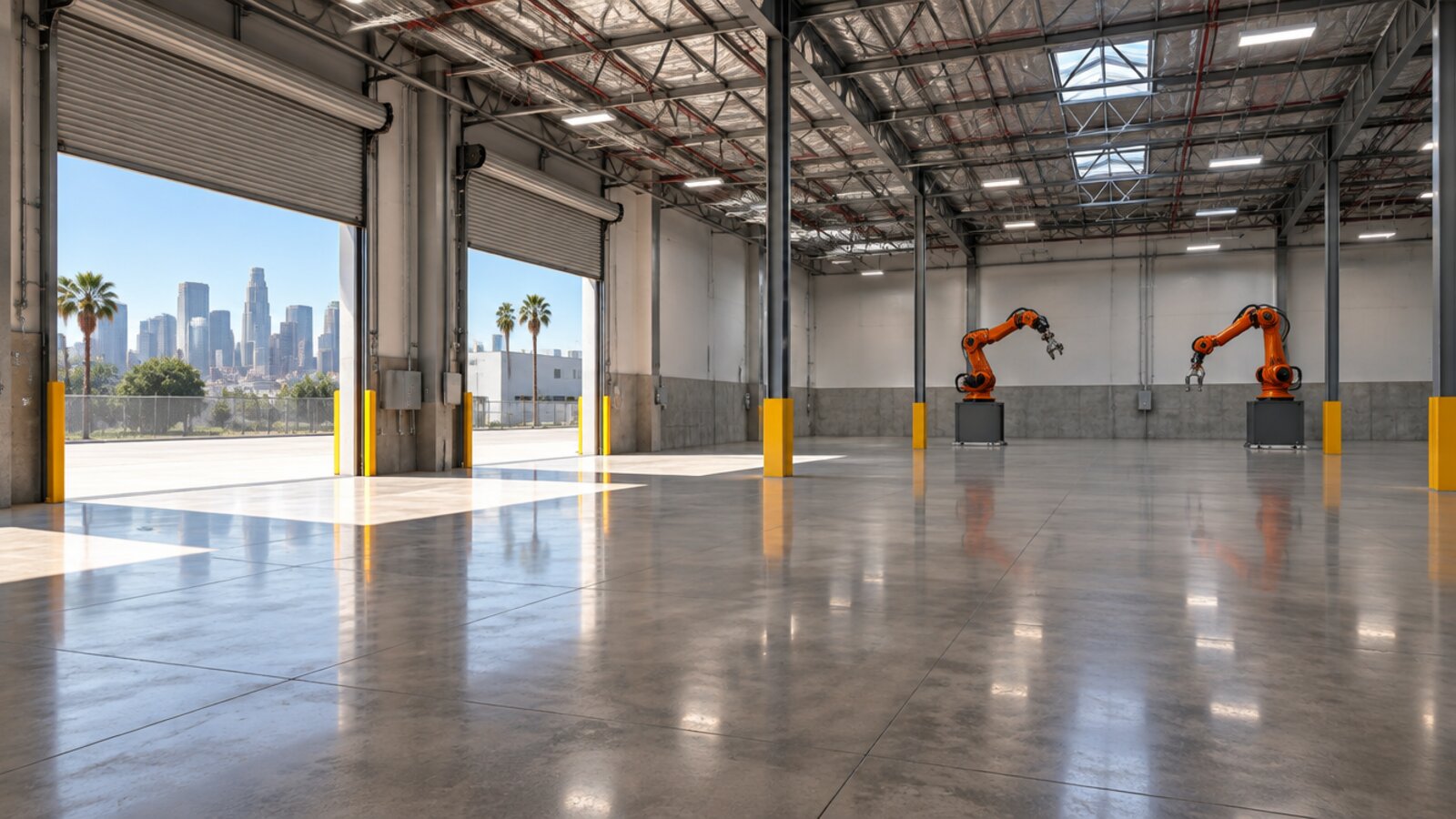
Sharing the floor
Solideon shares its Inglewood space with Zoo, a Los Angeles startup building agentic speech-to-CAD tools that turn a spoken description into a design file. The two are working on workflows that go from spoken design intent all the way to a manufactured part.
Taiwo sees that kind of partnership as essential.
“We need a network of companies to help with adoption.”
Building a team in LA
The company is small and growing. Taiwo says Solideon has raised roughly $9 million to date and expects more funding. Its main customers today are in defense: the U.S. Air Force has backed a deployable manufacturing cell through a $1.25 million AFWERX contract, and the company operates Solideon Defense in Norfolk, Virginia.
Commercial interest extends to energy and heavy industry, where getting a part to a remote site can cost more in time than in materials.
Taiwo is clear about the long-term horizon, which reaches all the way to the Moon and Mars. But the work in Inglewood is about something more immediate: proving that a few robots and the right software can do the job of a plant, and doing it in a city that already knows how to build.