

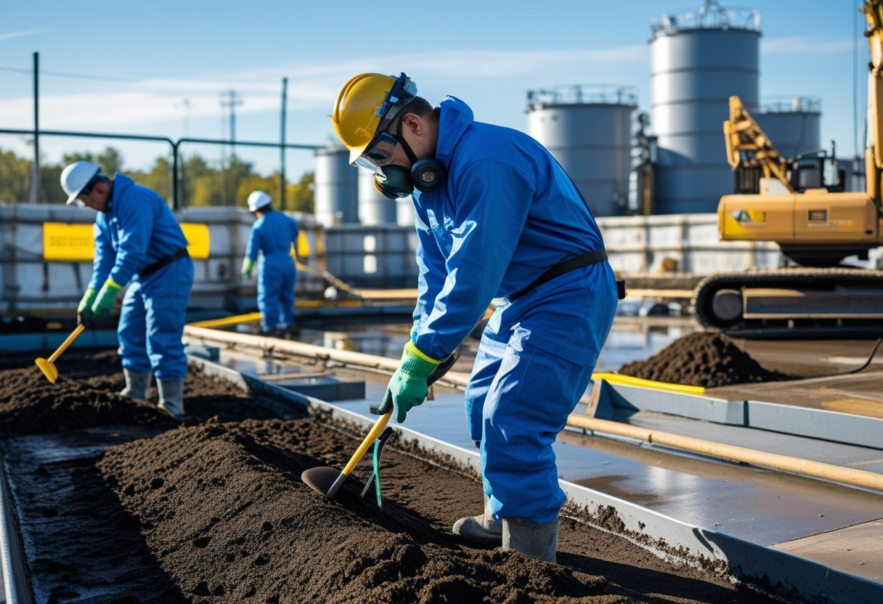
Industrial operations and urban development frequently present complex environmental remediation challenges—including soil contamination, vapor emissions, hydrocarbon pollutants, and evolving regulatory constraints. These realities demand a structured, science-based approach to risk reduction. Remedia International, an environmental remediation technology company, supports this effort through practical, field-tested tools and methods. One such solution is the Remedia™ Heavy Metal Stabilizer, a material designed for heavy metal chemical stabilization in soils. This treatment promotes reduced mobility of metals through chemical binding, supporting compliance-driven remediation strategies without implying guaranteed performance outcomes.
Environmental remediation refers to the strategic process of reducing, removing, or controlling environmental pollutants in soil, water, or air to meet regulatory and safety standards. It addresses a broad range of site-specific challenges, from odor and vapor issues to hydrocarbon impacts and heavy metal contamination. Remediation is not a single-product solution—it is a multidisciplinary intervention that uses site data, environmental science, and engineered technologies to minimize risk. Companies like Remedia International provide tools that support these efforts by enabling practitioners to manage contamination more effectively. Remediation workflows often evolve through site assessment, application of appropriate methods, and ongoing evaluation to ensure sustainable environmental management.
Source Control
Effective remediation begins with identifying and minimizing the source of contamination. This step prevents further pollutant release and simplifies downstream treatment.
Containment and Stabilization
Once a contaminant is present, limiting its migration is essential. Remedia International supports techniques that immobilize or restrict the movement of contaminants through engineered barriers or chemical interactions.
Treatment and Mitigation
After containment, selected processes aim to reduce the contaminant’s concentration or hazard potential. These treatments are applied under controlled conditions to achieve site-specific remediation objectives.
A complete remediation system consists of three main functional elements. First are the application and delivery systems, which ensure accurate deployment of remediation materials to affected zones—whether through injection, surface application, or mixing. Second, treatment agents like the Remedia™ Heavy Metal Stabilizer are used to interact with pollutants, modifying their behavior or reducing mobility. Lastly, monitoring and support infrastructure—such as sampling plans or field observation tools—helps assess performance over time and guide further action. These components work together to provide an adaptive, science-based framework for environmental risk reduction.
Remedia Global, operating internationally as Remedia International, is a remediation technology company specializing in site-specific, chemistry-based solutions for environmental applications. Founded to support responsible land use and industrial operations, the company designs and supplies products that address contaminants in soil, sediment, and water. Remedia’s technologies are deployed across a range of environmental conditions, including industrial facilities, construction zones, and infrastructure development areas. With a focus on contaminant control, Remedia Global collaborates with consultants and environmental engineers to implement practical remediation strategies. Its portfolio includes heavy metal stabilization agents and other tools that align with regulatory-driven remediation workflows. The company’s operational presence spans North America and select global markets, where its formulations are adapted for regional compliance and application methods. As a provider of heavy metal stabilization agent technologies, Remedia maintains a focus on environmental stewardship through structured, science-based intervention.
Remedia International provides a suite of remediation materials and formulations designed for use in diverse environmental conditions. These include contaminated industrial soils, vapor-impacted zones, hydrocarbon sites, and odor-sensitive environments. Solutions are developed to support in-situ and ex-situ applications, depending on site constraints and remediation objectives. The company’s technologies are structured around chemical binding and immobilization mechanisms that reduce the environmental mobility of select pollutants. Deployment methods include surface mixing, direct injection, and incorporation during excavation or construction activities. In many cases, these treatments are integrated into larger environmental management systems, working alongside containment structures and field monitoring protocols. Each system component is engineered to complement site assessments and risk management goals, rather than to function as stand-alone products. This approach allows for consistent integration into regulatory-compliant remediation strategies tailored to specific site conditions.
One example of Remedia’s technology offerings is its heavy metal stabilization and immobilization products, which are used to manage the mobility of metals in contaminated soils. These materials are suitable for application at legacy industrial sites, construction zones, or infrastructure areas where soils may contain residual contaminants. The stabilization products are designed to be delivered through various field methods, including mechanical blending and targeted injection, depending on project specifications. Each formulation is manufactured to align with regulatory requirements and can be adapted based on site chemistry. The intent of these technologies is to support immobilization of target contaminants, reducing their potential for off-site migration. Remedia’s tools are applied within broader environmental management frameworks, often as part of multi-phase remediation plans involving source control, barrier systems, or field monitoring infrastructure.
Assessment and Planning
Remediation begins with site-specific assessment to identify contaminant profiles, affected media, and exposure pathways. This information is used to develop a treatment plan tailored to environmental conditions and regulatory needs.
Deployment and Implementation
Technologies from Remedia International are deployed through established delivery methods such as in-situ injection, mechanical blending, or incorporation into engineered fill. These are selected based on soil characteristics, contaminant type, and site accessibility.
Monitoring and Operational Considerations
Post-deployment, environmental professionals may implement field sampling or monitoring programs to document site conditions. Remedia’s solutions are designed to function within these systems, ensuring they remain aligned with project timelines and compliance benchmarks.
Remedia International technologies are designed for application across a wide range of industrial and environmental settings. In industrial and manufacturing facilities, they help address legacy contamination in soil or fill material related to site operations. At hydrocarbon-impacted sites, technologies may be used in combination with other materials to treat complex chemical mixtures. Waste management areas and transfer stations also present opportunities for application, particularly where long-term stability or control of specific elements is required. In compliance-driven projects—such as brownfield redevelopment or infrastructure expansion—Remedia’s products may be integrated during grading, excavation, or capping activities. Environmental restoration initiatives often involve managing contaminants without removal, where chemical stabilization approaches can support long-term risk management. Across all these use cases, the focus is on enabling environmentally responsible reuse, containment, or treatment in line with site-specific planning documents.
When applying Remedia International’s formulations, environmental professionals consider site conditions, seasonal factors, and compatibility with existing remediation systems. Products are used in accordance with local regulatory frameworks, including guidelines for soil treatment and waste management. Handling requirements are aligned with standard environmental health and safety practices, including on-site mixing procedures and exposure precautions. Applications are typically selected to match the contaminant profile and surrounding use context—urban redevelopment, industrial infrastructure, or environmental buffers. From a sustainability standpoint, the use of in-place stabilization or non-invasive application methods may support goals such as resource conservation and reduced environmental disruption. As a provider of heavy metal immobilization technology, Remedia International ensures that each solution is positioned within a responsible, systems-based approach to remediation planning.
Remedia International technologies are designed for seamless integration into diverse environmental and construction workflows. Deployment logistics vary by site, with options including in-situ injection, mechanical blending, or surface application. Compatibility with existing infrastructure—such as excavation schedules, containment structures, or grading equipment—is a key factor in planning. Storage requirements follow standard environmental product guidelines, including protection from moisture and temperature extremes. Handling and maintenance are managed by trained environmental professionals using established safety protocols. Remedia International provides product documentation and supports field integration to ensure proper use within multi-phase remediation projects.
Frequently Asked Questions (FAQs)

What is environmental remediation?
Environmental remediation is the process of reducing or managing contaminants in soil, water, or air to meet environmental and regulatory standards through science-based interventions.
Where is remediation typically applied?
It is commonly used at industrial facilities, brownfield redevelopment sites, hydrocarbon-impacted areas, and waste transfer locations where contamination may affect health or environmental quality.
What are the safety and handling considerations?
Remedia products are handled by environmental professionals following standard health and safety practices. Usage involves protective equipment and site-specific procedures for mixing, application, and transport.
Are there infrastructure requirements for using these systems?
Yes, implementation may require compatible equipment for mixing or injection and coordination with site access conditions, grading schedules, or other remediation infrastructure.
How do these technologies differ from traditional mitigation?
Unlike physical removal, Remedia’s stabilization approach treats contaminants in place. This process-focused method allows integration with existing site systems and supports long-term management.
What are the environmental considerations of using these systems?
In-place treatment methods may reduce the need for excavation or transport, aligning with sustainability goals such as lower disruption and conservation of site materials.
Can this product be used alongside other remediation methods?
Yes, Remedia™ Heavy Metal Stabilizer can be part of a multi-technology strategy, supporting containment, monitoring, or chemical treatment plans in complex remediation projects.
Remediation planning and implementation continue to evolve as environmental expectations, land use pressures, and regulatory frameworks become increasingly complex. Organizations involved in industrial operations, infrastructure development, or environmental restoration are incorporating structured remediation systems as part of broader environmental management practices. Companies such as Remedia International support these efforts through the supply of field-ready materials and application strategies tailored to diverse site conditions. With an emphasis on integration and regulatory alignment, their tools are utilized across a range of contaminated environments where engineered interventions are necessary. As environmental professionals navigate both legacy and emerging challenges, practical remediation technologies remain a vital component of site management frameworks used worldwide.