

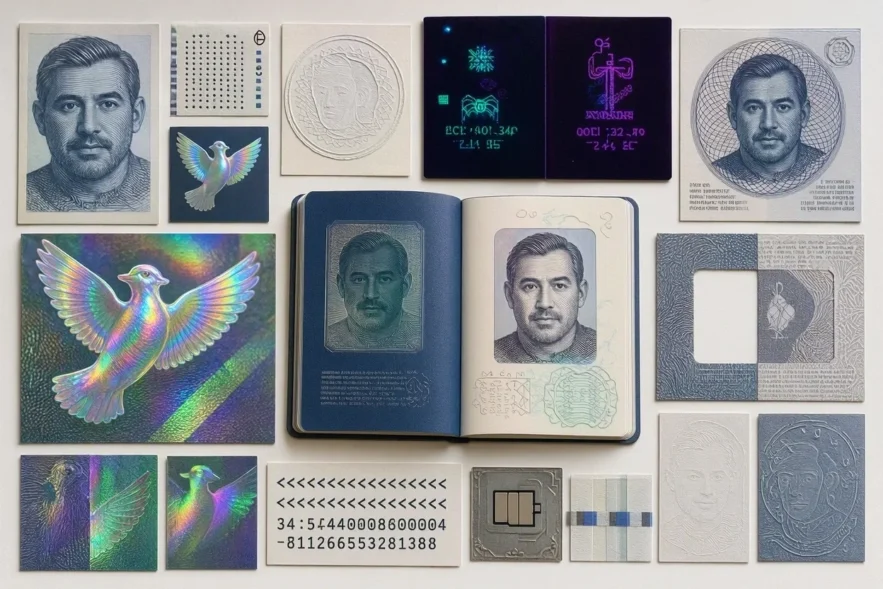
Checking names, document numbers and portraits across both formats provides one part of a broader document assessment.
WASHINGTON, DC, October 12, 2026 — Electronic passports give authorities two closely linked representations of the same travel credential, allowing them to compare information printed or personalized on the physical identity page with protected biographical and biometric records retrieved from the contactless chip.
When names, document numbers, dates, nationality information, machine-readable data, and facial images match across both sources, that consistency can strengthen confidence in the document, while significant unexplained differences can warrant closer professional examination.
The Physical and Electronic Passport Should Tell the Same Story
A modern electronic passport combines a physical booklet with visible personalization and security features and a contactless chip with standardized electronic records that should match the identity and document information established during legitimate government issuance.
The ICAO ePassport validation framework specifically recognizes the value of comparing authenticated electronic information with printed information and the facial image appearing on the physical biographical data page when evaluating an electronic travel document.
The Comparison Becomes Stronger After Electronic Authentication
Simply reading information from a chip provides useful data, but the comparison becomes much more meaningful when Passive Authentication confirms that the protected electronic records remain digitally signed and unchanged since legitimate personalization.
Once investigators authenticate the electronic information, they can use it as an independent reference to compare names, dates, document numbers, portraits, machine-readable information, and other visible elements in the physical passport.
Data Group 1 Provides an Important Electronic Reference
Electronic passports store machine-readable biographical and document information in Data Group 1, giving inspection systems a structured electronic representation they can compare directly with the machine-readable zone printed on the physical passport.
ICAO guidance specifically allows comparison of the conventional visual MRZ with the authenticated MRZ information stored electronically, helping establish that the contactless chip content and the physical travel document belong together rather than representing unrelated identities.
The Passport Number Is an Obvious Comparison Point
The document number printed on the identity page and encoded in the physical machine-readable zone should correspond to the number in the electronic passport information stored on the contactless chip.
An unexplained difference matters because the physical and electronic components are meant to represent one government-issued credential, though specialists still need to determine whether the inconsistency results from alteration, capture error, technical corruption, or another explanation.
Names Can Also Be Compared Across Representations
The holder’s name appears in the visible identity information and machine-readable structures, and corresponding standardized information may also be available electronically, providing another opportunity to identify discrepancies during inspection.
Different transliteration conventions and standardized MRZ formatting can affect how names appear, so trained systems and personnel distinguish legitimate formatting differences from substantive inconsistencies rather than expecting every physical and electronic representation to be typographically identical.
Birth Information Provides Another Cross-Check
The holder’s date of birth appears in the passport’s visible biographical information and standardized electronic identity records, so agreement between those sources is another useful element in a broader document assessment.
A discrepancy in birth information deserves attention because it can indicate that physical personalization no longer matches authenticated electronic data, although optical capture errors and other technical explanations must also be considered before reaching conclusions.
Expiration Information Should Also Remain Consistent
The expiration date printed on the passport and encoded in its machine-readable information should match the relevant electronic representation, allowing inspection systems to compare a document-specific value across separate physical and digital sources.
Because expiration information also participates in some electronic access procedures, accurate capture and interpretation become especially important before an apparent mismatch is treated as evidence of intentional document alteration.
Nationality and Issuing Information Add Further Context
Country codes, nationality information, and issuing-state references can appear across the physical document, MRZ, electronic records, and cryptographic certificate environment, giving professional systems several related elements whose consistency can be evaluated.
ICAO guidance recommends consistency checks that compare issuing-country information from authenticated electronic data, the visual MRZ, and relevant certificate structures, helping authorities identify combinations that don’t match expected document relationships.
The Printed MRZ Is Particularly Valuable for Comparison
The machine-readable zone provides a standardized physical representation designed specifically for reliable automated capture, making it one of the easiest parts of the passport to compare directly with electronically stored identity information.
Because the MRZ follows internationally standardized structures, compatible systems can check consistency across documents from many countries without relying solely on the visual arrangement or language used elsewhere on the identity page.
The Facial Image Creates a Second Major Comparison
The visible passport portrait and the facial image stored electronically should represent the same legitimate holder, giving authorities another independent relationship to assess when comparing the physical and digital components of an electronic passport.
The chip image can provide a cleaner electronic reference because it avoids glare, printing texture, optical overlays, camera perspective, and other visual effects introduced when someone photographs the physical identity page.
The Electronic Portrait Can Strengthen Physical Review
Once authorities cryptographically authenticate the chip portrait, they can compare that trusted digital reference with the image personalized into the physical passport and determine whether both representations still support the same identity.
A significant unexplained difference can matter because altering the visible portrait without a corresponding change to the authenticated electronic information can cause the two identity representations to diverge.
Small Image Differences Are Not Automatically Suspicious
Printed and electronic portraits can differ slightly in cropping, resolution, tone, contrast, color reproduction, scaling, or visual appearance because the physical and digital versions pass through different production and display processes.
Professional examination therefore concentrates upon meaningful identity consistency rather than expecting pixel-for-pixel equality between a biometric file stored electronically and a portrait reproduced through polycarbonate, printing, laser personalization, or another physical manufacturing process.
The Smartphone Camera Adds Yet Another Representation
During mobile verification, the phone can capture an optical image of the passport page and separately retrieve the biometric portrait stored within the chip, allowing specialized software to compare information obtained through two distinct technologies.
If the application also captures the current passport holder, the verification environment can contain a physical-page portrait, an electronic reference portrait, and a newly captured live image representing the person presently using the document.
Each Image Answers a Different Question
The printed portrait helps authenticate and visually inspect the physical credential, the chip portrait provides an electronic biometric reference associated with protected passport data, and the live image helps connect the document with the person presenting it.
Combining those sources can create stronger evidence, but the system still needs to understand their different origins rather than treating three facial images as interchangeable copies carrying identical security significance.
Electronic Authentication Does Not Inspect the Entire Booklet
Even perfect agreement between printed biographical information and electronically authenticated records cannot determine whether every visa page, watermark, holographic element, ultraviolet feature, tactile characteristic, or binding component remains genuine.
The PRADO document reference system shows the wide range of physical security characteristics that document examiners can evaluate independently of the electronic identity information stored in the passport chip.
Physical Examination Adds Evidence the Chip Cannot Supply
Inspectors can examine substrate characteristics, laser engraving, optically variable devices, watermarks, microprinting, ultraviolet artwork, secondary portraits, page numbering, stitching, and other features that electronic comparison cannot evaluate directly.
The strongest passport assessment therefore combines consistency between printed and electronic data with an examination of the materials and manufacturing characteristics expected for the specific document generation presented.
A Genuine Chip Can Accompany a Physically Altered Document
A person could manipulate visible passport elements while leaving the original electronic component untouched, allowing the chip to continue producing authentic, signed information despite suspicious changes elsewhere in the booklet.
Cross-comparison becomes valuable in that scenario because authenticated electronic information can reveal a mismatch with altered visible personalization, even when the contactless component continues functioning exactly as designed.
A Physical Match Does Not Prove Electronic Authenticity
The opposite limitation also applies because printed information can match electronically displayed information even when the reader has not established that the chip data carry a trustworthy government signature or remain stored on the original electronic component.
Document comparison is therefore stronger when electronic information has first undergone appropriate authentication, rather than when software simply retrieves and displays apparently matching text and photographs.
Passive Authentication Establishes the Electronic Baseline
Passive Authentication checks digital signatures and protected reference values associated with passport data, helping determine whether retrieved records remain consistent with legitimate issuance before authorities rely upon them for physical comparison.
Without that cryptographic baseline, matching electronic and printed information could provide useful consistency evidence but offer weaker assurance that authorities can trust the electronic records themselves.
Anti-Cloning Checks Can Add Another Layer
When supported, Active Authentication or Chip Authentication can provide additional evidence that the passport’s electronic information remains tied to a chip with protected cryptographic credentials rather than an exact copy of signed static data.
This distinction matters because physical-electronic consistency becomes more persuasive when authorities possess evidence not only that the electronic information is authentic but also that the responding chip belongs to the legitimate travel document.
ICAO Explicitly Supports Physical-Electronic Comparison
ICAO’s current security specifications identify comparison between the conventional machine-readable zone and authenticated chip-based MRZ information as an advanced security method that can help establish that the physical electronic passport and its contactless contents belong together.
That comparison does not address every possible counterfeit or cloning scenario, but it provides another independent relationship that a manipulated document must preserve convincingly to survive broader inspection.
Inconsistencies Require Investigation Rather Than Instant Conclusions
A difference between physical and electronic information can arise from deliberate alteration, but it can also result from optical recognition mistakes, software errors, damaged electronic data, unusual document formatting, or other legitimate technical circumstances.
Professional systems therefore treat unexplained mismatches as reasons for closer examination rather than allowing one discrepancy automatically to become a final determination about fraud, nationality, identity, or government issuance.
OCR Errors Can Create False Mismatches
Smartphone and document-reader cameras can misrecognize similar characters, especially when glare, scratches, unusual fonts, page curvature, reflections, or poor focus affect the machine-readable zone or visible personalization.
Applications should therefore verify captured information through standardized check digits and repeat uncertain optical readings before comparing those values against authenticated electronic information and declaring a substantive inconsistency.
Formatting Differences Can Be Legitimate
Names with multiple components, transliteration differences, filler characters, shortened fields, and standardized machine-readable formats can make information appear different across visual and electronic representations without describing different identities.
Automated systems designed for passport comparison need to understand these legitimate transformations so formatting differences don’t trigger unnecessary alerts that trained personnel later find have no security significance.
Document Generations Also Need Correct Identification
Governments can issue several passport generations simultaneously, each with different visual layouts, personalization technologies, chip configurations, or security elements, while remaining valid until the normal expiration.
The physical and electronic information should still correspond appropriately, but inspectors need the correct document model before deciding whether a particular arrangement, feature, or electronic behavior falls outside the expected design.
Secondary Portraits Offer Another Physical Comparison
Many modern passports include ghost images, secondary laser portraits, or other personalized representations that make alteration harder by repeating identity information through another manufacturing process.
Those features can be compared with the principal portrait and electronic biometric reference, increasing the number of independent representations that must remain consistent within a genuine-looking document.
Repeated Identity Information Is a Deliberate Security Strategy
Modern document designers often place names, dates, document numbers, portraits, or related information in multiple physical or electronic forms because duplication creates opportunities to spot inconsistencies after unauthorized alteration.
The security benefit comes from requiring several independent elements to agree, rather than assuming repeated information is secret, making a document’s internal relationships part of its authentication architecture.
Consistency Checks Can Be Automated
Professional document readers can capture physical passport information electronically and compare it with records retrieved from the contactless chip, allowing many routine consistency checks to occur without requiring an officer to compare every character manually.

Automation improves speed while leaving unusual results for human review when the system identifies conflicting information, uncertain optical capture, or other conditions outside expected parameters.
Human Review Remains Important for Ambiguous Cases
Automated software can identify mismatches efficiently, but trained document examiners remain important when differences involve transliteration, image appearance, physical damage, unusual national formatting, or other circumstances requiring contextual interpretation.
The objective is not merely to find that two values differ, but to determine why they differ and whether that explanation affects confidence in the passport’s authenticity or legitimate use.
The Holder Adds Another Consistency Check
After authorities compare the physical and electronic passport information, they can examine whether the person presenting the document matches the protected facial identity represented in both sources.
A passport whose physical and electronic portraits agree perfectly can still be misused by another person, demonstrating why internal document consistency does not eliminate the separate requirement to verify the holder when circumstances require it.
Current Status Remains Outside the Comparison
Perfect agreement between the identity page and authenticated chip cannot reveal automatically whether the issuing government later canceled, revoked, or recorded the passport as lost or stolen.
Government status databases address those later administrative events, providing another independent layer beyond the information permanently incorporated into the document during issuance.
Immigration Eligibility Is Another Separate Question
A passport can remain physically genuine, electronically authentic, internally consistent, currently valid, and correctly matched to its holder even when the traveler lacks a required visa or fails another destination-country admission requirement.
Comparing physical and electronic details therefore supports document authentication without resolving every legal question about the traveler’s international movement.
Smartphones Can Demonstrate the Comparison Clearly
A purpose-built passport app can photograph the identity page, read its machine-readable information, retrieve chip data via NFC, and display physical and electronic information in the same mobile workflow.
That capability makes smartphones useful educational and verification tools because users can observe how one government credential represents the same identity through both visible document features and protected electronic records.
Consumer Applications Still Have Important Limits
A mobile application may accurately compare printed and electronic information but may have incomplete issuer certificates, limited anti-cloning support, no access to government status systems, and no ability to perform comprehensive physical security inspections.
Users should therefore treat a successful consistency comparison as one useful result in a broader verification process, not as a comprehensive statement that every aspect of the passport has been independently authenticated.
Remote Passport Images Cannot Provide the Same Evidence
A photograph or JPEG copy of a passport can preserve visible names, numbers, and portraits but cannot reproduce live chip communication, cryptographic authentication, dynamic optical behavior, tactile characteristics, or authoritative current status checks.
Comparing data from an image alone therefore provides considerably less evidence than comparing the original physical passport with electronically authenticated information retrieved directly from its contactless chip.
Metadata Does Not Replace Document Authentication
Digital metadata attached to a photograph or scan describes the image file’s properties rather than establishing that the physical passport was genuinely manufactured or that its electronic information carries valid government signatures.
Authenticity conclusions should therefore rely on the underlying travel document, its physical features, authenticated electronic data, and appropriate government records, rather than treating a copied image’s properties as substitute evidence.
Internal Consistency Is Valuable Because Fraud Can Create Contradictions
A manipulated passport must maintain agreement across several identity representations to avoid detection during layered inspection, making internal consistency a valuable security concept even though no single comparison is decisive.
An altered document number, substituted portrait, changed date, or modified machine-readable field becomes harder to conceal when corresponding authenticated information remains independently stored in the chip.
Agreement Strengthens Confidence Without Proving Everything
When names, dates, document numbers, portraits, and machine-readable information match between the physical passport and authenticated electronic records, authorities have another reason to trust those components belong together.
That agreement cannot prove current validity, legitimate possession, immigration eligibility, or every physical security feature, but it can substantially strengthen the internal consistency assessment of the travel document.
Disagreement Provides a Reason for Escalation
A significant, unexplained difference between authenticated electronic information and visible physical personalization warrants further investigation because legitimate passport components are meant to represent the same government-issued identity and document.
Further examination can determine whether the discrepancy results from fraud, damage, optical-recognition error, technical malfunction, legitimate formatting variation, or another cause before reaching a final conclusion.
Comparison Works Best as One Layer Among Several
Through Amicus International Consulting’s passport security resource, readers can see how physical-electronic consistency checking complements digital signatures, chip authentication, physical security features, biometric holder verification, and government status systems in modern passport examination.
The comparison is powerful because it connects two sides of the same credential, letting electronically authenticated information serve as an independent reference for what the physical document visibly represents.
Physical and Electronic Identity Information Should Ultimately Converge
A modern electronic passport is designed so its visible identity page, machine-readable information, electronically stored biographical records, and biometric portrait describe the same person and the same government-issued travel document.
Comparing those representations can reveal inconsistencies that deserve closer examination, particularly when authenticated electronic information conflicts with visible personalization or when the physical passport presents identity details that cannot be reconciled with its protected digital records.
The strongest conclusion comes not from a single matching name or photograph, but from several independent physical, electronic, biometric, and administrative checks that support the same identity and document, creating a layered assessment that is more reliable than any isolated feature.