

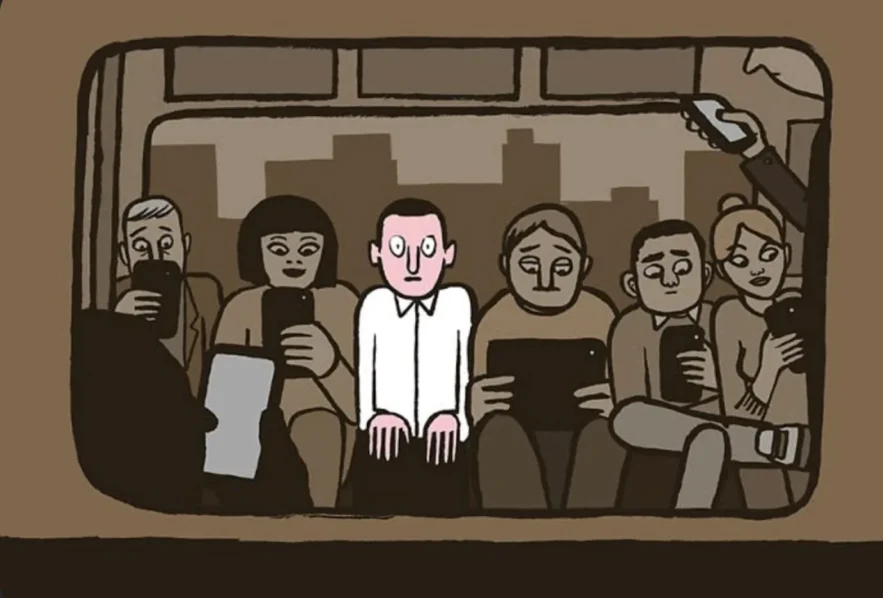
Photo: Enzzo Gabriel
If you spent any time watching human behavior in coffee shops or scrolling through culture commentaries this week, you probably noticed a fascinating paradox playing out in real time.
On one hand, millions of young people are actively participating in viral offline social movements, gathering in quiet parks for screen free book clubs and trading their smartphones for old school flip phones. On the other hand, the moment a pause occurs in line or at a red light, those same hands instinctively reach down to check a glowing screen.
We are living through a strange historical moment where almost everyone feels the heavy, subtle pull of digital saturation, yet almost no one wants to use the word addiction.
When we hear the word addiction, our minds immediately picture dark, dramatic scenarios: ruined careers, complete physical dependence, and total societal collapse. Because scrolling through short form videos or checking notifications every six minutes does not look like a Hollywood crisis, we reassure ourselves that we are completely in control. We tell ourselves that we are just staying connected, keeping up with friends, or unwinding after a long day at work.
Yet, if you sit quietly and ask yourself a simple, uncomfortable question, the answer might surprise you: when was the last time you sat alone with your own thoughts for twenty minutes without reaching for a digital pacifier?
The Stealthy Architecture of Digital Attachment
The fundamental reason digital device overuse is so difficult to spot is that it does not destroy your life overnight. It erodes it in tiny, invisible increments.
Most young adults in their late teens and twenties do not log onto social platforms with the conscious intention of wasting three hours. They open an application to check a single message or look at a quick recipe. But modern digital platforms are built by some of the sharpest behavioral minds on the planet, engineered specifically to exploit human psychology.
The Intermittent Reward Trap: The mechanism that keeps you scrolling is the exact same psychological engine that keeps someone pulling the lever on a slot machine. You do not get a reward every time you swipe, but the possibility of seeing something surprising, funny, or validating on the next swipe keeps your nervous system in a state of perpetual, low grade anticipation.
Over time, this constant stimulation changes your baseline tolerance for normal life. Everyday moments like waiting for a train, sitting through a lecture, or cooking a meal begin to feel unbearably dull. The quiet, unhurried rhythm of the real world starts to feel like an intolerable desert of boredom.
Why Simple Screen Time Limits Keep Failing
When young people realize that their digital habits are taking over their lives, the standard response is to set up strict personal boundaries. They set application timers, turn their screens to grayscale, or download app blockers promising to restore balance.
Yet, for the vast majority of people, those artificial boundaries collapse within forty eight hours.
The reason these self-help tricks fail so consistently is that they treat screen overconsumption as a simple habit flaw rather than a coping mechanism for emotional discomfort.
- What we think we are doing: I am just bored and checking my phone for entertainment.
- What is actually happening: I am reaching for a screen to escape a sudden wave of social anxiety, solitude, or career dread.
When a young adult feels overwhelmed by the sudden weight of independent living, picking up a smartphone offers an immediate, risk free emotional bunker. Inside the screen, you are never rejected, never forced to face awkward silences, and never required to process uncomfortable internal feelings. The device becomes an emotional security blanket that protects you from the friction of real life.
Moving Out of the Digital Bunker
If we want to help a generation reclaim their attention and agency, we have to stop offering them superficial hacks and start offering them real world alternatives.

This core realization is central to the point of view expressed by Dr. Jesse Viner and his team at Yellowbrick, a national psychiatric treatment center specializing in treating teenagers and emerging adults. Having spent decades guiding emerging adults through complex emotional and developmental hurdles, Dr. Jesse Viner has consistently pointed out that you cannot heal a problem of digital isolation by simply taking away a device. At Yellowbrick, the focus is not on preaching digital abstinence, but on helping young adults build a life that is so rich, engaging, and socially meaningful that the screen naturally loses its hypnotic grip.
At Yellowbrick, emerging adults are brought into a vibrant, face to face living community. Instead of sitting alone in a bedroom trying to willpower their way through a digital detox, young people engage in real world responsibilities, cook shared meals, resolve interpersonal conflicts, and practice taking supported risks alongside real peers and mentors.
When a young person experiences the genuine warmth and safety of real human belonging, the artificial comfort of a social feed ceases to be the only sanctuary available.
Reclaiming the Art of Unstructured Time
Recognizing your own attachment to digital platforms is not a reason for shame or self criticism. It is simply an invitation to wake up and take back the driver seat of your own life.
If you suspect that your relationship with technology has crossed the line from helpful tool to silent dependency, breaking the cycle does not require throwing your phone into the ocean. It starts with small, intentional choices to reintroduce real world friction back into your days:
- Embrace the awkward pauses: Practice standing in line, riding an elevator, or walking to your car without pulling out your phone. Allow your brain to experience the natural rhythm of unoccupied thought.
- Create screen free sanctuaries: Keep devices completely out of your bedroom at night and establish phone free zones during meals with friends and family.
- Prioritize side by side human connection: Swap out text chains and online group chats for real world activities like walking, cooking, or playing sports, where presence is physical and undivided.
The world waiting for us outside our screens is messy, unpredictable, and sometimes uncomfortable. But it is also where real relationships are forged, where genuine resilience is built, and where a meaningful human life actually happens. It is time to put down the mirror and step back into the room.