

Prosecutors and defense lawyers are preparing for a federal trial expected to examine years of Medicare billing records, hospice certifications, beneficiary identities, referral payments, electronic communications, and disputed financial transactions across four Southern California providers.
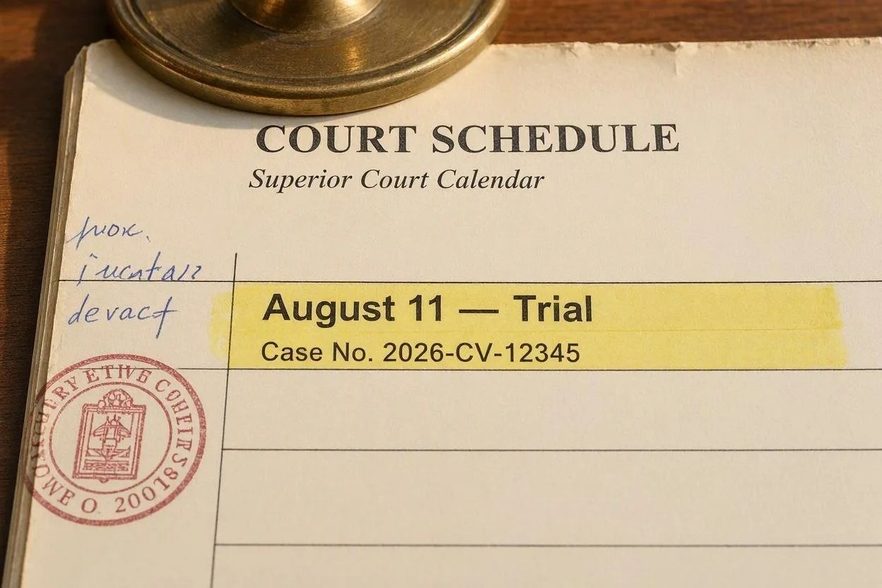
WASHINGTON, DC — An August 11 trial setting has placed the federal hospice fraud prosecution of Oren David Shachar and Abraham Shin on an approaching courtroom calendar in Los Angeles, less than two months after their arrests and arraignments.
The Justice Department alleges that four hospice companies connected to Shachar submitted approximately $27,731,000 in false Medicare claims and received approximately $26,908,000, creating a document-intensive prosecution spanning beneficiary eligibility, identity records, referrals, reimbursements, and corporate spending.
Prosecutors contend that claims involved people who were not terminally ill, services allegedly billed after beneficiaries had died, and referrals purportedly obtained through unlawful payments, while the defendants retain every right to dispute those accusations through counsel and admissible evidence.
Shachar, Shin, and co-defendant Jeannie Choi remain presumed innocent unless guilt is established beyond a reasonable doubt, and an announced trial date is a scheduling milestone, not proof that any allegation in the indictment has been proved.
August 11 is the publicly announced trial setting
The Justice Department’s official Central District of California announcement states that Shachar and Shin were scheduled for trial on August 11 after both men were arrested, initially appeared, and were arraigned in Los Angeles on June 18.
That announcement, issued June 23, supplies the public foundation for the August date, although the operative federal docket and the court’s latest orders ultimately control whether jury selection begins then or the proceeding moves to a later day.
Complex criminal calendars can change because of discovery volume, motion practice, expert preparation, counsel scheduling, plea discussions, severance questions, or judicial findings that additional preparation time serves the interests of justice under federal procedural requirements.
Accordingly, describing August 11 as the announced trial setting is accurate without portraying it as an immutable deadline, particularly when publicly accessible reporting does not reproduce every later docket entry or scheduling conference involving all three defendants.
The scheduled proceeding follows a rapid charging timeline
A federal grand jury returned the 16-count indictment on June 16, and agents arrested Shachar and Shin two days later before both men appeared in United States District Court, entered the federal process, and obtained release on bond.
Choi was arrested several days later, according to prosecutors, creating a different procedural timeline that may affect whether her case proceeds alongside the two men or follows a schedule set by separate orders and pretrial decisions.
Independent news coverage describing the Los Angeles hospice case also reported the August 11 setting for Shachar and Shin while emphasizing the alleged use of deceased beneficiaries’ information and the defendants’ continuing presumption of innocence.
Because that reported date concerned Shachar and Shin specifically, careful coverage should avoid assuming that Choi shares every deadline, release condition, defense position, or strategic decision without a court filing or reliable public record confirming the same arrangement.
Years of Medicare records could define the trial
The indictment describes allegedly false claims submitted from February 2021 through March 2026, meaning trial preparation may require both sides to reconstruct more than five years of enrollment activity, hospice services, reimbursements, staffing, referrals, and internal company decisions.
Medicare claim files can identify beneficiaries, service periods, billing codes, provider numbers, reimbursement amounts, attending physicians, and submission dates, but those data points acquire evidentiary meaning only when connected to authenticated clinical records and knowledgeable witnesses.
Prosecutors may attempt to show recurring patterns across companies and beneficiaries, while defense lawyers can insist that every charged execution be evaluated independently and that aggregated data never replace proof concerning the person, record, intent, and transaction identified in each count.
The enormous overall billing figure may command public attention, yet jurors will likely need to distinguish the broader alleged scheme from the selected claims charged as substantive offenses, because criminal liability cannot rest upon scale or suspicion alone.
Four hospice companies create a complicated evidence map
Prosecutors allege that Shachar owned, controlled, or operated Gentle Touch Hospice Care in Valley Glen, Oxford Hospice Care in Montclair, Art of Hospice in Encino, and Holly Trinity Hospice in Glendale during different portions of the charged period.
Each company may generate separate corporate filings, Medicare enrollment materials, bank accounts, payroll records, patient charts, electronic systems, office personnel, clinicians, marketers, and reimbursement histories, requiring the parties to organize overlapping evidence without obscuring important differences among providers.
The government may use common ownership, repeated payment practices, shared personnel, or similar documentation to argue the companies operated under one coordinated plan, while the defense may point to decentralized decisions, lawful services, and company-specific explanations.
Jurors could therefore confront a trial record resembling several interlocking business cases rather than one simple billing dispute, and the court must ensure that evidence admitted against one defendant or entity is considered only for legally proper purposes.
Hospice eligibility will require clinical context
Medicare hospice coverage generally depends upon certification that a beneficiary is terminally ill, ordinarily reflecting a life expectancy of six months or less if the illness follows its normal course, together with a documented election of hospice benefits.
That standard involves medical judgment rather than a mechanical laboratory threshold, so prosecutors cannot prove fraud merely by showing that a beneficiary survived longer than expected, while the defense cannot establish legitimacy solely through the existence of a signed certification.
Physicians, nurses, medical directors, records custodians, or outside experts may explain diagnoses, functional decline, comorbidities, recertification practices, face-to-face encounters, plan-of-care documentation, and whether the available chart supported hospice eligibility when decisions were actually made.
The central dispute may concern whether challenged certifications reflected good-faith clinical judgment, careless documentation, administrative mistakes, or knowingly fabricated support for billing, with a criminal conviction requiring proof of the charged mental state beyond reasonable doubt.
Patient charts may be tested line by line
Medical records could reveal admission assessments, physician narratives, nursing notes, medication histories, care plans, visit logs, election forms, discharge information, and signatures, allowing both sides to compare claimed services with contemporaneous evidence from patients, families, and providers.
Prosecutors may highlight repeated wording, impossible dates, conflicting diagnoses, missing encounters, or entries created after a beneficiary’s death, while defense counsel may argue that templates, delayed charting, clerical corrections, or fragmented record systems explain apparent irregularities.
Authentication will matter because a document appearing within a patient file does not automatically establish who created it, when it was entered, whether it was later modified, or whether Shachar, Shin, or Choi ever reviewed its contents.
Records custodians can explain ordinary system practices and data retention, but they generally cannot supply personal knowledge about every clinical decision, conversation, signature, or alleged direction underlying thousands of pages produced during discovery and potentially summarized at trial.
Deceased beneficiaries create the case’s starkest factual dispute
The government alleges that personal information belonging to deceased people was obtained and used to construct backdated hospice documentation portraying them as evaluated, certified, and enrolled before death, thereby creating apparently billable periods of end-of-life care.
Death certificates, funeral-home records, hospital charts, next-of-kin communications, enrollment forms, claim dates, and electronic timestamps could let prosecutors compare the authentic chronology of a person’s final days with the timeline recorded by a hospice.
Defense lawyers may challenge whether particular documents were created fraudulently, whether later entries represented permissible administrative completion, whether relatives understood what they signed, and whether any disputed action can be attributed knowingly to a named defendant.
The emotional force of allegations involving deceased people also creates a courtroom-management challenge, because the judge must permit relevant evidence while preventing sympathy, anger, or disturbing details from displacing the elements jurors must apply separately.
Identity records may connect several evidentiary systems
The indictment describes names, Social Security numbers, Medicare identifiers, death information, physician details, medical histories, and next-of-kin records allegedly moving among participants, giving prosecutors multiple databases and witnesses through which they may attempt to trace information.
Amicus International’s analysis of identity schemes involving stolen personal records explains more broadly why combined identifiers can support sophisticated fraud when authentic details from separate institutions appear consistent enough to satisfy routine verification systems.
Within this prosecution, however, general identity-crime methods cannot establish guilt, because the government must show that protected identifiers belonged to real people, were used without lawful authority, related to qualifying offenses, and were knowingly handled by particular defendants.
Defense counsel can examine lawful access, consent, data provenance, record custody, electronic attribution, and whether an individual merely possessed information through ordinary health care work rather than joining the criminal use prosecutors allege.
Electronic metadata could become a silent witness
If hospice forms were backdated as alleged, file creation times, modification histories, user accounts, audit logs, scanner records, email attachments, cloud backups, and device extractions may show when documents actually entered an electronic system and who handled them.
Metadata can appear objective, yet its interpretation depends upon system configuration, time-zone settings, migrations, software updates, shared credentials, automated processing, and preservation methods, giving forensic experts substantial room to disagree about seemingly precise timestamps.
Prosecutors may combine digital traces with messages and witness testimony to argue that records were deliberately reconstructed, while defense specialists may identify incomplete collections, unreliable attribution, overwritten logs, or benign workflows consistent with delayed administrative processing.
Before jurors see extracted messages or technical summaries, the parties may litigate search scope, authenticity, completeness, hearsay issues, privilege screening, and whether presentation methods preserve context rather than selecting only incriminating fragments from larger conversations.
Bank records may reveal the alleged referral economy
The government alleges that marketers received payments for beneficiary referrals and that some living beneficiaries received cash or material benefits to remain enrolled, making bank statements, checks, ledgers, invoices, payroll entries, and reimbursement deposits central to the case.
Financial analysts may try to trace Medicare payments into hospice accounts and then toward marketers, beneficiaries, owners, or personal expenditures, while defense accountants can question source assumptions, account commingling, business purposes, and missing transactional context.
A payment alone does not prove an illegal kickback because compensation can arise from lawful services, but labels such as consulting, marketing, payroll, rebate, or patient support likewise cannot insulate a transfer if evidence establishes a prohibited referral purpose.
Jurors may need to evaluate agreements, work product, payment frequency, recipient testimony, tax records, internal messages, and the timing of beneficiary admissions before deciding whether challenged compensation represented legitimate business activity or criminal inducement.
The indictment identifies selected payments and transactions
Counts Fourteen and Fifteen allege that Shachar offered and paid separate amounts of approximately $300 to Choi and Shin for identified beneficiary referrals, giving prosecutors two narrowly framed transactions within the indictment’s broader kickback narrative.
Count Sixteen separately alleges that Shachar sold, arranged the sale, or distributed nine Medicare beneficiary identification numbers to an unnamed physician for $12,500, an accusation requiring proof of the transfer, payment, knowledge, and absence of lawful authority.
Those selected transactions can give jurors concrete dates and amounts, but the government must still authenticate supporting records and establish the required intent, while the defense may dispute purpose, recipient accounts, witness reliability, or the meaning of related communications.
Detailed allegations may help organize a trial, but specificity does not make them self-proving, and every disputed payment remains subject to evidentiary objections, cross-examination, competing interpretations, and the presumption of innocence.
A Rolls-Royce wire creates a distinct financial question
Count Thirteen alleges that Shachar caused a $15,000 wire from a Holly Trinity Hospice bank account as partial payment toward a lease-to-own down payment for a Rolls-Royce Phantom, which prosecutors characterize as criminally derived property.
To prevail on that count, the government would need more than evidence of an expensive automobile, because it must prove the qualifying monetary transaction, the unlawful source of the funds, the required value, and Shachar’s knowledge concerning criminal derivation.
The defense may challenge tracing, account ownership, payment purpose, source commingling, valuation, or the inference of knowledge, while also asking the court to prevent luxury imagery from becoming an emotionally powerful substitute for statutory proof.
Unlike the shared conspiracy, fraud, and identity counts naming Shin and Choi, the proceeds-transaction allegation names Shachar alone, reinforcing the need for separate verdict analysis even if overlapping bank records appear throughout the government’s broader presentation.
Sixteen counts will require a disciplined trial structure
Shachar is named in all 16 counts, comprising one alleged conspiracy, eight alleged executions of health care fraud, three aggravated identity theft counts, one proceeds transaction, two alleged kickback payments, and one alleged identifier sale.
Shin and Choi are each named in seven counts, including the conspiracy, three later health care fraud executions, and three connected aggravated identity theft allegations, while the remaining substantive counts concern Shachar rather than both defendants.
Opening statements, witness examinations, exhibit numbering, limiting instructions, and closing arguments must keep that map understandable, because jurors may accept evidence concerning one defendant, beneficiary, date, or transaction while rejecting another part of the prosecution’s theory.
Separate verdict forms ordinarily require count-specific decisions, protecting against an undifferentiated judgment based merely upon the case’s size while allowing each defendant to challenge the evidence and legal elements applicable to that individual.
Conspiracy evidence may expand the courtroom narrative
The first count alleges an agreement to commit health care fraud, permitting prosecutors to present evidence about relationships, shared objectives, coordinated actions, and statements they contend reveal knowing participation within a common plan to obtain Medicare payments improperly.
The government need not prove that every alleged conspirator performed every act, but it must establish that each charged person knowingly joined the unlawful agreement rather than merely associating with others or performing innocent work within the hospice industry.
Defense strategies may therefore diverge, with one lawyer emphasizing limited timing, another challenging ownership or direction, and another arguing that marketers, clinicians, administrators, or outside participants acted independently without the defendant’s knowledge or agreement.
Those differences can lead to requests for limiting instructions or severance if jointly presented evidence creates legally significant prejudice, although courts often prefer a single trial when charges, witnesses, records, and alleged conduct substantially overlap.
Witness credibility could decide what records cannot explain
Documents can show dates, amounts, and recorded identities, but they rarely reveal intent on their own, making testimony from employees, marketers, clinicians, beneficiaries, relatives, funeral-home personnel, financial custodians, and investigators potentially decisive for both sides.
Cooperating witnesses may offer direct accounts of instructions or payments, but defense lawyers can examine plea agreements, immunity, expected benefits, prior inconsistent statements, personal involvement, memory limitations, and motives to shift responsibility elsewhere.
Patients and relatives may describe enrollment conversations or signatures, while clinicians may explain certifications and care, but the passage of time, serious illness, bereavement, incomplete records, and unfamiliar paperwork could complicate recollections of particular encounters.
Jurors will be instructed to evaluate credibility using courtroom evidence rather than titles or affiliations, considering opportunity to observe, consistency, corroboration, bias, demeanor, and whether a witness’s account makes sense alongside authenticated documents and other testimony.
Experts may translate Medicare systems for jurors
The prosecution may call experts or knowledgeable agency witnesses to explain hospice eligibility, claim submission, payment processing, provider enrollment, reimbursement rules, and how Medicare data reflects services that a hospice represented as eligible and actually delivered.
Defense experts may identify legitimate variations in clinical practice, ambiguous regulations, coding limitations, delayed documentation, reasonable prognostic uncertainty, or analytical flaws in any government model that categorizes broad groups of claims as fraudulent.
Financial and digital-forensics experts could also disagree about tracing methods, metadata, user attribution, statistical sampling, or summary exhibits, turning apparently technical questions into central disputes about what the underlying records genuinely establish for jurors.
Expert testimony can assist jurors, but no specialist may simply announce that a defendant possessed criminal intent, and the government remains responsible for proving knowledge and purpose through the complete admissible courtroom record.
Summary charts may make millions of records manageable
When evidence includes extensive claims and financial data, prosecutors may seek permission to use charts, timelines, payment maps, or summaries that condense voluminous admissible materials into formats jurors can follow during testimony and deliberations.
The defense can challenge whether those summaries fairly represent source records, omit legitimate claims, combine legally distinct categories, assume disputed facts, or use visual design that exaggerates relationships not independently established through evidence.

Underlying materials must remain available for examination under applicable rules, allowing lawyers to test formulas, filters, beneficiary selections, date ranges, payment totals, and whether a chart accurately distinguishes billed amounts from money Medicare actually paid.
A persuasive graphic can clarify complexity, but jurors must understand whether it constitutes evidence, demonstrative assistance, or expert opinion, because polished presentation cannot cure inaccurate inputs or unsupported assumptions within a sprawling financial prosecution.
Defense lawyers can challenge the government without proving innocence
Defendants have no obligation to prove legitimate operations, identify the true cause of every discrepancy, testify personally, or present any evidence, because the burden remains entirely on prosecutors throughout the criminal trial.
Defense counsel may nevertheless offer documents, witnesses, experts, or alternative timelines while arguing that the government has confused aggressive business practices, administrative failures, clinical disagreement, employee misconduct, or poor supervision with knowing participation in federal crimes.
Cross-examination can expose gaps concerning document authorship, electronic access, referral purposes, claim preparation, witness incentives, and whether investigators considered potentially exculpatory records before forming conclusions that later shaped the indictment and courtroom presentation.
Reasonable doubt can arise from affirmative defense evidence, weaknesses within the government’s proof, or both, and jurors must acquit a defendant on any count for which prosecutors fail to establish every required element.
Pretrial rulings could reshape the August proceeding
Before jury selection, lawyers may seek rulings concerning electronic searches, business-record foundations, expert qualifications, hearsay exceptions, co-conspirator statements, prior acts, luxury spending, beneficiary privacy, severance, forfeiture, and the legal sufficiency of identity theories.
Some disputes may be resolved through stipulations that shorten trial, while others may require evidentiary hearings, supplemental briefing, or schedule changes if the judge determines that fairness and adequate preparation require additional time.
An August 11 setting therefore concentrates attention upon the approaching courtroom date, but the most important immediate development could instead be an order narrowing evidence, separating defendants, continuing trial, or establishing procedures for protected medical information.
Responsible reporting should distinguish a scheduled event from a completed event, particularly because federal fraud cases often evolve rapidly through sealed filings, minute orders, plea negotiations, and rulings that may not appear within an earlier press release.
A trial would begin with selection rather than immediate testimony
If proceedings begin on August 11, the court may first address final motions, scheduling, juror questionnaires, hardship requests, and voir dire designed to identify bias concerning Medicare, hospice care, death, wealth, identity theft, or government programs.
Potential jurors may already have encountered dramatic descriptions of deceased patients and luxury vehicles, requiring careful questioning about whether they can disregard publicity and decide only from evidence admitted under the judge’s instructions.
After a jury is selected, opening statements would outline competing interpretations without themselves becoming evidence, followed by the government’s witnesses and exhibits, defense cross-examination, and any defense case the accused individuals choose to present.
Closing arguments and legal instructions would then frame the deliberations, but the precise order, estimated length, witness list, and daily schedule depend upon courtroom rulings that cannot responsibly be inferred from the original announced date alone.
The nationwide crackdown provides context but not proof
Federal authorities announced the Los Angeles hospice prosecution as part of a coordinated health care fraud operation involving 455 defendants, including 90 physicians and other licensed professionals, across 56 federal districts and 45 states and territories.
The broader initiative concerned more than $6.5 billion in alleged false claims and included asset seizures, payment suspensions, billing revocations, exclusions, civil matters, and administrative actions intended to disrupt suspected fraud beyond individual criminal cases.
That scale explains the national attention surrounding Shachar’s case, yet unrelated allegations and enforcement statistics cannot prove anything against these defendants, whose responsibility must be determined solely through evidence lawfully connected to their charged conduct.
Jurors should never be asked to treat participation in a government takedown announcement as evidence of guilt, because publicity describes prosecutorial action while trial tests whether the government’s particular claims can survive adversarial scrutiny.
Patients and families remain more than entries in a database
Hospice supports eligible people approaching the end of life through nursing, symptom management, counseling, equipment, medications, spiritual care, and family assistance, making accuracy essential without casting suspicion upon legitimate providers performing deeply necessary work.
Improper enrollment can affect treatment expectations and coverage choices, while alleged misuse of a deceased person’s information can deepen a family’s distress by converting private medical and identity records into instruments of disputed billing and public litigation.
Trial testimony involving unnamed beneficiaries should balance the defendants’ confrontation rights, the public nature of criminal proceedings, and reasonable protection for sensitive health information belonging to vulnerable people who are not themselves accused of misconduct.
The human consequences also reinforce why jurors must separate emotional reaction from legal analysis, since compassion for patients and families cannot relieve prosecutors of proving every element or prevent defendants from fully contesting the government’s narrative.
The case highlights a boundary between identity administration and misuse
Hospice organizations routinely collect sensitive identifiers for lawful enrollment, care coordination, insurance verification, and billing, making access necessary while creating serious compliance risks whenever controls fail or information moves beyond a legitimate clinical purpose.
Amicus International’s guidance distinguishing lawful identity changes from counterfeit or stolen identities underscores the broader principle that government-recognized identity administration differs fundamentally from unauthorized acquisition, fabrication, trading, or exploitation of another person’s protected information.
For this jury, that distinction must be decided through defendant-specific evidence showing whether access was authorized, whether records were genuine, what each person knew, and whether any identity use occurred during and in relation to a qualifying fraud offense.
Hospice providers watching the case can strengthen role-based access, audit trails, death-data checks, marketer oversight, document retention, complaint channels, and independent review without assuming the truth of allegations that remain unproved against every named defendant.
Sentencing and forfeiture remain distant questions
Potential penalties can be substantial for health care fraud, aggravated identity theft, criminally derived transactions, and Anti-Kickback Statute violations, but statutory maximums do not predict an actual sentence and should not be added mechanically across every count.
Any sentencing would depend upon convictions, guideline calculations, loss findings, grouping principles, criminal history, role adjustments, victim impact, acceptance of responsibility, statutory factors, and arguments addressing the individual conduct established through a verdict or plea.
Forfeiture and restitution could also produce disputes concerning traceable proceeds, legitimate services, substitute assets, third-party interests, and loss causation, although those issues cannot become punishment unless criminal responsibility is first established through lawful adjudication.
At trial, jurors ordinarily decide guilt rather than punishment, allowing them to evaluate evidence without calculating prison exposure or speculating about financial consequences that belong to later proceedings.
August 11 marks a procedural threshold, not a forecast
If the announced date remains operative, prosecutors will begin converting a detailed indictment into witness testimony and authenticated exhibits, while defense lawyers will test whether years of records genuinely support the intent, attribution, and causation required for conviction.
If the date changes, a continuance would not, by itself, show weakness, delay, or misconduct, because document-heavy federal cases often need more time to resolve discovery, expert, privacy, scheduling, or evidentiary issues before a fair trial can begin.
The most accurate conclusion on August 8 is therefore measured: August 11 was publicly announced for Shachar and Shin, the court’s operative orders control the calendar, and every accusation remains disputed unless established through admissible evidence.
Whether trial begins as scheduled or later, the decisive question will turn on proof rather than publicity, because only a jury or a lawful plea can determine whether the alleged Medicare billing, identity use, kickbacks, and financial transactions constituted federal crimes.