

Photo By: John Paul Cuvinar
As financial services increasingly move onto smartphones and digital platforms, millions of Americans continue to rely on cash for at least some of their everyday transactions. For these consumers, accessing modern financial services can still involve multiple trips, fees and disconnected providers.
Michael Herron, CEO and President of PointsKash, believes physical financial kiosks could help close that gap by bringing services directly to consumers rather than requiring them to seek out different providers.
“The easiest way to explain it is that KashPoint brings everyday financial services to the consumer instead of requiring the consumer to go find them,” Herron said.
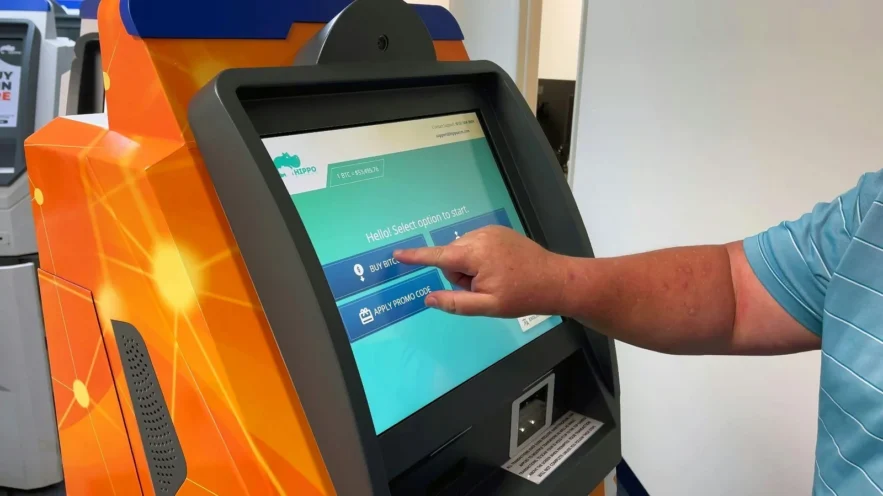
PointsKash’s KashPoint kiosks are designed to bring multiple financial services together in a single location. Consumers may use them to pay bills, send money, access digital financial services, purchase gift cards, withdraw cash or move between cash and the digital economy.
The concept is built around convenience, but Herron sees it as something larger: a way to connect consumers who still operate partly in a cash economy with an increasingly digital financial system.
Creating a bridge between cash and digital money
The continued importance of physical access points may seem surprising in an era when banking and payments can be conducted from a smartphone. But Herron argues that having a smartphone does not necessarily mean having equal access to financial services.
“Technology only creates financial inclusion if people can actually access it,” he said.
For consumers who primarily use cash, a digital-only financial product may not address every need. Someone may have cash available but need to pay a digital bill, send money to a family member or make an online purchase.
A physical kiosk can serve as an on-ramp between those two worlds.
PointsKash is developing its kiosks alongside its KashPoint Express platform and PK Pay, with the goal of creating a connected ecosystem rather than treating physical and digital services as competing models.
“We don’t see physical and digital as competing with each other,” Herron said. “The future is connecting them.”
That approach reflects a broader challenge in financial inclusion: access is not simply about whether a financial product exists. It is also about whether consumers can conveniently and affordably use it in their everyday lives.
Reducing the friction of everyday finances
For underbanked consumers, one of the biggest obstacles can be the complexity of completing basic financial transactions.
A consumer may need to visit one location to access cash, another to pay a bill and another to send money. Each additional stop takes time and can introduce another transaction fee.
“One of the biggest barriers is simply friction,” Herron said.
PointsKash aims to reduce that friction by consolidating multiple services in one location.
That strategy also influences where the company places its kiosks. Rather than making financial services another destination consumers have to seek out, PointsKash is targeting retail and high-traffic environments such as grocery stores, convenience stores and hotels.
“If you’re already at a grocery store, convenience store, hotel or another location you regularly visit, why should you necessarily have to make a separate trip just to handle a basic financial transaction?” Herron said.
The model could benefit both sides of the transaction. Consumers gain another convenient way to manage financial needs, while retailers can potentially give customers an additional reason to visit their locations.
Making financial inclusion practical
Herron argues that the definition of financial inclusion needs to extend beyond simply providing access to financial products.
“Financial inclusion isn’t just about whether someone technically has access to a financial product,” he said. “It’s about whether that product is practical, affordable and accessible enough to actually improve their everyday life.”
That distinction is particularly important for consumers who move between cash and digital payments depending on the situation.

Rather than pushing consumers toward a single method of managing money, Herron says PointsKash wants to give them more choices.
“Your money should be accessible to you on your terms,” he said.
That could mean using cash, a debit card, a digital wallet or some combination of the three.
A connected future for financial kiosks
While physical kiosks are central to PointsKash’s strategy, Herron does not envision the kiosk operating in isolation.
Instead, he sees it as one part of a broader connected financial experience in which consumers can move seamlessly between physical locations and mobile devices.
“The kiosk is the physical doorway, the phone becomes the digital doorway, and platforms like PK Pay can connect the two,” he said.
Under that model, a consumer could interact with a kiosk or point-of-sale device, move between cash and digital money, and then continue managing those funds through a mobile platform.
Herron believes that kind of connectivity could eventually become an expectation among consumers who have historically faced barriers to traditional financial services.
As PointsKash expands nationally, the company’s broader objective is to make financial services more accessible without dictating how consumers should manage their money.
“We’re not trying to tell consumers how they should manage their money,” Herron said. “We’re trying to give them more choices in how they can access it, use it and move it.”
For PointsKash, the future of financial inclusion may not be entirely digital or entirely physical. Instead, it could be a combination of both — with the kiosk providing the physical doorway and digital platforms extending that access beyond the location itself.
The larger idea is straightforward: financial services should meet consumers where they are, giving them more convenient ways to access and move their money on their own terms.