

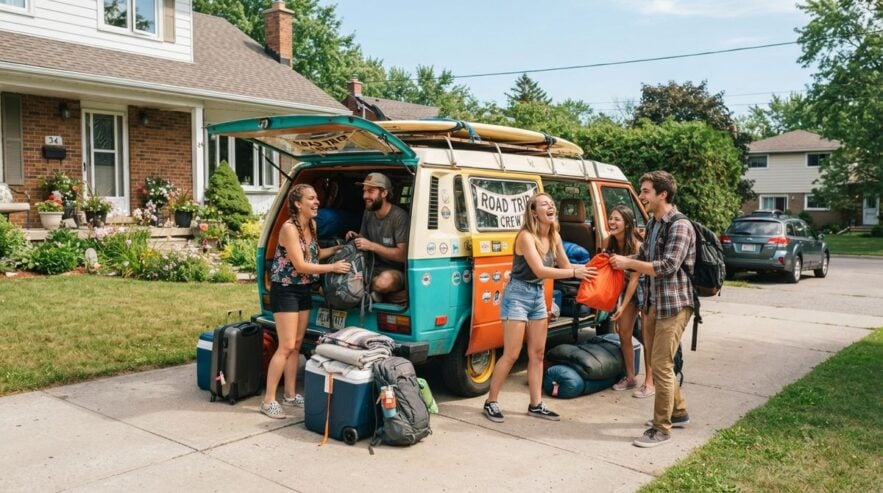
Teenagers who split their time between two homes often face a particular kind of organisation problem. Books, chargers and sports kit end up in the wrong place, and the school timetable does not always match the travel pattern. When a parent also commutes a long way, the logistics can feel even heavier. This article explains how to build a simple system a teenager can actually use, without turning daily life into a list of rules. Many families find that the biggest gains come from a few simple habits rather than a complicated system.
Setting Up a Base in Each Home
Each home needs a small, dedicated area for school things. A tray near the door, a hook for the bag and a spare set of basic items can prevent many morning arguments. Label the containers clearly, so that a younger sibling or a visiting relative can find what they need without asking. Avoid trying to duplicate everything. Focus on the items that cause the most trouble, such as a textbook for a weekly lesson or a clean uniform. Keep a shared list in each home so the teenager can check what is needed before leaving.
Teenagers should have a say in how these spaces are arranged. Ask them which items they carry every day and which they usually forget. Their answers reveal the real gaps, and they are more likely to use a system they helped design. Keep the arrangements flexible, because teenage schedules change quickly and a setup that works in September may need changing by December. Readers may also want to visit Richname.net.
A Shared Packing Routine
A shared routine reduces the mental load on everyone. Agree on a few steps that happen every time the teenager moves between homes, and keep them consistent.
- Check the timetable on the evening before any move
- Pack the bag by the door, not on a bedroom floor
- Keep chargers in a fixed spot in each home
- Store sports kit in a labelled bag that can stay in the car
- Note any homework that must travel between homes
- Make a quick check of the phone before leaving the house
A list like this works best when it is short and visible. Put it on the fridge or in a shared note the teenager can open on their phone. Revisit it after a few weeks and remove any item that no longer helps. Some families also keep a spare phone charger in the car, which can save a long day.
Communicating Without Constant Messages
You can also visit economicsandmoney.com for more reading. Agree on one main message thread for schedule changes, and keep other messages for real emergencies. A teenager who receives fewer, more useful messages is more likely to read them carefully. Let the teenager choose how they prefer to be contacted, within sensible limits.
It also helps to agree on what counts as urgent. A missed lesson or an early finish is usually not an emergency, while a health concern or a change to pick-up arrangements usually is. Writing these categories down removes guesswork for everyone.
If a parent is travelling and cannot be reached during the school day, agree on a backup adult, such as a relative or a family friend who lives near the school. Share their contact details with the school office so that everyone knows who to call when a plan changes.

Protecting Time for Rest and Friends
Long journeys can leave a teenager tired and isolated. Protect a few evenings each week with no travel and no homework push, so the teenager can see friends or pursue a hobby. Sleep matters too. If a teenager is up late with messages or games, a calm wind-down time can help. For a related read on this site, see An Evening Homework Routine That Ends Nightly Battles.
This is general guidance only. A family doctor or school nurse can offer personal advice if sleep or mood concerns continue.
When the Plan Breaks Down
Every system will fail sometimes. A missed bus, a lost key or a late train is normal. Instead of blaming the teenager, talk through what happened and adjust the process. Keep the tone calm and practical, and focus on fixing the system rather than the person. Teenagers are more willing to share problems when they expect a fair and practical response. Afterwards, ask what would make the next morning easier, and let the teenager suggest one change. Small adjustments made together tend to last longer than sudden new rules.
Two homes and a long commute will always ask for effort, but a teenager who helps design the routine often rises to the challenge. Keep the system simple, review it regularly and celebrate small wins, such as a bag packed on time or a week with no missing kit.