

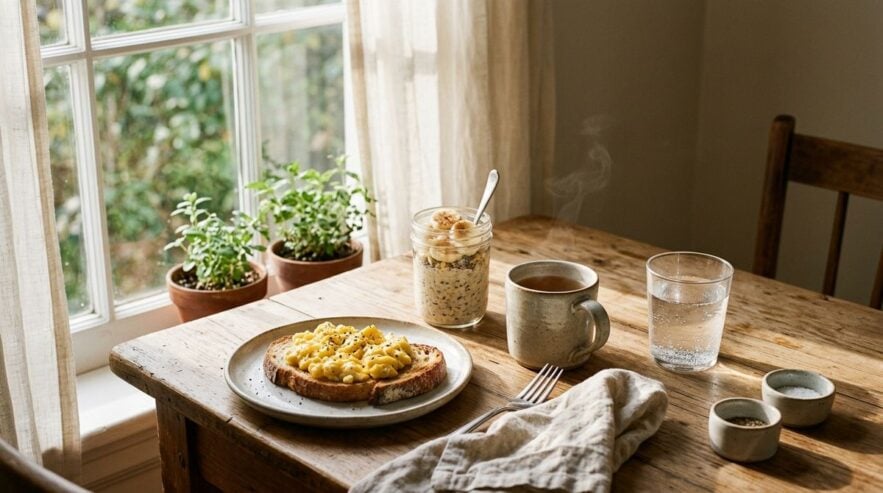
Oats can become creamy porridge, a firmer make-ahead slice, a chilled breakfast, or a crisp topping. Using several textures helps a household keep breakfast familiar without making it monotonous. The main variables are the type of oat, the amount of liquid, cooking time, and what happens after cooking.
Know the oat styles available
Whole oat groats are least processed and take the longest to cook. Steel-cut oats are chopped and retain a chewy texture. Rolled oats are steamed and flattened, so they soften more quickly. Quick-cooking oats are thinner and produce a smoother result. Instant flavoured packets may contain added sweeteners or seasonings and behave differently from plain oats.
Check the package for preparation directions, allergy statements, and storage advice. Readers may also want to visit creativediary.net.
Adjust the stovetop method
For creamy porridge, use rolled or quick oats and stir occasionally as they simmer. Milk or a suitable alternative adds richness, while water produces a clean oat flavour; a mixture of the two is flexible. For more distinct texture, choose steel-cut oats and stir less often.
Use a pot with room for bubbling and keep the heat moderate. Oatmeal can rise suddenly and stick to the base. Add more hot liquid if it thickens before the grains are tender. Let the finished porridge stand briefly, because it continues to absorb liquid off the heat.
Offer toppings separately so each person can adjust flavour and texture:
- Soft or chopped fresh fruit.
- Plain yoghurt or a suitable alternative.
- Seeds or finely prepared nuts where safe.
- Cinnamon or another gentle spice.
- A small spoonful of fruit compote.
You can also visit recknews.com for more reading.
Create chilled and baked versions
For overnight oats, combine rolled oats with enough liquid to hydrate them and refrigerate in a covered container. Add ingredients that remain pleasant after soaking, saving crisp toppings until serving. Use clean utensils and keep perishable mixtures cold. The result should be soft but spoonable; thin it in the morning if needed.
Baked oats use a thicker batter-like mixture and set into scoopable portions. Follow a tested formula, especially when eggs or leavening are involved. For a related read on this site, see How to Keep Homemade Granola Crisp From Tray.
For a firmer make-ahead breakfast, cool baked oats, portion them, and refrigerate promptly. Reheat only the servings needed. Label containers so leftovers do not become anonymous and remain past their useful period.

Keep sweetness and variety flexible
Build flavour with ripe fruit, spices, toasted oats, and contrasting toppings before relying on heavy sweetness. This is not a rule against sweeteners; it is a way to let each eater adjust the bowl. A lightly seasoned base works for different preferences and can even take savoury toppings such as egg, greens, or cheese.
Cook a small batch when trying a new texture. Notice whether family members prefer loose or thick porridge, chewy or soft grains, warm or chilled preparations. Record the liquid ratio and standing time that produced the preferred result.
Store dry oats sealed in a cool, dry place and inspect them for stale or rancid aromas before use. Rotate varieties rather than keeping several forgotten packages open. A family does not need a different recipe every morning. One dependable bag of oats can feel varied when cooking method, temperature, and toppings change with purpose.
Batch preparation can save time when storage is handled carefully. Make a plain base, cool it promptly, and divide it into covered portions rather than repeatedly warming one large pot. On reheating, add liquid gradually and stir so the centre warms evenly. A thick portion may loosen considerably before tightening again, so wait before deciding it needs more oats. Keep toppings separate until serving, especially crisp seeds, fresh fruit, and anything that releases water. For school or work, transport chilled oats in an insulated setup that maintains a safe temperature. These practices make variation easy: the same base can become warm and spiced one day, cool and fruity the next, or savoury with vegetables and egg when suitable.
Mark containers with the preparation date and discard portions that show spoilage or were stored unsafely. A small label supports variety without turning breakfast into guesswork.