

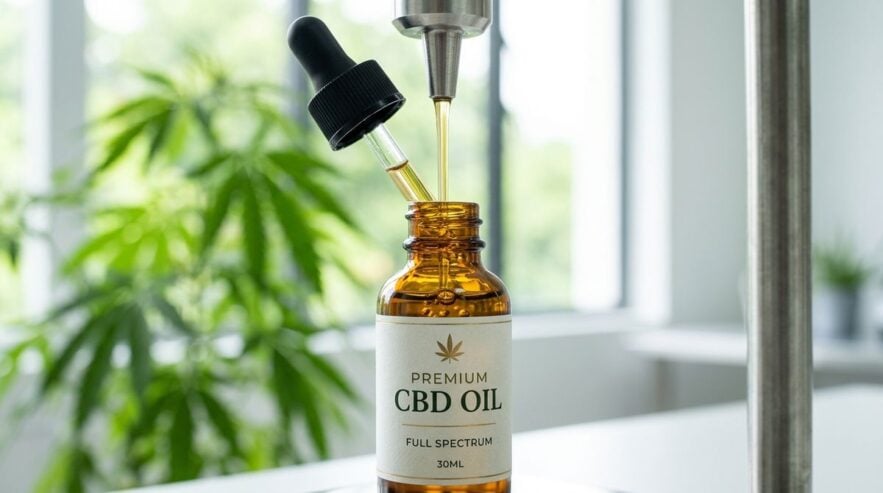
Most households own one small dropper bottle that sits in a cabinet for months, and few people think about it until the label has faded or the contents look different from the first week. CBD tinctures are usually sold in dark glass for a reason, so the shelf they live on matters nearly as much as the cap that keeps them sealed.
This article covers general storage habits for anyone who buys products in this category and wants them to stay in good condition. It does not describe effects, dosing or health outcomes, and it is not a replacement for advice from a qualified professional who knows your personal situation.
Reading the Label Before the Bottle Goes Home
Start with the printed label, which often includes a storage line and a best by window. Manufacturers word these instructions differently, so the most reliable habit is to read the exact sentence on your own bottle rather than relying on a general rule. If the label says keep refrigerated, follow it, and if it says keep away from direct light, treat that as a firm instruction. Readers may also want to visit farmhousefoodsco.com. Some labels also print a lot number, which becomes useful if you ever need to report a problem. Write the open date on a strip of masking tape the day you start a new bottle, because the purchase date is easy to forget by the second month.
Travel Bags and Summer Car Rides
A parked car is one of the least stable places for any bottle during warm weather. The cabin can climb well past comfortable temperatures in a short time, even when the day feels mild. If you need to carry a bottle on a trip, place it in an insulated pouch with a cool pack set outside the bag rather than pressed against the glass. You can also visit teamvodkamartini.net for more reading. Put a small zip bag around the bottle to catch any leak, and keep it in the middle of the luggage instead of an outer pocket where sun and bumps are harder to control. When you reach your room, unpack the bottle first so it does not sit in a warm suitcase all afternoon.
Choosing a Cabinet Spot That Stays Steady
A bathroom shelf looks convenient, yet it is one of the poorest choices in a home because showers bring humidity and temperature swings. A kitchen cupboard can be just as tricky when it sits beside the oven, the dishwasher or a hot water pipe. Look for a cool, dry shelf on an interior wall, away from appliances that give off heat. Keep the bottle upright in its original box so it does not roll or tip, and wipe the dropper area clean after each use to limit sticky residue. For a related read on this site, see Turning Off Location History on a Family Phone. Pick one permanent place and stick with it, since moving a bottle from room to room is how it ends up left on a sunny counter.

Noticing Changes Worth a Second Look
Color shifts, unusual smells or a texture that looks separated are reasons to stop and check rather than guess. Write down what changed, the lot number on the label and the date you noticed the difference. Then contact the seller or the manufacturer with those details, and ask how the product should be handled from that point. Do not taste or apply a product that looks off simply to test it, and do not pour it into another container to hide the change from others in the house. Keep the original bottle with its label intact if you plan to ask for help. A small notebook kept beside the cabinet makes this step easy, and it gives you a record to refer to if a question comes up later.
A Shelf Routine That Keeps Things Simple
Storage works best as a habit rather than a one time fix. Keep the bottle out of reach of children and pets as well, because a dropper is easy for curious hands to pick up and carry off. Once a month, check the label, look at the open date and confirm the bottle is still on the shelf you chose. Wipe the outside of the glass if it has picked up dust or fingerprints, then return it to the same spot. A calm routine like this takes only a minute, and it helps the product stay in the condition its label describes for as long as you keep using it.